The overland journey from Kampala to Arusha by bus is one of the longer and more logistically involved ground crossings in East Africa — approximately 1,200 km covering Uganda, Kenya, and Tanzania, requiring passage through two international border crossings (Uganda–Kenya at Malaba or Busia, then Kenya–Tanzania at Namanga), and totalling 24–36 hours of actual travel time under normal conditions without breakdowns, extended border queues, or significant road disruptions — making it a journey that requires realistic planning and a genuine appetite for extended overland travel rather than an easy regional hop. For travellers combining Uganda gorilla trekking with Tanzania wildlife destinations (Serengeti, Ngorongoro, Kilimanjaro), the Kampala–Arusha bus is the budget-viable ground option that eliminates one or both international flight legs at the cost of 2 days of travel. This guide covers the practical logistics: operators, departure points, crossing sequence, realistic journey times, and how to plan the Uganda portion of an East Africa trip (including gorilla trekking) before picking up the Arusha bus from Kampala. For the gorilla trekking permit that makes the Uganda portion worth extending your trip for, see the permit guide.
Kampala to Arusha by Bus: Key Facts
- Journey time: 24–36 hours — this is a multi-day overland journey, not a day trip
- Borders crossed: Uganda–Kenya (Malaba/Busia), Kenya–Tanzania (Namanga)
- Main operators: Kampala Coach, Modern Coast (to Nairobi then transfer), Mash Poa, Cross Country
- Departure hub: Kampala bus parks — Namayiba Terminal and Qualicel
- Visas needed: Kenyan eVisa (USD $30 for most nationalities), Tanzanian visa on arrival or online
- Arusha is 90 minutes from Kilimanjaro International Airport and 3–4 hours from Serengeti gate
The journey from Kampala to Arusha by bus is not your average cross-border hop—it’s a true overland odyssey that blends beauty, endurance, and a raw sense of movement across the heart of East Africa. Whether you’re a budget-conscious backpacker chasing Kilimanjaro’s silhouette, a volunteer heading to Moshi, or simply a traveler seeking the scenic route, this trip is a rite of passage. In 2025, it remains one of the most affordable and culturally immersive ways to connect Uganda and Tanzania by land. But let’s be clear: this isn’t for the faint-hearted. It’s for the traveler who wants more than just a seat on a bus. It’s for the one who wants to feel the land shift beneath them—from the hills of central Uganda to the open plains of northern Tanzania.
Setting the Stage: How Long, How Far, and What to Expect
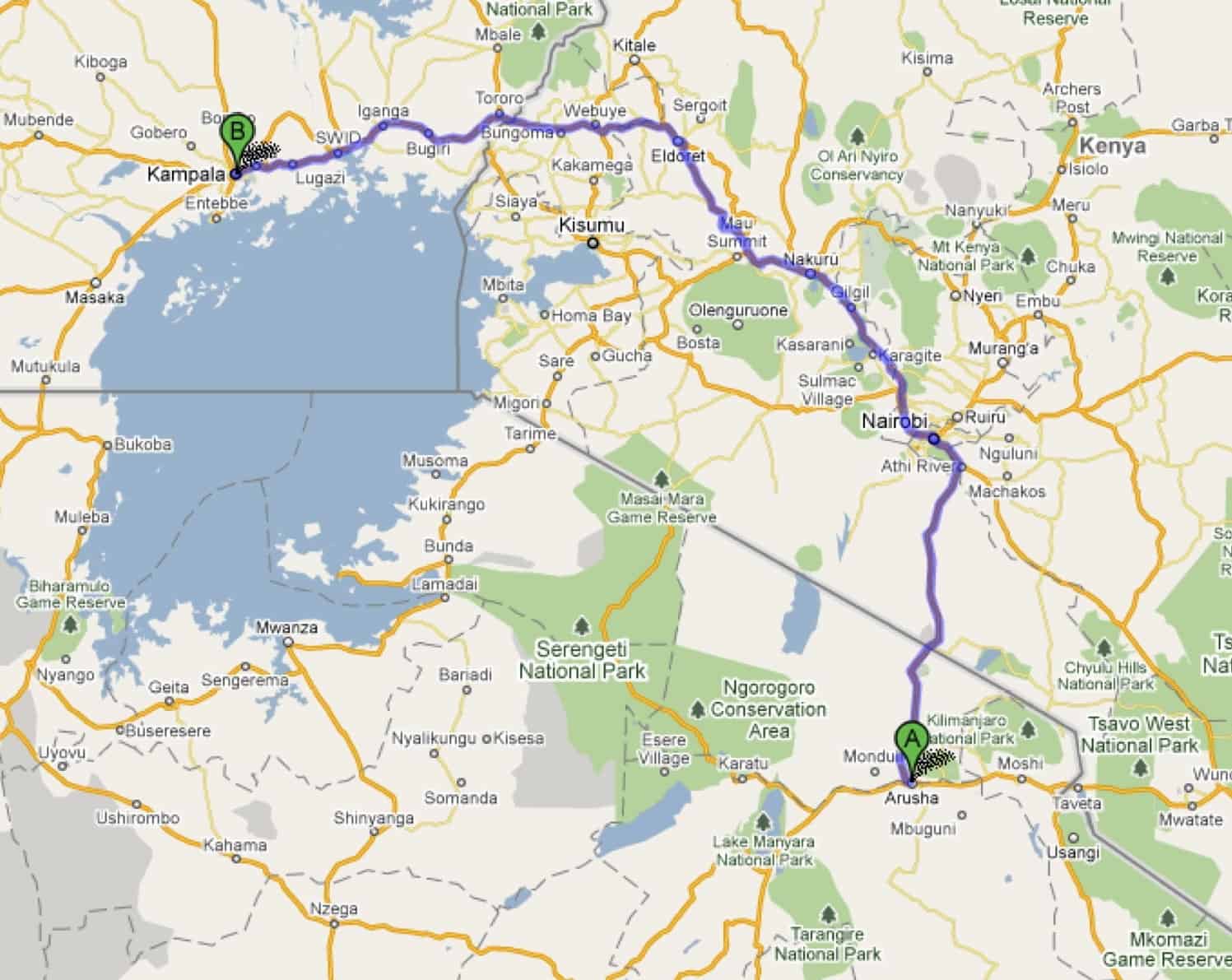 The Kampala to Arusha route covers a vast stretch of over 1,000 kilometers, with the most common overland path cutting through Uganda, into Kenya, and finally into Tanzania. There is no direct Uganda–Tanzania cross-border bus, so travelers almost always transit via Nairobi, making this a two-part journey: Kampala to Nairobi, then Nairobi to Arusha. Depending on traffic, road conditions, and your transfer timing, this trip can take 18 to 26 hours total, or longer if you’re splitting the journey with a rest stop in Nairobi.
It’s not just the distance that makes this trip epic—it’s the rhythmic chaos of East African transport: checkpoints, border crossings, roadworks, weighbridges, long stopovers, and unexpected delays. But it’s also full of slow-burning beauty. The deeper into the trip you go, the more the landscapes unfold—lush in Uganda, volcanic in Kenya, and sunburnt gold as you enter northern Tanzania.
Leg 1: Kampala to Nairobi – Through Uganda and Across the Rift
You start early—either in the still-dark hours of morning or late at night, depending on whether you choose the day bus or the night service. Companies like Mash Poa, Modern Coast, and Tahmeed Coach operate daily between Kampala and Nairobi, departing from Namayiba Bus Terminal or other city hubs. Prices vary depending on seat class, with VIP or business class offering wider, more cushioned seats and better legroom, ideal for a journey that may stretch 14 hours or more.
The road takes you through Jinja, Iganga, Mbale, and Tororo, brushing alongside tea plantations and Nile tributaries before reaching the Malaba or Busia border crossing. Immigration is generally straightforward but always slow—expect fingerprint scans, visa checks, and yellow fever certificate verifications. In 2025, the East African Tourist Visa (valid for Uganda, Kenya, and Rwanda) remains your best friend for border travel. If you’re a non-EAC national, make sure you secure it before the journey begins—it saves time and headaches at immigration.
Once inside Kenya, the road flattens into long stretches. Towns like Eldoret, Nakuru, and Naivasha flicker past the window, offering roadside snacks, bathroom stops, and a constant reminder that East Africa never sleeps. The closer you get to Nairobi, the denser the traffic, especially if you arrive in the evening. You’ll likely disembark near Afya Centre, Machakos Airport Bus Station, or River Road, depending on your company. Now you’re halfway there.
Rest or Ride: The Nairobi Connection Dilemma
Upon arriving in Nairobi, you have a choice: continue immediately to Arusha on a connecting night bus (if your timing works), or rest for the night and catch the next morning’s service. This decision matters more than it seems. If you’ve just spent 12–14 hours on a cramped coach, your body may thank you for a shower, food, and a decent sleep. Nairobi has affordable accommodations near the city center, and a short overnight stay allows you to reset before tackling the next leg.
But if you’re tight on time and catch a well-coordinated transfer, you can connect to Arusha on the same day, typically via Impala Shuttle, Riverside Shuttle, or regional coaches like Tahmeed or Kampala Coach. Just ensure your arrival in Nairobi is before 3–4 p.m., as most Arusha-bound vehicles leave before sunset.
Leg 2: Nairobi to Arusha – The Border, the Highlands, and Kilimanjaro’s Shadow
The Nairobi to Arusha stretch, though only about 280 kilometers, can still eat up 6–8 hours of your time due to the Namanga border crossing, road conditions, and transfer logistics. Fortunately, this part of the journey is more scenic, with views of Mount Longonot, open savannahs, and eventually Mount Meru rising beyond Arusha as you approach Tanzania’s tourism capital.
The Namanga border itself has become more organized in 2025, with eVisa acceptance, biometric clearance, and dual immigration complexes simplifying the process for most travelers. If you already have the East African Tourist Visa, crossing is fast. If you’re entering Tanzania with a Tanzania eVisa, print it in advance to avoid complications. If you’re applying on arrival, you may need to pay in cash—usually $50 USD for many nationalities—so carry dollars and your yellow fever card just in case.
As you move into Tanzania, the road shifts slightly rougher but feels less industrial, with more wildlife, village life, and rolling open space. You’ll know you’re near Arusha when the tempo changes—more signs for safari lodges, more tourists boarding shared vans, and the unmistakable presence of tour guides holding welcome boards at every fuel station and rest stop.
Arrival in Arusha: Where the Road Finally Exhales
Arusha, the gateway to Serengeti, Ngorongoro, and Kilimanjaro, is not loud in its welcome—but it is alive. The city moves with a quiet confidence, knowing that it is at the center of East Africa’s most iconic adventures. The bus will likely drop you at the central station, near Bondeni Road or Makao Mapya, from where you can walk or take a short taxi to most hostels or hotels.
The air is cooler here—elevated, mountain-touched, and fresh. After 24 hours on the road, you might expect exhaustion. But what you’ll feel, more than anything, is triumph. You did it. You crossed three countries, watched landscapes shift like chapters in a book, and arrived in the beating heart of Tanzania.
What This Journey Teaches You: More Than Just Kilometers
Traveling by bus from Kampala to Arusha is not for those who seek comfort. It’s for those who want the truth of the road. You will see how people move, how trade flows, how borders don’t just divide countries but reshape routines and habits. You’ll hear stories in whispers and shouted phone calls, watch landscapes bleed into each other, and perhaps most importantly—you’ll gain time. Not time in hours or minutes, but real, meaningful time with the journey itself.
In a world obsessed with arrival, this is one ride that reminds you: sometimes, it’s not about how fast you get there. It’s about what the road does to you while you’re moving.
Frequently Asked Questions
The Kampala–Arusha bus journey takes 24–36 hours under typical conditions, making it one of the longer overland journeys commonly attempted by travellers in East Africa. The total route length is approximately 1,200 km, passing through Uganda, Kenya, and Tanzania with two international border crossings. The journey breaks down roughly as: Kampala to Malaba/Busia border 5–6 hours (including Kampala morning traffic), border crossing 1–4 hours, Malaba/Busia to Nairobi 7–8 hours, Nairobi to Namanga border 2–3 hours, border crossing 1–2 hours, Namanga to Arusha 2–3 hours. Many operators connect through Nairobi and require either a scheduled onward connection or overnight in Nairobi, making the through-journey difficult to achieve in less than 30 hours. Delays from road construction, accidents, and border queue surges are common. Plan arrival in Arusha for the day after departure from Kampala rather than expecting a same-day connection. What visa documents do you need for the Kampala to Arusha bus route? The Kampala–Arusha bus crosses two international borders, each requiring separate visa arrangements. For the Uganda–Kenya crossing at Malaba or Busia: most nationalities require a Kenyan eVisa (USD $30), applied online before departure at the official Kenya eDRS portal — allow at least 72 hours for processing, though 1–2 weeks ahead is recommended. For the Kenya–Tanzania crossing at Namanga: Tanzanian visa requirements vary by nationality — some nationalities receive a visa on arrival (currently USD $50 for most Western nationalities), while others can apply for an e-visa in advance at the Tanzania Immigration Services portal. The East Africa Tourist Visa (USD $100) covers Uganda, Kenya, and Rwanda on a single document but does not include Tanzania, so it does not eliminate the separate Tanzanian visa requirement. Carry all required visas and eVisa approval printouts physically accessible during transit rather than only on a phone — document checks happen at both borders and sometimes by police on the road. What bus operators run between Kampala and Arusha? There is no single direct scheduled bus service between Kampala and Arusha offered by one operator covering the entire route. The practical options are: take a Kampala–Nairobi bus (Modern Coast, Mash Poa, Easy Coach, or Simba Coach — scheduled daily), spend a night or transit day in Nairobi, then take a Nairobi–Arusha bus (multiple operators: Cross Country, Riverside Shuttle, Impala Shuttle — the Nairobi to Arusha segment is a more developed route with more frequent options); or use Kampala Coach or similar that handles the transit routing with an included Nairobi connection. Bus conditions, reliability, and booking methods change over time — verify current operators and schedules at Kampala’s main bus terminals (Namayiba, Qualicel) or through Nairobi-based booking platforms in the weeks before your departure. The Nairobi–Arusha leg is the more comfortable and predictable segment; the Kampala–Nairobi segment carries the higher variable risk. What is Arusha like and what can you do from it after the bus from Kampala? Arusha is the gateway to northern Tanzania’s most famous wildlife destinations: it sits approximately 3–4 hours from the western Serengeti gate, 2 hours from Ngorongoro Crater, 45 minutes from Lake Manyara, and 90 minutes from Kilimanjaro International Airport. The city itself has a functional tourist infrastructure with accommodation ranging from budget guesthouses to upmarket lodges, a busy Maasai market, and a straightforward Tanzania safari booking market where independent travellers can arrange northern circuit game drives, Kilimanjaro climbs, and Zanzibar onward travel. For a traveller arriving from Uganda by bus, Arusha represents a natural pivot point: rest and recover for 1 night, arrange onward Tanzania safari or Zanzibar travel, and continue the East Africa journey. The sequence Uganda (gorilla trekking) → Kampala by road → Arusha by bus → northern Tanzania safari → Zanzibar is one of the most comprehensive East Africa itineraries available in a single 3–4 week trip without flying any internal leg. How do you combine Uganda gorilla trekking with the Arusha bus as an East Africa itinerary? A comprehensive Uganda–Tanzania overland itinerary using the Kampala–Arusha bus as the connecting leg typically runs: fly into Entebbe, spend 7–10 days in western Uganda (Kibale chimpanzees, Queen Elizabeth National Park, Bwindi gorilla trekking), return to Kampala, take the overnight bus to Nairobi, connect to Arusha (same day or overnight depending on arrival time), and continue to the northern Tanzania circuit. This approach covers two of Africa’s three great primate trekking experiences (chimpanzees and mountain gorillas in Uganda) and three of Africa’s most iconic savannah wildlife destinations (Serengeti, Ngorongoro, Amboseli/Masai Mara depending on route) in a single trip without flying any internal leg — at a significantly lower cost than the equivalent air-connected itinerary. The gorilla permit is the most time-sensitive element to book first (5–6 months ahead for peak season), around which the entire itinerary — including the Kampala departure date and Arusha arrival timing — is then built. Plan the Uganda leg before the Arusha bus Gorilla Permit Guide — book the Bwindi permit before flights and bus schedules are set Uganda Gorilla Families — the mountain gorilla families at the Uganda apex of the East Africa circuit Full Safari Cost Guide — Uganda trip budget for the overland East Africa traveller Safari Itineraries — Uganda circuit itineraries connecting to the Kampala bus departure Further Reading From Kampala to Nairobi by Bus From Kampala to Kigali by Bus Amin’s Torture Chambers in Kampala The Bahá’í Temple in Kampala Discovering NACCAU Crafts Village Kampala Uganda Gorilla Trekking from Kampala: The Complete Journey Guide How to Get to Bwindi: Transport Options From Kampala and Entebbe Distance from Kampala to Bwindi: Drive Times and All Routes Bus to Bwindi from Kampala: Schedules and Booking Guide Kampala to Kabale: All Ways to Travel to Gorilla Country <
The Kampala–Arusha bus crosses two international borders, each requiring separate visa arrangements. For the Uganda–Kenya crossing at Malaba or Busia: most nationalities require a Kenyan eVisa (USD $30), applied online before departure at the official Kenya eDRS portal — allow at least 72 hours for processing, though 1–2 weeks ahead is recommended. For the Kenya–Tanzania crossing at Namanga: Tanzanian visa requirements vary by nationality — some nationalities receive a visa on arrival (currently USD $50 for most Western nationalities), while others can apply for an e-visa in advance at the Tanzania Immigration Services portal. The East Africa Tourist Visa (USD $100) covers Uganda, Kenya, and Rwanda on a single document but does not include Tanzania, so it does not eliminate the separate Tanzanian visa requirement. Carry all required visas and eVisa approval printouts physically accessible during transit rather than only on a phone — document checks happen at both borders and sometimes by police on the road. What bus operators run between Kampala and Arusha? There is no single direct scheduled bus service between Kampala and Arusha offered by one operator covering the entire route. The practical options are: take a Kampala–Nairobi bus (Modern Coast, Mash Poa, Easy Coach, or Simba Coach — scheduled daily), spend a night or transit day in Nairobi, then take a Nairobi–Arusha bus (multiple operators: Cross Country, Riverside Shuttle, Impala Shuttle — the Nairobi to Arusha segment is a more developed route with more frequent options); or use Kampala Coach or similar that handles the transit routing with an included Nairobi connection. Bus conditions, reliability, and booking methods change over time — verify current operators and schedules at Kampala’s main bus terminals (Namayiba, Qualicel) or through Nairobi-based booking platforms in the weeks before your departure. The Nairobi–Arusha leg is the more comfortable and predictable segment; the Kampala–Nairobi segment carries the higher variable risk. What is Arusha like and what can you do from it after the bus from Kampala? Arusha is the gateway to northern Tanzania’s most famous wildlife destinations: it sits approximately 3–4 hours from the western Serengeti gate, 2 hours from Ngorongoro Crater, 45 minutes from Lake Manyara, and 90 minutes from Kilimanjaro International Airport. The city itself has a functional tourist infrastructure with accommodation ranging from budget guesthouses to upmarket lodges, a busy Maasai market, and a straightforward Tanzania safari booking market where independent travellers can arrange northern circuit game drives, Kilimanjaro climbs, and Zanzibar onward travel. For a traveller arriving from Uganda by bus, Arusha represents a natural pivot point: rest and recover for 1 night, arrange onward Tanzania safari or Zanzibar travel, and continue the East Africa journey. The sequence Uganda (gorilla trekking) → Kampala by road → Arusha by bus → northern Tanzania safari → Zanzibar is one of the most comprehensive East Africa itineraries available in a single 3–4 week trip without flying any internal leg. How do you combine Uganda gorilla trekking with the Arusha bus as an East Africa itinerary? A comprehensive Uganda–Tanzania overland itinerary using the Kampala–Arusha bus as the connecting leg typically runs: fly into Entebbe, spend 7–10 days in western Uganda (Kibale chimpanzees, Queen Elizabeth National Park, Bwindi gorilla trekking), return to Kampala, take the overnight bus to Nairobi, connect to Arusha (same day or overnight depending on arrival time), and continue to the northern Tanzania circuit. This approach covers two of Africa’s three great primate trekking experiences (chimpanzees and mountain gorillas in Uganda) and three of Africa’s most iconic savannah wildlife destinations (Serengeti, Ngorongoro, Amboseli/Masai Mara depending on route) in a single trip without flying any internal leg — at a significantly lower cost than the equivalent air-connected itinerary. The gorilla permit is the most time-sensitive element to book first (5–6 months ahead for peak season), around which the entire itinerary — including the Kampala departure date and Arusha arrival timing — is then built. Plan the Uganda leg before the Arusha bus Gorilla Permit Guide — book the Bwindi permit before flights and bus schedules are set Uganda Gorilla Families — the mountain gorilla families at the Uganda apex of the East Africa circuit Full Safari Cost Guide — Uganda trip budget for the overland East Africa traveller Safari Itineraries — Uganda circuit itineraries connecting to the Kampala bus departure Further Reading From Kampala to Nairobi by Bus From Kampala to Kigali by Bus Amin’s Torture Chambers in Kampala The Bahá’í Temple in Kampala Discovering NACCAU Crafts Village Kampala Uganda Gorilla Trekking from Kampala: The Complete Journey Guide How to Get to Bwindi: Transport Options From Kampala and Entebbe Distance from Kampala to Bwindi: Drive Times and All Routes Bus to Bwindi from Kampala: Schedules and Booking Guide Kampala to Kabale: All Ways to Travel to Gorilla Country <
There is no single direct scheduled bus service between Kampala and Arusha offered by one operator covering the entire route. The practical options are: take a Kampala–Nairobi bus (Modern Coast, Mash Poa, Easy Coach, or Simba Coach — scheduled daily), spend a night or transit day in Nairobi, then take a Nairobi–Arusha bus (multiple operators: Cross Country, Riverside Shuttle, Impala Shuttle — the Nairobi to Arusha segment is a more developed route with more frequent options); or use Kampala Coach or similar that handles the transit routing with an included Nairobi connection. Bus conditions, reliability, and booking methods change over time — verify current operators and schedules at Kampala’s main bus terminals (Namayiba, Qualicel) or through Nairobi-based booking platforms in the weeks before your departure. The Nairobi–Arusha leg is the more comfortable and predictable segment; the Kampala–Nairobi segment carries the higher variable risk. What is Arusha like and what can you do from it after the bus from Kampala? Arusha is the gateway to northern Tanzania’s most famous wildlife destinations: it sits approximately 3–4 hours from the western Serengeti gate, 2 hours from Ngorongoro Crater, 45 minutes from Lake Manyara, and 90 minutes from Kilimanjaro International Airport. The city itself has a functional tourist infrastructure with accommodation ranging from budget guesthouses to upmarket lodges, a busy Maasai market, and a straightforward Tanzania safari booking market where independent travellers can arrange northern circuit game drives, Kilimanjaro climbs, and Zanzibar onward travel. For a traveller arriving from Uganda by bus, Arusha represents a natural pivot point: rest and recover for 1 night, arrange onward Tanzania safari or Zanzibar travel, and continue the East Africa journey. The sequence Uganda (gorilla trekking) → Kampala by road → Arusha by bus → northern Tanzania safari → Zanzibar is one of the most comprehensive East Africa itineraries available in a single 3–4 week trip without flying any internal leg. How do you combine Uganda gorilla trekking with the Arusha bus as an East Africa itinerary? A comprehensive Uganda–Tanzania overland itinerary using the Kampala–Arusha bus as the connecting leg typically runs: fly into Entebbe, spend 7–10 days in western Uganda (Kibale chimpanzees, Queen Elizabeth National Park, Bwindi gorilla trekking), return to Kampala, take the overnight bus to Nairobi, connect to Arusha (same day or overnight depending on arrival time), and continue to the northern Tanzania circuit. This approach covers two of Africa’s three great primate trekking experiences (chimpanzees and mountain gorillas in Uganda) and three of Africa’s most iconic savannah wildlife destinations (Serengeti, Ngorongoro, Amboseli/Masai Mara depending on route) in a single trip without flying any internal leg — at a significantly lower cost than the equivalent air-connected itinerary. The gorilla permit is the most time-sensitive element to book first (5–6 months ahead for peak season), around which the entire itinerary — including the Kampala departure date and Arusha arrival timing — is then built. Plan the Uganda leg before the Arusha bus Gorilla Permit Guide — book the Bwindi permit before flights and bus schedules are set Uganda Gorilla Families — the mountain gorilla families at the Uganda apex of the East Africa circuit Full Safari Cost Guide — Uganda trip budget for the overland East Africa traveller Safari Itineraries — Uganda circuit itineraries connecting to the Kampala bus departure Further Reading From Kampala to Nairobi by Bus From Kampala to Kigali by Bus Amin’s Torture Chambers in Kampala The Bahá’í Temple in Kampala Discovering NACCAU Crafts Village Kampala Uganda Gorilla Trekking from Kampala: The Complete Journey Guide How to Get to Bwindi: Transport Options From Kampala and Entebbe Distance from Kampala to Bwindi: Drive Times and All Routes Bus to Bwindi from Kampala: Schedules and Booking Guide Kampala to Kabale: All Ways to Travel to Gorilla Country <
Arusha is the gateway to northern Tanzania’s most famous wildlife destinations: it sits approximately 3–4 hours from the western Serengeti gate, 2 hours from Ngorongoro Crater, 45 minutes from Lake Manyara, and 90 minutes from Kilimanjaro International Airport. The city itself has a functional tourist infrastructure with accommodation ranging from budget guesthouses to upmarket lodges, a busy Maasai market, and a straightforward Tanzania safari booking market where independent travellers can arrange northern circuit game drives, Kilimanjaro climbs, and Zanzibar onward travel. For a traveller arriving from Uganda by bus, Arusha represents a natural pivot point: rest and recover for 1 night, arrange onward Tanzania safari or Zanzibar travel, and continue the East Africa journey. The sequence Uganda (gorilla trekking) → Kampala by road → Arusha by bus → northern Tanzania safari → Zanzibar is one of the most comprehensive East Africa itineraries available in a single 3–4 week trip without flying any internal leg. How do you combine Uganda gorilla trekking with the Arusha bus as an East Africa itinerary? A comprehensive Uganda–Tanzania overland itinerary using the Kampala–Arusha bus as the connecting leg typically runs: fly into Entebbe, spend 7–10 days in western Uganda (Kibale chimpanzees, Queen Elizabeth National Park, Bwindi gorilla trekking), return to Kampala, take the overnight bus to Nairobi, connect to Arusha (same day or overnight depending on arrival time), and continue to the northern Tanzania circuit. This approach covers two of Africa’s three great primate trekking experiences (chimpanzees and mountain gorillas in Uganda) and three of Africa’s most iconic savannah wildlife destinations (Serengeti, Ngorongoro, Amboseli/Masai Mara depending on route) in a single trip without flying any internal leg — at a significantly lower cost than the equivalent air-connected itinerary. The gorilla permit is the most time-sensitive element to book first (5–6 months ahead for peak season), around which the entire itinerary — including the Kampala departure date and Arusha arrival timing — is then built. Plan the Uganda leg before the Arusha bus Gorilla Permit Guide — book the Bwindi permit before flights and bus schedules are set Uganda Gorilla Families — the mountain gorilla families at the Uganda apex of the East Africa circuit Full Safari Cost Guide — Uganda trip budget for the overland East Africa traveller Safari Itineraries — Uganda circuit itineraries connecting to the Kampala bus departure Further Reading From Kampala to Nairobi by Bus From Kampala to Kigali by Bus Amin’s Torture Chambers in Kampala The Bahá’í Temple in Kampala Discovering NACCAU Crafts Village Kampala Uganda Gorilla Trekking from Kampala: The Complete Journey Guide How to Get to Bwindi: Transport Options From Kampala and Entebbe Distance from Kampala to Bwindi: Drive Times and All Routes Bus to Bwindi from Kampala: Schedules and Booking Guide Kampala to Kabale: All Ways to Travel to Gorilla Country <
A comprehensive Uganda–Tanzania overland itinerary using the Kampala–Arusha bus as the connecting leg typically runs: fly into Entebbe, spend 7–10 days in western Uganda (Kibale chimpanzees, Queen Elizabeth National Park, Bwindi gorilla trekking), return to Kampala, take the overnight bus to Nairobi, connect to Arusha (same day or overnight depending on arrival time), and continue to the northern Tanzania circuit. This approach covers two of Africa’s three great primate trekking experiences (chimpanzees and mountain gorillas in Uganda) and three of Africa’s most iconic savannah wildlife destinations (Serengeti, Ngorongoro, Amboseli/Masai Mara depending on route) in a single trip without flying any internal leg — at a significantly lower cost than the equivalent air-connected itinerary. The gorilla permit is the most time-sensitive element to book first (5–6 months ahead for peak season), around which the entire itinerary — including the Kampala departure date and Arusha arrival timing — is then built. Plan the Uganda leg before the Arusha bus Gorilla Permit Guide — book the Bwindi permit before flights and bus schedules are set Uganda Gorilla Families — the mountain gorilla families at the Uganda apex of the East Africa circuit Full Safari Cost Guide — Uganda trip budget for the overland East Africa traveller Safari Itineraries — Uganda circuit itineraries connecting to the Kampala bus departure Further Reading From Kampala to Nairobi by Bus From Kampala to Kigali by Bus Amin’s Torture Chambers in Kampala The Bahá’í Temple in Kampala Discovering NACCAU Crafts Village Kampala Uganda Gorilla Trekking from Kampala: The Complete Journey Guide How to Get to Bwindi: Transport Options From Kampala and Entebbe Distance from Kampala to Bwindi: Drive Times and All Routes Bus to Bwindi from Kampala: Schedules and Booking Guide Kampala to Kabale: All Ways to Travel to Gorilla Country <