Updated
The bus from Kampala to Nairobi covers about 660 km and takes roughly 12–14 hours, including the border crossing at Busia or Malaba, with tickets usually costing around US$20–40 depending on the company and seat class. Several Kenyan and Ugandan companies run the route daily, most of them overnight. It is the cheapest way between the two capitals; a flight takes about an hour and a quarter.
Travellers combining a Uganda gorilla trip with a Kenya safari often consider the bus. Here is how the journey works, what to expect at the border and how to make it comfortable and safe.
Bus or flight?
| Bus | Flight (Entebbe–Nairobi) | |
|---|---|---|
| Journey time | About 12–14 hours, including the border | About 1 hour 15 minutes, plus airport time |
| Typical price | Around US$20–40 | Usually much higher; varies by season |
| Border | Land crossing at Busia or Malaba | Immigration at Nairobi airport |
| Best for | Budget travellers with time, overland adventurers | Most safari travellers on a schedule |
Companies, tickets and departure points
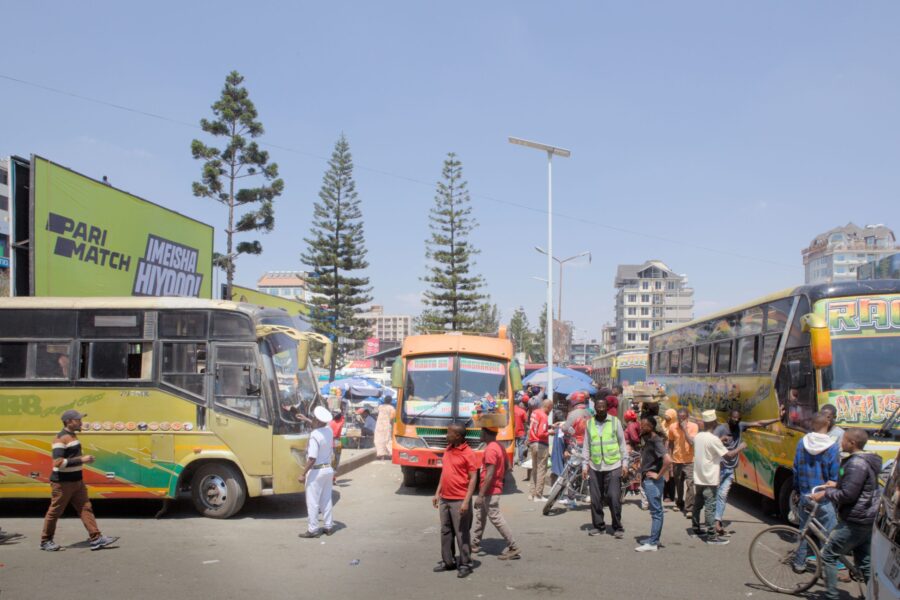
The main companies on the route include Modern Coast, Easy Coach, Mash and Tahmeed, among others. Most offer a standard class and a more spacious VIP or executive class with reclining seats, air conditioning and sometimes charging points. Buses leave from company offices and bus parks in central Kampala, mostly in the afternoon and evening, arriving in Nairobi the next morning. A few companies run daytime departures.
Book a day or two ahead, either at the company’s Kampala office or by phone and mobile money; many Kenyan operators use M-PESA. Check the departure point carefully, as companies use different terminals, and arrive at least 30 minutes early to load luggage. Keep your ticket, passport and visa documents in your hand luggage, not in the hold.
The journey and the border crossing
From Kampala, the bus heads east through Mukono and Lugazi, crosses the Nile at Jinja and continues to the Kenyan border at Busia or Malaba, usually reached late at night on overnight services. At the border, all passengers leave the bus, walk through Ugandan exit formalities and then Kenyan entry, and reboard on the other side. With several buses arriving together, this can take one to two hours. The road then runs through western Kenya, past Kisumu or Eldoret depending on the route, and down into the Rift Valley before reaching Nairobi.
At Kenyan immigration, you need your passport, Kenyan entry authorisation and a yellow fever certificate. Kenya introduced an electronic travel authorisation for most visitors; if you hold the East Africa Tourist Visa, which covers Kenya, Uganda and Rwanda, check that it is accepted for your route. Rules change, so confirm on the official portals before travelling. For Uganda’s side, see Uganda entry requirements.
Safety and comfort tips
Long-distance road travel is the main safety risk in East Africa, and night driving carries higher risk. Choose an established company rather than the cheapest option, wear a seatbelt where fitted, and consider a daytime bus if one suits your schedule. Keep valuables, phone and passport on you, especially at the border, where crowds make pickpocketing easier. Bring water, snacks, a warm layer for air-conditioned buses at night, a neck pillow and some Kenyan shillings or US dollars for the other side; money changers at the border offer poor rates, so change only small amounts.
Combining Uganda’s gorillas with Kenya
Many visitors pair gorilla trekking in Bwindi with a safari in the Maasai Mara. Because Bwindi is in Uganda’s far south-west, the overland route from the gorillas to Nairobi takes two full days. If time is limited, flying between Entebbe or Kigali and Nairobi is usually the better choice. Our guide to Nairobi to Bwindi compares the options, and our Uganda safety guide covers road safety in more detail. For the Uganda part of the trip, see our gorilla safari itineraries.
Frequently asked questions
Generally, with established companies. The main risks are road accidents and petty theft. Choose a reputable operator and keep valuables on you.
Either Busia or Malaba, depending on the company and route. Both involve leaving the bus to clear Ugandan exit and Kenyan entry on foot.
It is designed for travel between Kenya, Uganda and Rwanda, but entry rules change. Confirm what Kenya currently requires before you travel.
No. You would travel to Kampala first, about 8–10 hours, then take the Nairobi bus. Flying is far quicker.