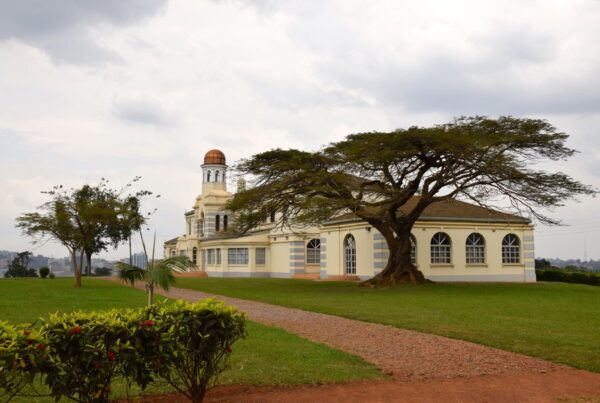
Namirembe Cathedral, St Paul’s, is the Anglican cathedral of Kampala, standing on Namirembe Hill with wide views over the city. The current red-brick building was completed in 1919 after earlier churches on the site were destroyed, and it is the mother church of the Church of Uganda. Its hilltop setting, history and Sunday services make it a rewarding stop.
History
Christian missionaries from the Church Missionary Society arrived in Buganda in 1877, and the first church on Namirembe Hill followed in the 1890s. Earlier buildings were lost to collapse and lightning, and the present cathedral was consecrated in 1919. The graveyard holds notable figures, including the medical missionary Sir Albert Cook, founder of Mengo Hospital nearby.
Visiting
Visitors are welcome outside services, and attending a Sunday service, with its choir and lively singing, is a memorable experience; dress modestly. The cathedral grounds offer some of the best views of Kampala’s hills. Allow 30 to 60 minutes.
Combining your visit
Namirembe is close to Mengo and the Kabaka’s Palace, and to Lubaga’s Catholic cathedral on the next hill. The gorilla permit costs US$800, or US$600 in April, May and November. See our guides to Kampala’s religious landmarks, the Uganda National Mosque, the Kabaka’s Palace and the Namugongo Martyrs Shrine.
Frequently asked questions
The current building was completed in 1919.
The Anglican Church of Uganda.
Yes, visitors are welcome at Sunday services.
Notable figures include Sir Albert Cook, founder of Mengo Hospital.
Namirembe’s History and Architecture
Namirembe Cathedral, the Anglican cathedral of the Diocese of Kampala, occupies one of Kampala’s seven hills and has served as the spiritual centre of Ugandan Anglicanism since its construction in the late 19th century. The current building — the fourth structure on the same hill since the first temporary church of 1890 — was completed in 1919 after a series of fires destroyed its predecessors, and its colonnaded exterior and decorative stained glass windows make it one of the more architecturally refined religious buildings in Kampala. The cathedral’s position on a hill visible from much of the city gives it the same topographic prominence that the National Mosque on Old Kampala Hill and the Rubaga Catholic Cathedral on Rubaga Hill share — a three-way religious landmark that defines Kampala’s skyline from most viewing directions.
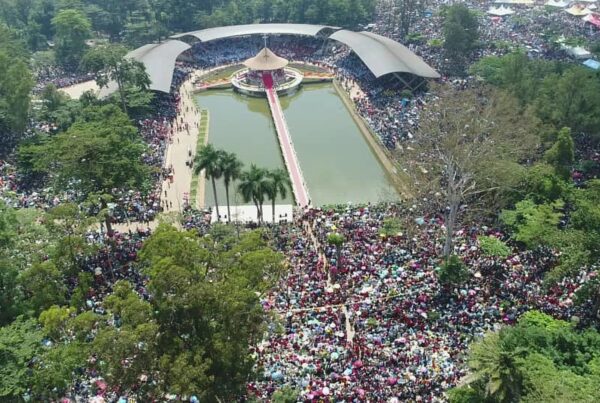
The graves of the Uganda Martyrs — the young pages of King Mwanga II who were killed for refusing to renounce their Christianity in 1886, and who are commemorated at the Martyrs Shrine at Namugongo — include several buried on Namirembe Hill. The cathedral’s museum and the graves on the hill grounds provide a physical connection to the events that shaped the religious identity of the Buganda Kingdom and, through it, much of southern Uganda’s Christian community. The annual pilgrimage to Namirembe on June 3rd, drawing tens of thousands of worshippers from the Buganda region, is one of Kampala’s most significant religious observances.
Visitor access to Namirembe Cathedral is available daily during daylight hours, and the volunteer guides who typically approach visiting tourists provide an informal history of the building and its significance that supplements the informational panels in the entrance area. The cathedral’s bookshop carries publications on Ugandan church history and the Uganda Martyrs specifically — a relevant library resource for visitors with an interest in the religious dimensions of Uganda’s history.
Visiting Namirembe: What to Expect
The visitor approach to Namirembe Cathedral is most rewarding when made on foot from the Mengo area rather than arriving directly by vehicle — the walk up the hill through the old residential quarter of Mengo provides the urban density context from which the cathedral’s hilltop position emerges as a genuinely commanding elevation. The cathedral building’s interior — open to visitors outside of service times and during the daily quiet hours that the caretaking team maintains — contains the historical documentation panels that trace the diocese’s history from the first missionaries through the martyrs period to the post-independence church governance. The graves on the cathedral’s grounds include several Ugandan church leaders alongside the graves of some of the British missionaries who established the CMS presence in Buganda — a physical representation of the institutional continuity across the colonial and post-colonial periods that the Anglican Diocese of Kampala’s history embodies. The bookshop at the cathedral entrance carries a range of publications on Ugandan church history, the Uganda Martyrs specifically, and the broader history of Christianity in the Great Lakes region — a useful acquisition for visitors who find the historical dimension of the cathedral visit more engaging than the architectural dimension, and who want the reading material to extend the interpretation that the site visit begins.