Updated
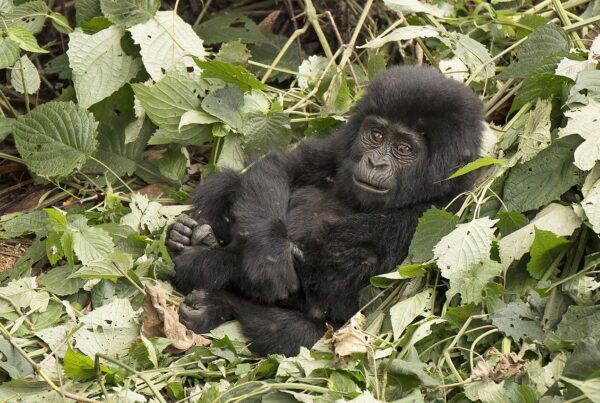
camera traps gorilla conservation technology is a subject central to Uganda’s wildlife tourism, where mountain gorilla conservation and responsible visitor experiences go hand in hand. Mountain gorilla conservation has always been a data-hungry endeavour — and the shift from manual observation to camera trap networks, DNA analysis from fecal samples, and satellite-based habitat monitoring over the past two decades has transformed researchers’ ability to track individuals, assess population health, and detect early signs of disease or poaching activity across the full 780 square kilometres of mountain gorilla range in Uganda, Rwanda, and the DRC without disturbing a single animal. Camera traps deployed across Bwindi Impenetrable National Park by Uganda Wildlife Authority and conservation partners provide continuous monitoring that supplements the daily ranger tracking of habituated families. See Uganda gorilla safari packages that contribute directly to conservation through permit revenue.
- Camera traps: passive cameras triggered by motion — monitor gorilla behaviour and movement without human disturbance
- Individual identification: gorillas identified by unique nose prints (like human fingerprints); also by face shape, ear shape, and body markings
- DNA analysis: fecal samples collected non-invasively yield population genetics data without capturing animals
- Population census: the 2018 census confirmed 1,063 mountain gorillas — the first time the population exceeded 1,000
- Citizen science: iNaturalist and similar platforms used for biodiversity monitoring in Bwindi’s broader ecosystem
The conservation of mountain gorillas has always been a data-hungry endeavour. Understanding population dynamics, health status, habitat use, and the impacts of human disturbance requires sustained, systematic monitoring of individual animals and their groups across a vast forest landscape. For much of the 20th century, this monitoring depended entirely on the physical presence of trained researchers and rangers — walking the forest daily, identifying individuals by nose prints, recording observations in notebooks. The work was invaluable. It was also resource-intensive, physically demanding, and limited to the small proportion of the forest that humans could access and observe.
Camera traps and citizen science: how technology is transforming gorilla conservation
The camera trap revolution
Camera traps — motion-triggered cameras deployed at fixed locations in the forest — have transformed wildlife monitoring across the tropics, and mountain gorilla conservation is no exception. Where a researcher can observe one location at one time, a network of camera traps observes dozens of locations continuously, capturing images and video of every animal that passes, regardless of time of day or human access constraints.
In the forests of Bwindi, Mgahinga, and the Virunga Massif, camera traps have documented: gorilla social interactions that would be difficult to observe directly; the use of forest zones that rangers rarely visit; the movements of non-habituated gorilla groups that maintain their distance from humans; the presence and activity patterns of other wildlife sharing gorilla habitat; and poaching activity — snares, evidence of human incursion, and occasionally the poachers themselves.
The technology has evolved rapidly. Early camera traps produced relatively low-resolution images triggered by passive infrared sensors that detected heat and movement. Modern systems include high-resolution video capability, real-time data transmission via cellular networks, solar power charging, and artificial intelligence image classification that can automatically identify species from captured images without requiring human review of every photograph.
AI image recognition and the data flood
A well-deployed camera trap network in a national park can generate millions of images per year. Reviewing this data manually — identifying every species in every image — would require more staff-hours than most conservation programmes can afford. AI image recognition has become essential for processing this volume of data efficiently.
Platforms like Wildlife Insights, developed by Google, Conservation International, and partner organisations, use deep learning models trained on large databases of wildlife images to automatically classify species in camera trap photos. These tools achieve high accuracy for common, easily distinguished species and are improving continuously as more training data becomes available. For mountain gorillas specifically, algorithms can now identify individual animals by facial features and marking patterns with increasing reliability — the digital equivalent of the nose-print identification cards that researchers have maintained for decades.
Individual identification at scale is significant: it means that the movements of specific gorillas through the landscape can be tracked across time without requiring continuous human presence at any location. Population dynamics — which individuals are reproducing, which groups are growing or declining, how juveniles mature and disperse — can be monitored with much greater resolution than was previously possible.
Acoustic monitoring
Sound-based monitoring — acoustic sensors that record environmental audio and software that identifies species from vocalisations — is an increasingly valuable complement to camera trapping. Gorillas produce distinctive vocalisations including the silverback’s chest beat, belch vocalisations indicating group contentment, and alarm calls that signal disturbance. Passive acoustic monitoring can detect gorilla presence and estimate group location without any visual observation, providing coverage of areas where camera trap networks are sparse.
Acoustic monitoring is particularly valuable for detecting poaching. Gunshots, snares being set (distinctive metallic sounds), and human voices in restricted areas can all be detected by acoustic sensors and transmitted in near-real-time to park management systems. The Guardian system, developed by Rainforest Connection, has been deployed in several African forests specifically for anti-poaching acoustic surveillance, and similar systems are being tested in gorilla range countries.
Citizen science and community monitoring
Technology has expanded the range of people who can contribute meaningfully to conservation monitoring. Citizen science programmes — structured projects in which members of the public collect and submit data according to standardised protocols — have transformed the scale at which ecological monitoring can operate.
For mountain gorilla conservation, citizen science contributions come primarily through image classification platforms. Camera trap networks generate more images than paid research staff can review efficiently, but the classification task — identifying which images contain animals, and what species — can be distributed across large numbers of online volunteers with brief training. Platforms like Zooniverse have run gorilla camera trap classification projects that engaged thousands of volunteers globally, dramatically accelerating the rate at which image archives can be processed and analysed.
Community-based monitoring is a different but equally important form of citizen engagement. Local communities living near gorilla habitat have detailed knowledge of forest conditions, animal movement patterns, and unusual disturbances that complements the data collected by formal monitoring systems. Community ranger programmes in Bwindi train local residents — particularly from villages with traditional forest knowledge — to collect standardised ecological data during their regular movements through the landscape. This data is integrated with the camera trap and GPS tracking datasets to produce a more complete picture of what is happening across the whole ecosystem.
Health monitoring from a distance
One of the most significant conservation challenges for mountain gorillas is disease transmission from humans. Gorillas are susceptible to virtually all human respiratory pathogens, and an outbreak of a common human cold among a habituated group can have serious consequences — mountain gorilla populations are small enough that disease mortality has measurable demographic impacts.
Non-invasive health monitoring — collecting and analysing faecal samples to detect pathogens, assess parasite load, and measure hormonal stress indicators — has been practised by researchers for decades. Technology is now enabling more of this monitoring to happen remotely. Faecal sample collection by community monitors and trained rangers, combined with rapid field diagnostic tests and laboratory analysis of banked samples, provides a rolling health assessment for monitored gorilla groups without requiring direct veterinary examination of individual animals.
What this means for the future
The integration of camera traps, acoustic monitoring, AI image processing, community science, and health surveillance is producing a qualitatively different type of conservation intelligence than was available even a decade ago. Managers of gorilla habitats can now monitor more of the population, more continuously, with greater individual resolution, at lower cost per data point than at any previous point in the history of the programme.
This improved intelligence enables more targeted interventions: anti-poaching patrols directed by acoustic alerts rather than random deployment; veterinary responses triggered by health monitoring rather than waiting for visible signs of illness; habitat management decisions informed by data on which forest zones gorillas actually use rather than assumptions about what they need. The technology does not replace the field rangers, community monitors, and researchers whose physical presence in the forest remains irreplaceable — but it amplifies their effectiveness significantly. The combination of traditional conservation knowledge and modern monitoring technology is the most powerful tool available for securing the mountain gorilla’s future.
How are individual mountain gorillas identified by researchers?
Each mountain gorilla has a unique nose print — the wrinkled surface of the nose bridge creates a pattern that is as individually distinctive as a human fingerprint. Researchers use detailed nose print drawings and photographs to identify individuals across decades of monitoring. Beyond nose prints, facial structure, ear shape, body markings, scars, and silver-grey saddle patterns in adult males provide additional identification criteria. Camera trap images allow automated or semi-automated matching against databases of known individuals. This identification system enables researchers to track the life history of specific gorillas from birth to death without ever capturing or physically marking the animal — a non-invasive monitoring approach that is now standard across great ape field research.
How is DNA used to monitor mountain gorilla populations?
Fecal DNA analysis is one of the most valuable tools in mountain gorilla conservation biology. Gorilla droppings collected in the field yield sufficient DNA for individual identification, sex determination, and population genetics analysis — without capturing or disturbing any animal. This technique allows researchers to detect previously unknown individuals in non-habituated groups (gorillas that have not been brought into the habituation programme for tourism), to estimate gene flow between family groups, and to assess genetic diversity across the population. Low genetic diversity — a consequence of small population size — is a key risk factor for the long-term viability of the mountain gorilla population, and DNA monitoring tracks this metric across the census cycle. The 2018 census used a combination of direct observation and fecal DNA to confirm the 1,063-individual population count.
What did the 2018 mountain gorilla census reveal?
The 2018 census — the most recent comprehensive survey of the mountain gorilla population — confirmed 1,063 individuals across the Virunga range (Uganda, Rwanda, DRC) and Bwindi. This was the first time in recorded history that the population had exceeded 1,000 individuals, reversing the population decline that had dropped mountain gorillas to an estimated 254 individuals in the early 1980s at their lowest point. The census result allowed the IUCN to reclassify mountain gorillas from Critically Endangered to Endangered on the Red List — still a threatened species requiring active conservation, but no longer facing imminent extinction risk if current protection standards are maintained. The 1981-to-2018 recovery from 254 to 1,063 individuals is one of conservation’s most cited success stories.
How do camera traps help detect poaching in Bwindi?
Camera traps positioned at known forest entry points, snare hotspots, and along boundary areas capture images of human activity inside the park as well as wildlife movement. Images of poachers, snare-setters, or illegal timber harvesters collected from camera traps provide evidence for ranger prosecution cases and help identify patterns of illegal entry — particular areas, particular times of day, particular routes. Camera trap data also shows whether snare removal patrols are effective by tracking animal activity in previously snared areas. Uganda Wildlife Authority rangers check camera trap stations on regular patrol cycles, retrieving data and replacing batteries. The technology has significantly strengthened the evidence base for anti-poaching enforcement in Bwindi’s boundary areas.
Can tourists contribute to gorilla conservation science?
Yes — in several ways. The most direct contribution is through the $700 gorilla permit, a significant portion of which funds Uganda Wildlife Authority’s monitoring and conservation programmes. Additionally, iNaturalist — a citizen science platform where users upload and identify wildlife observations — has been used in Bwindi’s surrounding ecosystems to document biodiversity. Visitors who photograph wildlife, plants, or birds at Bwindi and upload them to iNaturalist contribute to a globally accessible dataset. Some conservation organisations operating at Bwindi offer visitor-funded research participation opportunities. The Gorilla Doctors programme, which monitors and treats injured or sick gorillas, accepts donations from visitors directly. Every legitimate purchase from Bwindi-area community cooperatives also supports the conservation economy indirectly by sustaining community income tied to the park’s existence.
- Camera traps and conservation technology: how scientists monitor Bwindi’s gorillas
- Meet the conservationist protecting mountain gorillas in the heart of the impenetrable forest.
- Exploring the Uganda Wildlife Conservation Education Centre
- Best Camera for Gorilla Trekking: From Phone to Professional DSLR
- Is Gorilla Trekking Ethical? The Conservation Argument Explained
- Gorilla Conservation Success Story: How Tourism Saved Mountain Gorillas
- Gorilla Trekking for Photographers: Advanced Camera Tips
- Gorilla Conservation Success Story: How Tourism Saved the Species
- How Many Gorillas Are in Uganda? Population Numbers and Conservation Success
- Do Gorillas Have Emotions? What Science Says