Updated
volunteer gorilla conservation Uganda is a subject central to Uganda’s wildlife tourism, where mountain gorilla conservation and responsible visitor experiences go hand in hand. You cannot volunteer to work directly with mountain gorillas in Uganda. Monitoring, tracking and veterinary care are done by Uganda Wildlife Authority rangers, trained researchers and professional vets, and the rules that limit human contact protect the gorillas from disease. What you can do is volunteer with the people and organisations around Bwindi whose work keeps the forest safe: a community hospital, a public-health conservation charity, local schools and women’s groups, and tree-planting projects. This guide explains which openings are real, who they suit, and how to tell a genuine placement from a paid package that adds little.
Best Volunteer Opportunities With Gorilla Conservation in Uganda
Why gorilla volunteering is limited
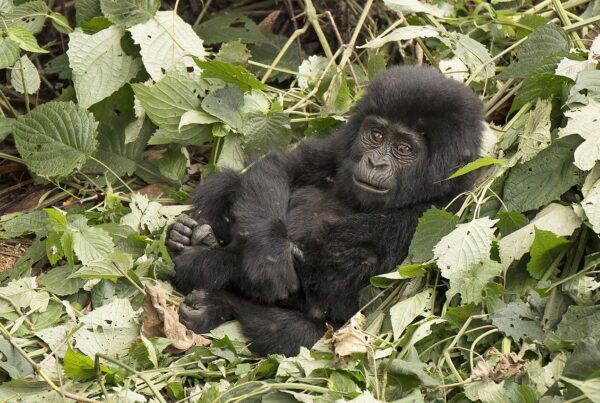
Mountain gorillas share about 98% of our DNA and catch human illnesses easily, from colds to measles and COVID-19. That is why tourists get one hour, wear masks and keep at least 7 m away, and why the park does not let untrained volunteers join the teams that follow gorilla families every day. Those teams are UWA trackers, many of them local men who have done the job for years, working with researchers who hold formal research permits.
Any website that promises volunteers will “help track and protect gorillas” for a fee should be treated with suspicion. At best you will join a normal trek with a paid permit; at worst you pay a large sum for a holiday dressed up as conservation work. The genuine openings are around the park, not inside the gorilla groups.
Bwindi Community Hospital: for medical and health professionals
Bwindi Community Hospital in Buhoma began in 2003 as an outreach clinic under a tree, started by American doctor Scott Kellermann to serve the Batwa who had been moved out of the forest. It has grown into a full hospital of over 100 beds with a nursing school, serving well over 100,000 people in a remote area where good healthcare was once a day’s travel away.
The hospital welcomes applications from qualified doctors, nurses, midwives and laboratory staff, and from medical and nursing students doing electives. Volunteers work alongside Ugandan colleagues, supporting clinical care, teaching and quality-improvement projects. Longer placements of several months are the most useful to the hospital. The connection to conservation is real: healthy families who see the benefits of living next to a protected forest are far less likely to depend on it for bushmeat or firewood. Apply through the hospital’s own website, not an agency.
Conservation Through Public Health
Conservation Through Public Health (CTPH) was founded by Dr Gladys Kalema-Zikusoka, Uganda’s first wildlife vet, and works around Bwindi on the link between human, animal and gorilla health. It trains village health volunteers, runs family-planning and hygiene programmes, monitors disease that could pass between people, livestock and gorillas, and helped write the guidelines on preventing disease spread that gorilla tourism follows today.
CTPH has hosted veterinary externs, students and interns on defined projects, usually chosen through an application and interview. Placements suit people studying veterinary medicine, public health, ecology or communications who can commit several weeks or longer. Even if you cannot volunteer, you can support its work by buying Gorilla Conservation Coffee, the social enterprise CTPH set up with coffee farmers near Bwindi, or by visiting its Gorilla Conservation Camp in Buhoma.
Research placements
Scientific research in Bwindi is based mainly at the Institute of Tropical Forest Conservation (ITFC) at Ruhija, run by Mbarara University of Science and Technology, alongside international organisations such as the Wildlife Conservation Society and the Max Planck Institute’s gorilla research. These are not volunteer programmes in the usual sense. Places go to students and researchers with a university affiliation, a supervisor and a project.
Foreign researchers need approval from the Uganda National Council for Science and Technology and a research permit from UWA before starting fieldwork. If you are a postgraduate student in ecology, primatology or conservation, the realistic route is to work through your university supervisor and contact the research station well in advance.
For the vets who treat sick or snared gorillas, see our guide to Gorilla Doctors in Bwindi. They are a professional team and do not take casual volunteers.
Community projects, schools and tree planting
Around Buhoma, Nkuringo and Rushaga, small community organisations run women’s craft cooperatives, school support, Batwa projects and tree nurseries. Some take short-term volunteers, often with a modest fee for food and lodging, and lodges can usually arrange a half-day visit or tree-planting session during your stay. These short visits are best seen as a way to learn and to spend money locally, not as a contribution of skills.
Be careful with schools and orphanages. Short-term volunteers teaching for a week or two can disrupt children’s learning, and orphanage volunteering is widely discouraged because it can encourage the separation of children from families. A teacher-training or classroom role makes sense only if you are qualified and can stay for a term or more. For the Batwa, joining the community-led Batwa cultural experience often does more good than an unskilled placement.
Chimpanzee sanctuary volunteering
If you want hands-on work with apes, the closest option is the Chimpanzee Trust’s sanctuary on Ngamba Island in Lake Victoria, which cares for orphaned and rescued chimps. It has offered paid volunteer stays alongside the caregivers, preparing food and helping with daily routines rather than touching the chimps. Check what is currently available directly with the trust.
Visas and paperwork
Uganda’s tourist visa does not cover work, and immigration treats many volunteer placements as work. Short-term volunteers are usually expected to hold a Special Pass, applied for online with a letter from the host organisation and valid for up to three months, with the option to extend. Longer stays need a work permit. Ask your host organisation which document it requires before you travel. Medical volunteers also need their professional registration checked by the relevant Ugandan council.
How to judge a placement
Good placements are run or requested by Ugandan organisations, ask for skills they actually need, and expect a minimum stay of several weeks. They say clearly where your fee goes and do not promise contact with gorillas or children. Ask how local staff are involved, what happened to the last volunteer’s work, and whether the role could be filled by a paid Ugandan. If the honest answer is yes, a donation may help more than your time.
Other ways to help gorillas
For most visitors, the most effective contribution is simply to trek responsibly. A gorilla permit costs US$800 (US$600 in April, May and November), and the money pays for rangers and monitoring, while part of it goes to communities around the park. If you want more time with gorillas, the four-hour Gorilla Habituation Experience costs US$1,500, rising to US$1,800 in 2027. You can also stay at lodges that invest in local communities, hire local guides and porters and buy crafts directly from makers. Our guide to responsible tourism in Uganda has more ideas.
Frequently asked questions
Not directly. Gorilla monitoring and care are done by UWA rangers, researchers and professional vets. Volunteers work with community, health and conservation organisations around Bwindi instead.
Yes. It accepts qualified doctors, nurses, midwives and laboratory staff, as well as medical and nursing students on electives. Apply through the hospital’s website.
Usually yes. A tourist visa does not cover work, and short-term volunteers normally need a Special Pass supported by a letter from the host organisation.
Buy a permit and follow the trekking rules, stay at lodges that support local communities, and back organisations such as CTPH, for example through Gorilla Conservation Coffee.