TALK TO AN EXPERT +256 716 068 279 WHATSAPP OPEN NOW.
Children & Family Education

How scientists count gorillas: wildlife monitoring methods explained

Home / Travel News, Stories & Tips / Children & Family Education / How scientists count gorillas: wildlife monitoring methods explained

One of the most common questions asked by visitors at Bwindi’s pre-trek briefings is remarkably simple: how do researchers actually know how many gorillas there are? The answer reveals a sophisticated system of field methods, long-term monitoring, international coordination and occasional adventurous fieldwork that together produce the population numbers cited in conservation reports. For anyone interested in how conservation science actually works — rather than just its headline outcomes — the methodologies behind gorilla counts are genuinely fascinating.

Individual identification: the foundation of everything

Mountain gorilla population counts are built on individual identification — the ability to distinguish one gorilla from another by physical characteristics. Unlike large mammals where individual identification requires expensive tagging or genetic sampling, gorillas can be reliably identified from photographs of their nose prints. Each gorilla’s nose has a unique pattern of creases, folds and profile — as distinctive as a human fingerprint. Field researchers photograph the nose prints of every known gorilla, and new individuals encountered during monitoring are photographed and entered into a reference database. An encounter with an unknown gorilla — not matching any nose print in the database — indicates either a new birth or immigration from an unmonitored group.

Daily monitoring of habituated groups

The habituated gorilla families in Bwindi — those accustomed to human presence and accessible for tourism — are monitored daily by research and ranger teams. Each monitoring visit records the group’s location, size, composition (number of silverbacks, blackbacks, females and infants), health observations and notable behaviours. These daily records, accumulated over decades for some families, constitute an extraordinary longitudinal dataset on mountain gorilla demography, life history and social dynamics. Births, deaths, immigrations and emigrations are all recorded; the resulting data allows researchers to calculate survival rates, generation lengths and population growth rates with a precision unusual for a species with only 1,000 individuals worldwide.

Census methods for unhabituated groups

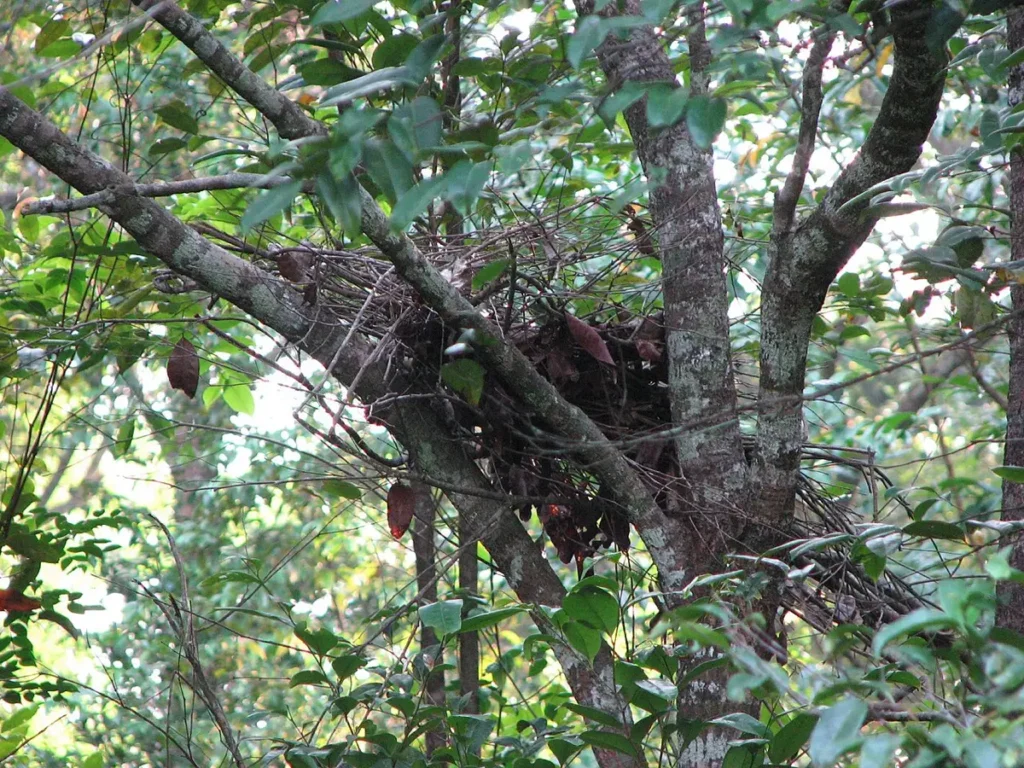
The habituated families represent roughly half the gorilla population. The other half — unhabituated groups that flee from human contact — requires different methods. Systematic transect surveys, where trained teams walk defined survey lines through the forest and count fresh gorilla signs (nests, footprints, dung, feeding remains), provide density estimates for unhabituated areas. Night-nest counts are particularly reliable: gorillas build a new sleeping nest each night, and fresh nests with dung allow accurate counting of individual animals, including size-class estimates from nest diameter. Teams from multiple organisations survey different sectors simultaneously to produce a total population estimate at a defined point in time.

The Bwindi Gorilla Census: a periodic stocktake

A formal gorilla census — a comprehensive survey of the entire Bwindi population — is conducted approximately every five years. The most recent Bwindi census combined data from habituated group monitoring (providing exact counts for known individuals) with transect and nest surveys in unhabituated areas (providing density estimates). Genetic sampling from dung allows molecular identification of individuals encountered during transect surveys, providing a cross-check on count accuracy. The result is a population estimate with a confidence interval rather than a single precise number — honest science acknowledging the inherent uncertainty in counting elusive animals in dense mountain forest.

Technology’s growing role: camera traps and DNA

Camera trapping adds a non-invasive layer to gorilla monitoring, particularly for individual identification in unhabituated areas where researchers cannot approach closely enough for nose print photography. Genetic analysis of dung samples provides a completely independent method of individual identification — each gorilla’s DNA profile is as unique as a nose print — and allows sex determination and population connectivity analysis that behavioural monitoring cannot provide. Acoustic monitoring, using sound recorders that detect gorilla vocalisations, is an emerging method for estimating group location and distribution without direct observation. Each technology adds a data layer that cross-validates and enriches the picture produced by traditional field methods.

Why population growth is not simple addition

When researchers report that the Bwindi mountain gorilla population has grown from approximately 320 in 1989 to over 460 today, the figure seems straightforwardly positive. But understanding what drives that growth — and what could reverse it — requires the demographic detail that long-term monitoring provides. Infant survival rates, inter-birth intervals, silverback tenure lengths and the frequency of group fissions all influence population trajectory in ways that aggregate counts cannot capture. The monitoring system exists precisely to detect early signs of decline — a rise in infant mortality, increased group instability, an emerging disease — before it becomes a population-level problem. The count is the headline; the monitoring system is the warning system.

What trekkers contribute to the data

Every gorilla trek generates data. The trackers’ observation records from each daily encounter — individual identifications, health observations, group composition notes — are entered into the long-term monitoring database maintained by the Bwindi Gorilla Research Centre and the Dian Fossey Gorilla Fund. Visitors sometimes notice that their guide takes notes during the trek; this is the data collection process operating in real time. The tourism system and the monitoring system are not separate — they use the same daily encounters to generate both income and scientific information simultaneously. A trekker who requests their guide’s notes or asks questions about the monitoring process is engaging with the science that underpins the conservation outcome they came to see.

Ready to experience Uganda’s mountain gorillas in 2026? Secure your gorilla permits early and let us craft a seamless safari tailored to your travel style, preferred trekking sector, and accommodation level. From luxury lodges to well-designed midrange journeys, every detail is handled for you. Every itinerary is carefully planned to maximize your time in the forest while ensuring comfort, safety, and unforgettable encounters.

Have questions about gorilla permits, travel dates, or the best itinerary for you? Speak with a safari expert and get clear, honest guidance to plan your trip with confidence.

When is the last time you had an adventure? African Gorillas!!! Up Close With Uganda’s Wild Gorillas Touched by a Wild Gorilla: An Unforgettable Encounter Inside Gorilla Families: Bonds, Hierarchies & Jungle Life Face to Face With a Silverback: The Wild Encounter You’ll Never Forget