

Updated
Posho is Uganda’s stiff maize-flour porridge, made by stirring white maize flour into boiling water until it forms a thick, smooth dough that holds its shape. Known as ugali in Kenya and Tanzania, it is cheap, filling and eaten with beans, groundnut sauce, greens, fish or meat stews. It is the everyday staple in schools, workplaces, prisons and many homes, and the most common food in Uganda after matoke. Here is how it is made, eaten and where to try it.
How posho is made
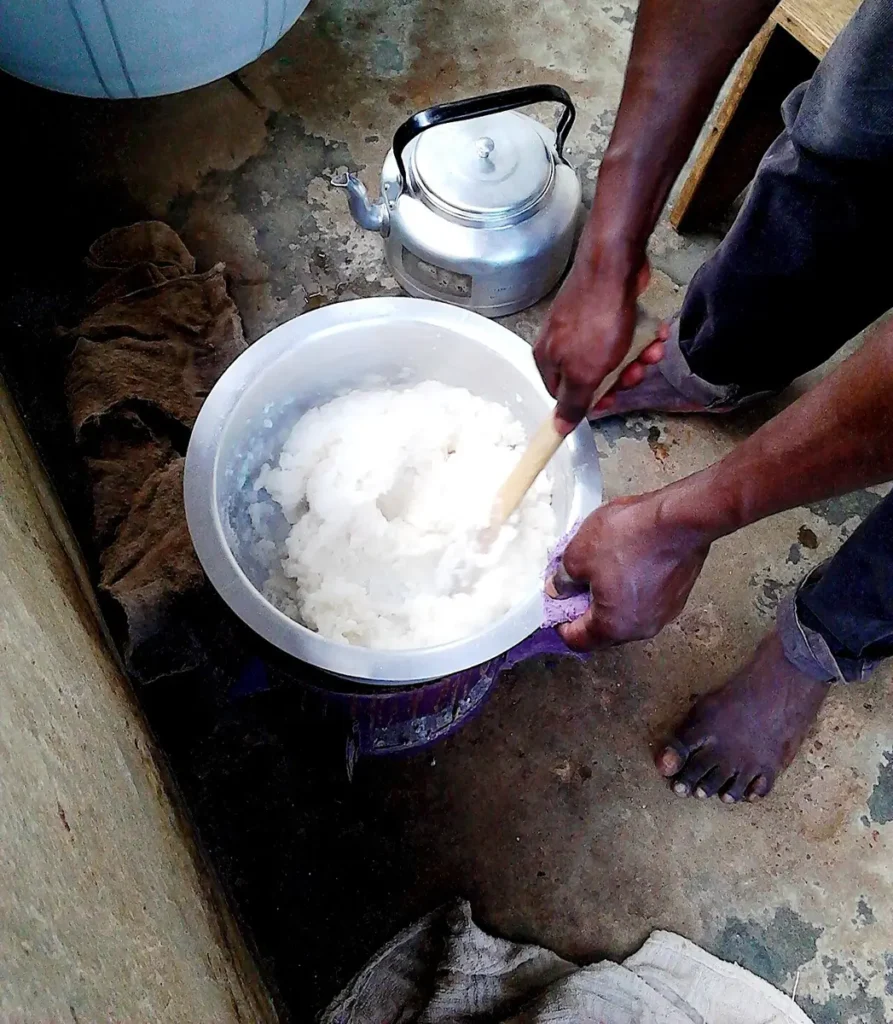
Water is brought to the boil, and maize flour is added gradually while stirring hard with a wooden spoon or paddle, called a mwiko, to prevent lumps. As it thickens, more flour is worked in until the mixture pulls away from the sides of the pan, then it is pressed and turned for a few more minutes to cook through. The finished posho is shaped into a mound and cut into slices or served in scoops. A thinner version, uji or porridge, often made with millet or maize, is drunk at breakfast.
How it is eaten
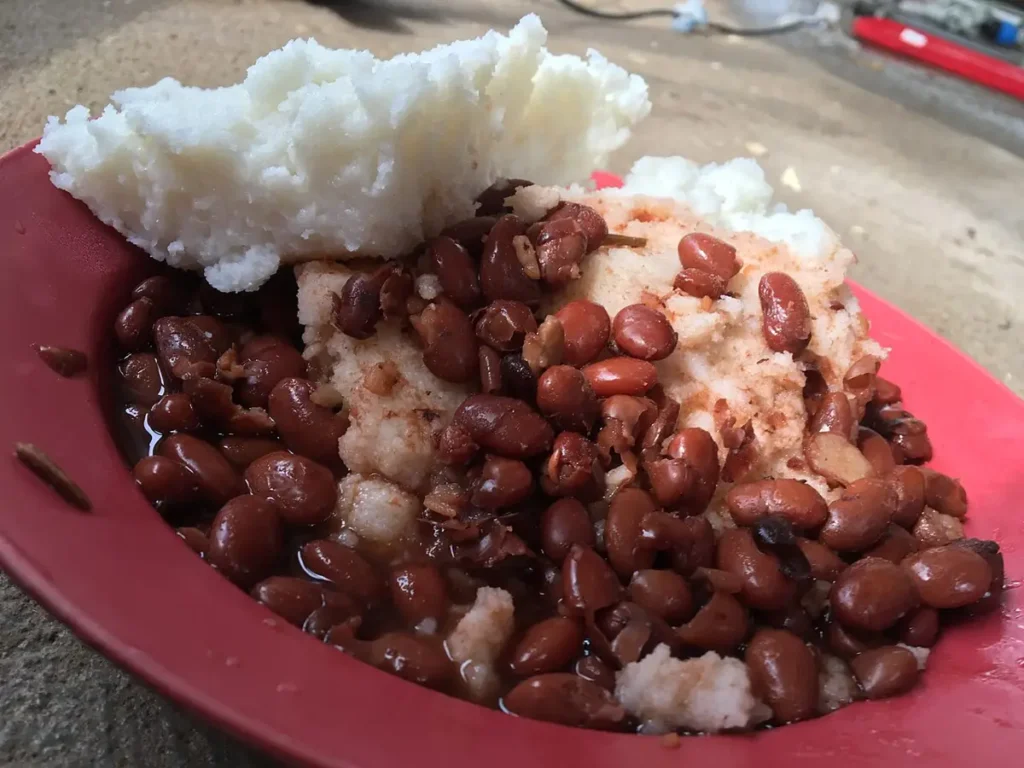
Posho itself is mild, so the sauce matters. The classic pairing is “posho and beans”, served in schools and roadside eateries across the country, but it also goes with groundnut sauce, sukuma wiki or dodo greens, fried tilapia and beef or goat stew. Many people eat it with the right hand, rolling a small ball, pressing a dent with the thumb and using it to scoop sauce. See our guides to groundnut stew and matoke.
Why it matters
Maize became a major crop in Uganda during the 20th century, and posho spread as a cheap, easily stored food for institutions and growing towns. It is rich in energy but less nutritious than mixed diets, which is why it is usually paired with beans or groundnuts for protein. In the north and east, millet bread, known as kalo, plays a similar role, while in the central and western regions matoke is preferred for special meals.
Trying posho on your trip
Local restaurants and roadside eateries along the road to Bwindi serve posho and beans cheaply at lunchtime, and many lodges include it in Ugandan buffets on request. For a hands-on try, a cooking class or a market visit with a guide shows how it is made. See our guides to the Uganda cooking class and Ugandan food markets. The gorilla permit costs US$800, or US$600 in April, May and November.
Frequently asked questions
A stiff porridge of maize flour and water, Uganda’s version of ugali.
Beans, groundnut sauce, greens, fish or meat stew.
Yes, it is the same dish under a different name.
Plain maize flour is naturally gluten-free, but check for cross-contamination if you are sensitive.










