TALK TO AN EXPERT +256 716 068 279 WHATSAPP OPEN NOW.
Uganda Food & Culture

The Ugandan Rolex: the street food every visitor should eat

Home / Travel News, Stories & Tips / Tales from the Mist / The Ugandan Rolex: the street food every visitor should eat

It has nothing to do with the Swiss watch. The Ugandan Rolex is a street food — a rolled chapati wrapped around a freshly made egg omelette, available at roadside stalls throughout Uganda for the equivalent of thirty to fifty Uganda shillings. The name is a corruption of the phrase rolled eggs, heard frequently enough that the vendors who make them began calling the product a Rolex. It is Uganda’s most iconic street food, the fuel of schoolchildren, office workers, night shift drivers, and travellers arriving hungry at Entebbe in the small hours. Understanding the Rolex is the first step toward understanding how Ugandans eat.

The Rolex has become a cultural symbol out of proportion to its simplicity. It has its own festival — the Rolex Festival held annually in Kampala. It has inspired documentary coverage and food writing. It has been the subject of at least one academic research paper on Ugandan street food economies. And it tastes, undeniably, exactly as good as you hope it will when you try it for the first time standing beside a charcoal-fired griddle somewhere on Kampala’s Kampala Road.

How a Rolex is made

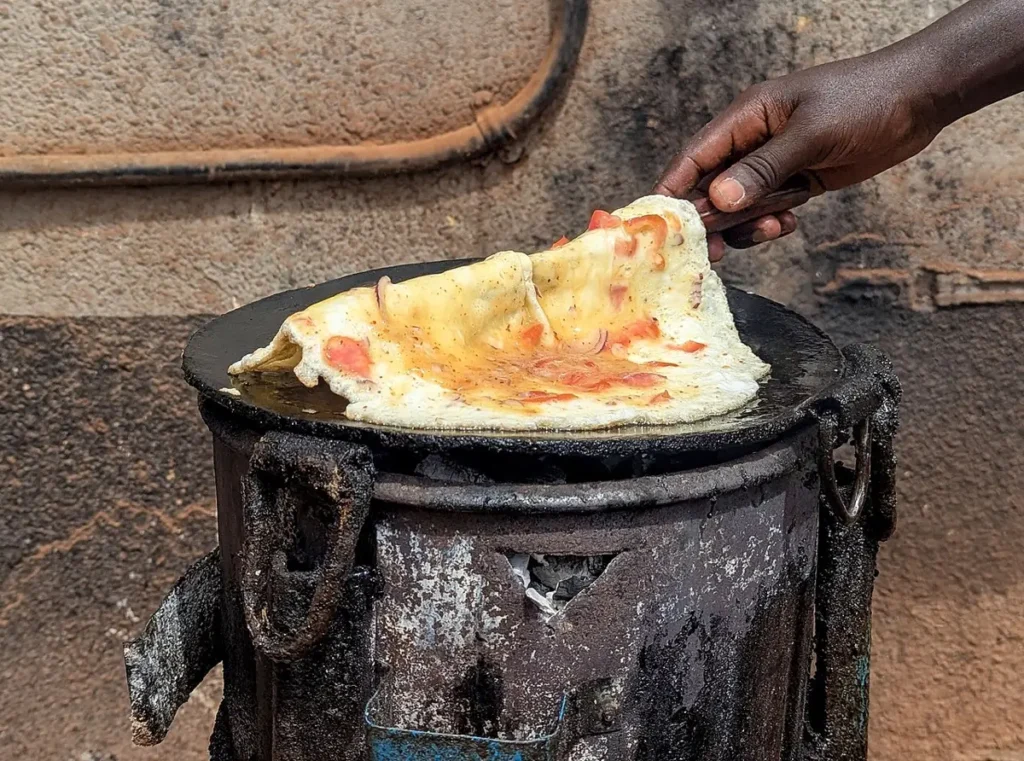
The technique is simple and takes about three minutes from order to eating. The vendor begins with a round of chapati dough that has been prepared in advance — a wheat flour flatbread enriched with a little oil, salt, and sometimes egg, rolled thin and cooked on a hot griddle until slightly charred in spots and cooked through. A good chapati is soft, slightly oily, with a distinctive chew from the wheat gluten. A fresh, hot chapati alone is excellent; the Rolex takes it further.

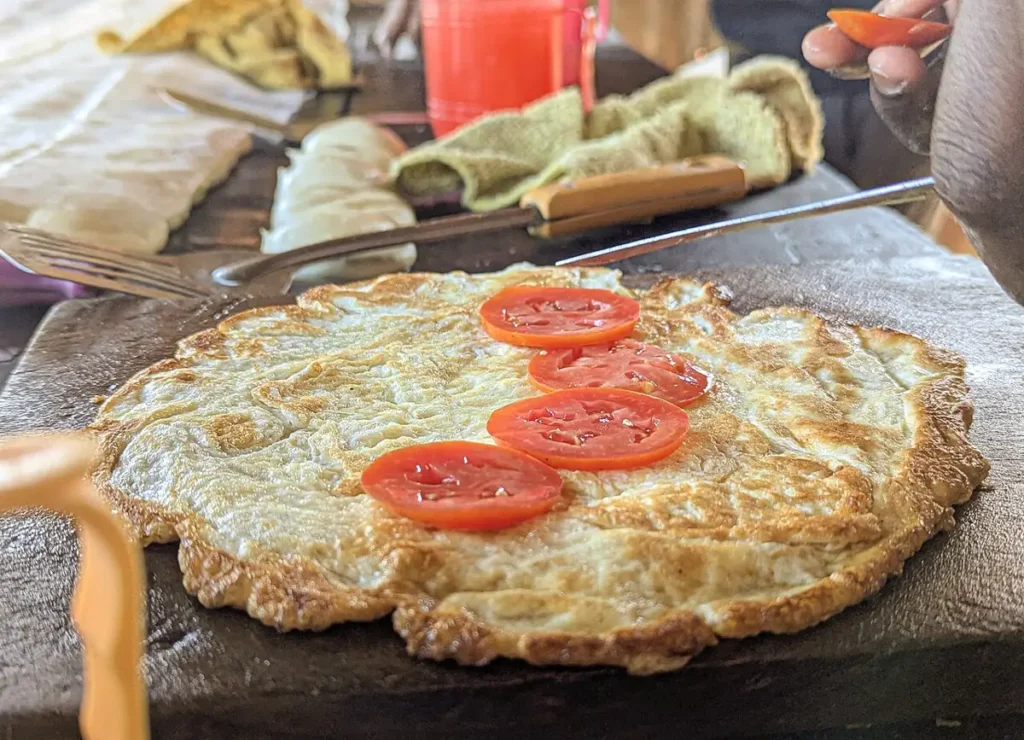
Once the chapati is cooked and still on the griddle, the vendor cracks one or two eggs into a bowl, beats them with a fork, and adds the customer’s chosen fillings. Standard additions are finely shredded cabbage, sliced tomato, and chopped onion. More elaborate versions include green peppers, red chilies, grated carrot, and slices of avocado. The egg mixture is poured onto the griddle beside the chapati, allowed to set into a thin omelette, and then the chapati is placed on top of the setting egg. The whole assembly is flipped once to seal the egg to the chapati, then rolled while still on the griddle into a tight cylinder that is handed over in a piece of newspaper or a paper bag.

The result in hand is a warm, substantial roll with the egg and vegetables sealed inside the chapati. The outside is slightly greasy, pleasantly charred in spots; the inside is soft egg and fresh vegetable with the warmth of the griddle still present. It is filling, balanced enough to constitute a proper small meal, and portable enough to eat standing at a street corner or sitting in a taxi park. It is also inexpensive enough that a visitor on any budget can eat three of them for less than the cost of a coffee at a Western-style café.

Where to find the best Rolex in Kampala

Rolex vendors operate from charcoal griddle setups throughout Kampala, but the quality varies significantly. The best Rolexes come from vendors who make high volumes of chapati daily — the dough improves with the cook’s daily practice and the griddle seasons better with constant use. Areas with high foot traffic and quick turnover produce fresher, more recently made chapati and eggs that have not been sitting waiting for customers.

The Old Taxi Park area in central Kampala is one of the most accessible concentrations of Rolex vendors for visitors. Owino Market and the surrounding streets have established vendors with years of experience. Wandegeya area near Makerere University has a strong street food culture where students’ demand has maintained high quality at low prices for decades. The Kikuubo commercial district in downtown Kampala has vendors operating from early morning through late evening catering to traders and market workers.

Outside Kampala, Rolex vendors are found at every major bus station, taxi park, and market town in Uganda. The quality on the road to Bwindi — in Mbarara, Kabale, and the towns between — is generally good because these are high-traffic road stops where vendors compete for bus passengers’ custom. Asking your driver-guide to stop at a recommended vendor on the road transfer to Bwindi is a reasonable request; most driver-guides have favourite spots they are happy to share.

Variations and upgrades

The basic Rolex has inspired a range of variations that reflect both culinary creativity and economic opportunity. Upmarket versions served at cafes and restaurants use higher-quality ingredients: eggs from local free-range chickens, freshly made chapati rather than pre-made, and fillings that might include mushrooms, green peppers, or even cheese. These restaurant Rolexes cost significantly more than street versions but are excellent lunch options that honour the original concept at a higher specification.

Some vendors offer meat Rolexes with minced beef or chicken mixed into the egg. Others add heat through a chili sauce applied before rolling. Sweet Rolexes, where the egg is replaced with honey and banana, appear occasionally but are more of a curiosity than a mainstream product. The classic vegetable Rolex remains the benchmark and is what most visitors order on their first encounter — it is the version that defines the dish.

Hygiene and safety for visitors

Street food is always a calculated risk in any developing country, but the Rolex is among the safer street foods available in Uganda because all components are cooked on a hot griddle immediately before eating. The egg is fully cooked. The chapati is freshly made or heated through. The vegetables are raw, which carries a small risk if the water source for washing them is not treated — but the cooking process applied to the egg and chapati creates a hot environment that mitigates most contamination risks in the assembly stage.

The practical advice for first-time visitors is to choose busy vendors with visible high turnover. Fresh eggs from vendors who crack them in front of you are safer than pre-beaten egg sitting in a bowl. Vendors working at established pitch locations with regular customers have incentives to maintain consistent hygiene standards. Your driver-guide’s recommendations carry weight here — they eat street food daily and know which vendors have earned consistent trust.

The Rolex Festival and cultural significance

The Rolex Festival is held annually in Kampala and celebrates the street food that Ugandans have adopted as a source of national culinary pride. The festival draws thousands of attendees and features Rolex competitions, live music, art, and food stalls offering both traditional and innovative versions of the dish. It has become an important Kampala cultural event that connects the city’s street food economy with tourism, media attention, and national identity in a way that few individual street foods manage anywhere in the world.

The cultural significance of the Rolex extends beyond the food itself. It represents the creativity of informal urban economies — the chapati vendor who made a practical adaptation and created something that spread city-wide through word of mouth and genuine quality. It is a food that crosses class lines; you see students, businesspeople, and visiting professionals all eating from the same vendor’s griddle. In a country with significant wealth inequality, the Rolex is a democratic pleasure that belongs to everyone equally.

Making your own Rolex at home

The Rolex is straightforward to replicate at home. The chapati recipe used in Uganda is slightly richer than Indian chapati — a little more oil in the dough, rested for at least thirty minutes, rolled to about two millimetres thickness. Cook on a dry cast iron pan over high heat until charred in spots and cooked through. The egg mixture is simply beaten eggs with finely shredded cabbage, sliced tomato, and chopped onion seasoned with salt. Pour onto the hot pan, allow to set to about eighty percent cooked, lay the chapati on top, flip together, then roll immediately and serve warm.

The technique is quick to master and the result reminds you, in a kitchen far from Kampala, of a food memory that most visitors to Uganda find disproportionately vivid among all the extraordinary experiences the country offers. The gorilla trek is why you go to Uganda. The Rolex is one of the things you find yourself thinking about on the long flight home.

Ready to experience Uganda’s mountain gorillas in 2026? Secure your gorilla permits early and let us craft a seamless safari tailored to your travel style, preferred trekking sector, and accommodation level. From luxury lodges to well-designed midrange journeys, every detail is handled for you. Every itinerary is carefully planned to maximize your time in the forest while ensuring comfort, safety, and unforgettable encounters.

Have questions about gorilla permits, travel dates, or the best itinerary for you? Speak with a safari expert and get clear, honest guidance to plan your trip with confidence.

When is the last time you had an adventure? African Gorillas!!! Up Close With Uganda’s Wild Gorillas Touched by a Wild Gorilla: An Unforgettable Encounter Inside Gorilla Families: Bonds, Hierarchies & Jungle Life Face to Face With a Silverback: The Wild Encounter You’ll Never Forget