Updated
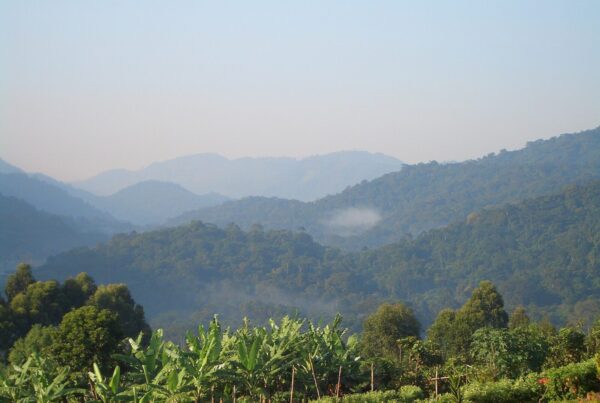
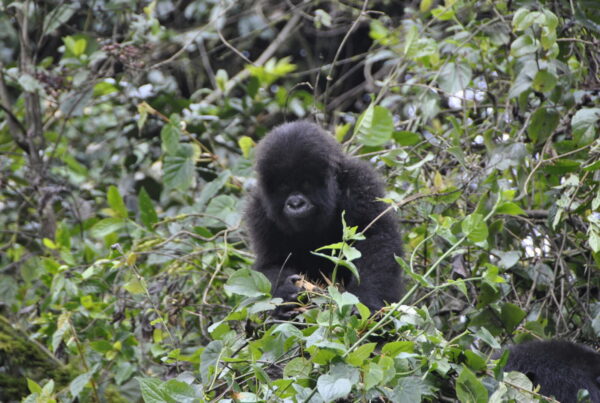
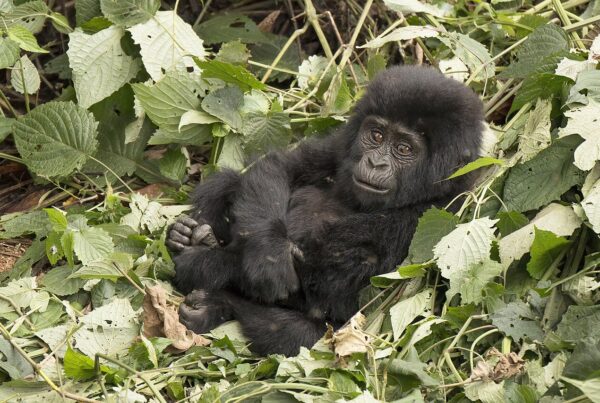
why grown men cry gorilla trekking Bwindi Uganda is one of Africa’s most extraordinary wildlife experiences, connecting travellers with mountain gorillas in their natural forest habitat. Why the Bwindi Forest makes grown men weep without warning is a question I have thought about since I watched a retired military officer stand in silence for a full minute with tears running down his face, three metres from a mountain gorilla family, clearly unable to explain to himself what was happening. He was not embarrassed, exactly — just surprised. He had not come to Uganda to be moved to tears. He had come, as he put it, “for the bucket list item.” He left with something considerably larger than a tick on a list.
Why the Bwindi Forest Makes Grown Men Weep Without Warning
The Type of Men Who Cry in Bwindi
I want to be specific about this because the specificity matters. It is not the obviously sentimental who are most consistently undone by Bwindi. It is the people who have spent the most effort constructing a stable identity around not being moved — the military men, the executives, the self-described “not a wildlife person” types who came along because their partner wanted to and were planning to enjoy it without being changed by it.
Ask any gorilla trekking guide in Bwindi which visitors are most likely to cry, and the consistent answer is: the ones who were sure they would not. There is something specific about the gap between the prepared, defended self and what the forest does to it.
Patrick, a guide at Buhoma with twelve years of experience, says: “The men who say before we start, ‘I am not a crier’ — those are the ones I watch. Because they almost always cry.”
Factor One: The Physical Stripping
The gorilla trek physically strips away the markers of status and competence that most adults use as emotional scaffolding. By the time you have been walking for ninety minutes through terrain that is genuinely impenetrable, with branches grabbing your clothing and mud on your boots and your heart rate higher than it has been since you were thirty, you are no longer a successful executive or a decorated officer. You are a biped mammal trying to move through a forest, and you are not particularly good at it.
This stripping is not humiliating. It is clarifying. The forest does not care about your credentials, your title, your net worth, or your rank. It applies the same terrain to everyone. The uniform this produces — sweaty, tired, a bit muddy, very alive — is actually the uniform of honesty, and honest physical experience tends to reach things that defended experience cannot.
Factor Two: The Animal’s Indifference
The mountain gorilla’s indifference to human status is, paradoxically, one of the most affecting things about the encounter. The silverback who looks at you for two seconds and then goes back to eating is not being rude. He is not being dismissive. He is simply operating in a world where the categories that organise human social life — wealth, status, achievement, appearance — do not exist. You are assessed briefly for threat level (low) and then categorised as irrelevant to current activities. That is all.
For people who have spent decades being assessed and categorised in systems where their achievements matter very much, there is something simultaneously deflating and profoundly liberating about being found irrelevant by a 200-kilogram primate who has better things to do. The liberation, arriving alongside the deflation, produces an emotional response that does not have a simple name but which very often presents as tears.
Factor Three: Proximity to Something Genuinely Real
Most of the experiences available to successful adults in developed countries are mediated — by screens, by service providers, by the layers of infrastructure that separate intention from experience. You do not grow your own food. You do not build your own shelter. You do not encounter predators. The world is experienced largely at one remove from its direct physical reality.
The gorilla encounter removes the remove. You are standing in a living forest, breathing its air, smelling its smells, with a 200-kilogram wild primate three metres away. There is no intermediary. Nothing stands between you and the direct physical reality of the encounter. For people who have not had this kind of direct experience recently — and many adults have not, for years — the arrival of unmediated reality can be overwhelming in a way that produces unexpected emotion.
Factor Four: The Weight of What Is Almost Gone
Mountain gorillas are critically endangered. There are just over 1,100 on Earth. This number — small enough to fit in a single large room — has a specific emotional weight when you are standing in the presence of the animal it describes. The joy of the encounter and the grief of its rarity are inseparable. You cannot fully appreciate what you are seeing without also comprehending how close it came to being gone, and how much continued effort is required to keep it from going.
For people who process things analytically — who have spent their careers in systems where problems are identified and solved — the conservation situation presents a specific kind of grief: the grief of a problem that is being managed rather than solved, that requires ongoing effort without the possibility of closure, that involves fighting for fractions of a percentage point in a population that is still vulnerable to disease, climate change, and the pressures of human activity at its borders.
This kind of grief does not make the encounter less beautiful. It makes it more so, in the way that knowing something is temporary makes its presence more vivid.
What the Guides Do With the Tears
Experienced guides at Bwindi have a practiced response to the tears of visitors that is worth noting: they largely ignore them. Not coldly — with a discreet respect for privacy that allows the visitor to have their experience without needing to manage it into a more presentable form. Patrick says: “If you cry, that is yours. I am not going to look at you and make it strange. I will look at the gorillas.”
This is, I think, exactly right. The tears are a private response to a shared experience. They do not need to be acknowledged, managed, or discussed. The guide’s role is to be present and unobtrusive, and the best guides at Bwindi are exceptionally good at exactly this.
After the Forest
The military officer — the one who started this account — came to dinner that evening and was, in every observable way, fine. He did not mention the tears. He talked about the gorillas with the enthusiasm of someone who had been genuinely surprised, and about the specific silverback who had passed two metres from his group with an authority that he described as “the most impressive thing I have ever seen.” He asked about booking a return trip.
Whatever had been reorganised in him during that hour in the forest — whatever the tears were registering — had been integrated quietly into the person he was when he came back to the table. This is what the forest does, and it does it efficiently.
Should You Prepare for This?
You should not try to prepare for tears. You should also not try to prevent them. You should simply go and allow the forest and the gorillas to do what they do, and trust that whatever response arrives in you is the appropriate response to what you are experiencing.
The men who tell themselves they will not cry are protecting something. The forest has a long history of making that protection unnecessary.
Contact Uganda Gorilla Trekking to book your permit. Bring a handkerchief. You may not need it, but you may.