Updated
gorilla trekking Uganda must do experience is one of Africa’s most extraordinary wildlife experiences, connecting travellers with mountain gorillas in their natural forest habitat. I have become, since returning from gorilla trekking in Uganda, mildly evangelical about it. Not in the way that people are evangelical about things they have done and want credit for having done — in the way that people are evangelical about things that genuinely changed something in them and that they believe might do the same for others. I tell people about gorilla trekking at dinner parties. I mention it in conversations where it is not obviously relevant. I have sent the same operator’s contact details to eleven different people in the last two years. This is the case I make.
Why I Tell Every Person I Meet to Go Gorilla Trekking Before They Die
What I Am Actually Recommending
I am not recommending gorilla trekking as a holiday. I am recommending it as a specific kind of experience — the kind that is sufficiently outside your ordinary life that your ordinary life becomes visible to you in a new way. Most holidays are good and most holidays produce pleasant memories and none of them, in my experience, produce the quality of shift that gorilla trekking in Uganda produces. The difference is the specific combination of physical effort, ancient forest, and the encounter with an animal that looks back at you with something recognisable as intelligence and finds you, accurately, unremarkable.
The permit costs $800 USD per person for international visitors. This is the number that stops most people. I address this directly when I make the recommendation: yes, $800. Yes, plus flights and accommodation. Yes, expensive. Also: the most cost-effective significant experience available at any price point, measured by the ratio of lasting effect to money spent. I have spent $800 on things I do not remember. I spent $800 on this and think about it every week.
The Specific Things I Tell People
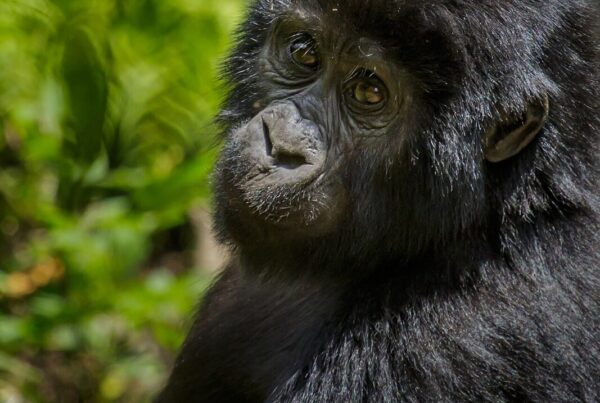
I tell them about the charter flight over the Rift Valley, because the beauty of that flight is available to everyone and is the beginning of the shift before you have even arrived. I tell them about Bwindi Forest — the age of it, the density, the quality of light and sound — because the forest is doing its work on you for the hours before you reach the gorillas, and understanding this changes how people experience the walk. I tell them about the silverback looking at you, because until they have experienced it they will not fully believe what I am describing, and after they have experienced it they will not need me to describe it.
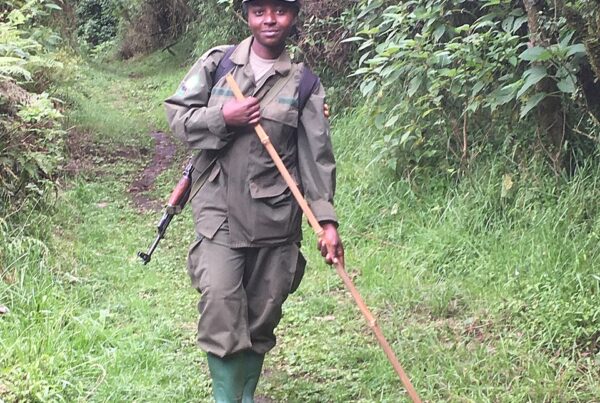
I tell them to book in advance — permits sell out months ahead and the best lodge availability goes quickly. I tell them to use a licensed Uganda Tourism Board operator because the quality of the experience is significantly shaped by the quality of the organisation around it. I tell them to take a porter — the forest terrain is demanding and having your weight carried frees your attention for the things that matter. I tell them to tip generously — the rangers, the guides, the porters are doing work that keeps these animals alive and they are worth more than a small afterthought at the end of the trek.
What People Say After They Come Back
Of the eleven people I have sent the operator’s details to, six have gone. All six have come back and said some version of the same thing: you did not tell us it would be like this. I did tell them. They heard it as enthusiasm rather than description. This is the limitation of all gorilla trek evangelism — the experience is one that language approaches but does not arrive at, and the people who have not yet had it will not fully believe the people who have. This is not a reason to stop trying to convey it. It is a reason to make the case as clearly and specifically as possible and then recommend they find out for themselves.
The Case in Brief
Go before you die. Not because it is a bucket list item — it is not a bucket list item, it is a perspective-altering experience. Go because the mountain gorilla population has recovered from near-extinction through a conservation model that your permit contributes to and that deserves to be supported. Go because Bwindi Forest is ancient and alive and one of the most extraordinary places you will stand in your life. Go because the silverback will look at you and find you unremarkable and this will be, unexpectedly, one of the most useful things that has ever happened to you. The permit is $800. Contact us. Go.
Frequently Asked Questions
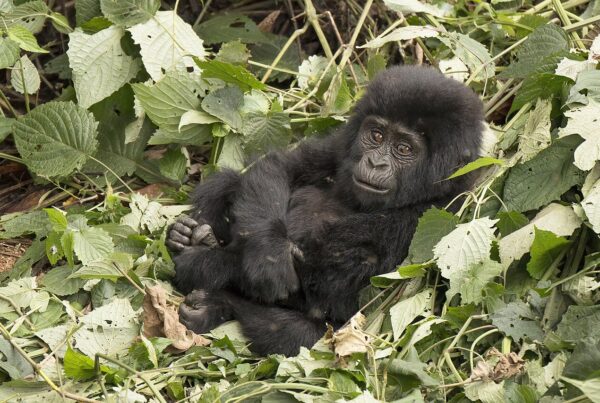
Uganda is home to the mountain gorilla (Gorilla beringei beringei), one of two subspecies of eastern gorilla. They live exclusively in the Virunga volcanic highlands (Uganda/Rwanda/DRC) and Bwindi Impenetrable Forest (Uganda only). Mountain gorillas are the only gorilla subspecies that cannot survive in captivity — every individual you can trek is a wild animal.
The standard gorilla trekking permit gives you exactly 1 hour with the gorilla family. This time begins when you make first contact with the family — the ranger signals the start. The Gorilla Habituation Experience gives 4 hours with a semi-wild family. The walk to find the gorillas can take 30 minutes to 5 hours depending on where the family has moved.
Stay calm, crouch down slowly, avoid direct eye contact, and remain quiet. Do not run — running triggers a chase response. Rangers accompanying your group manage close approaches. Habituated gorillas are accustomed to humans and almost never make contact, but a charging silverback is managed by staying still and following ranger instructions immediately.
A maximum of 8 visitors per habituated gorilla family per day for standard trekking. The Gorilla Habituation Experience has a maximum of 4 visitors per family per day. These limits are set by UWA to minimise stress on the gorilla families and maintain the quality of the experience.
Uganda is home to the mountain gorilla (Gorilla beringei beringei), one of two subspecies of eastern gorilla. They live exclusively in the Virunga volcanic highlands (Uganda/Rwanda/DRC) and Bwindi Impenetrable Forest (Uganda only). Mountain gorillas are the only gorilla subspecies that cannot survive in captivity — every individual you can trek is a wild animal.