Updated
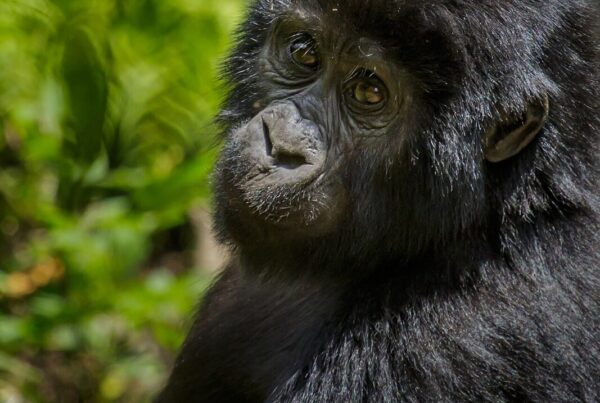
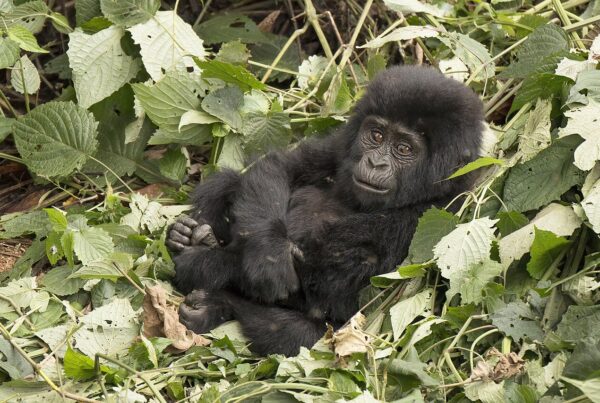
The Mishaya gorilla family territorial Uganda Bwindi is one of the habituated mountain gorilla groups that trekkers can visit in Uganda or Rwanda, offering an intimate encounter with these remarkable primates. In gorilla society, territory is not a casual matter. The boundaries between habituated groups in Bwindi Impenetrable National Park are known and generally respected — habituated gorilla families have overlapping home ranges but maintain a social understanding of space that prevents most direct confrontations. When those boundaries are tested, however, what follows is a display of gorilla social dynamics that researchers have found invaluable — and that trekkers present on such occasions describe as among the most dramatic wildlife encounters available anywhere in Africa. The Mishaya family’s territorial incursion of 2019 is one such event.
The Day the Mishaya Family Tried to Enter Another Gorilla’s Territory
Who the Mishaya Family Is
The Mishaya group takes its name from its founding silverback, Mishaya, who was himself an extraordinary figure in Bwindi’s gorilla history. Mishaya was a blackback — a young adult male — who left the Nshongi group in 2009 and did something unusual: instead of becoming a solitary male, as most departing males do, he immediately began assembling a new group. By 2010 he had attracted several females. By 2015 the Mishaya group numbered over fifteen individuals and had been officially habituated for tourism.
Mishaya himself was known to researchers and guides for his exceptional boldness. He had established his group’s territory in the Rushaga sector through a combination of determination and strategic aggression — he had faced down larger, more established silverbacks to secure the range his growing family needed. The 2019 incursion was consistent with this pattern.
The Incident
On a morning in April 2019, the Mishaya group moved into the established range of the Busingye group — a smaller habituated family whose territory overlapped at the southern edge with Mishaya’s range. The trackers who monitor both groups were aware of the movement before the trekking groups arrived, and the Uganda Wildlife Authority rangers accompanying the trek were briefed on the situation.
The trekkers present — a group of eight, including several researchers from Makerere University who were on a permitted observation visit — found both groups within thirty metres of each other. The silverhead of the Busingye group, a male named Busingye after whom the group is named, was vocalising — a series of deep chest beats and short charges that served as territorial warning. Mishaya, on the edge of the contested area, responded with his own chest beats.
What Chest Beating Actually Communicates
The chest beat is one of the most recognisable sounds in the animal world and one of the most misunderstood. It is not primarily a display of aggression toward observers — it is a complex communication directed at other gorillas, conveying information about the beater’s size, health, and social status. Research published in Scientific Reports has shown that chest beat acoustic quality correlates with male body size, meaning that experienced gorillas can assess a rival’s physical capabilities through sound alone. The exchange between Mishaya and Busingye was, in this sense, a sophisticated negotiation conducted at a distance before any physical contact occurred.
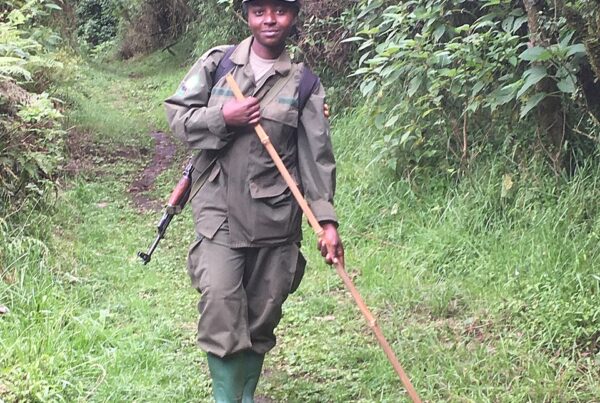
The UWA rangers maintained safe distances for the trekking group throughout. No trekkers were at risk at any point — the gorillas’ attention was entirely on each other, and the rangers’ experience in managing such situations ensured that the human observers remained outside the zone of direct gorilla interaction.
The Resolution
After approximately forty minutes of vocalisation and display, Mishaya led his group back toward their core territory. Busingye had held his ground. The Busingye group’s females and juveniles, who had retreated to a denser section of forest during the confrontation, gradually returned to normal foraging activity. No physical contact between the silverbacks occurred. This is, researchers note, the typical outcome of territorial contests between habituated gorilla families — the display serves its communicative function and direct confrontation is avoided.
For the trekkers present, the experience was a reminder that gorilla trekking in Uganda in 2027 offers not just the encounter with habituated families but the possibility of witnessing the full complexity of gorilla social life — including the rare but real occasions when those social structures are tested. The gorilla permit costs $800 per person. What it sometimes includes cannot be predicted in advance, which is part of what makes it extraordinary.
Frequently Asked Questions
Children aged 15 and older can trek. Uganda Wildlife Authority has a strict minimum age of 15 for all gorilla trekking and the Gorilla Habituation Experience — no exceptions. For families travelling with children under 15, alternative Uganda activities include chimpanzee trekking (age 12+ for standard chimp trekking), game drives, birding, and cultural experiences.
Gorilla trekking involves walking in steep, dense forest — sometimes for several hours at altitude. Fitness matters more than age. Many visitors in their 60s and 70s complete successful treks. Those with knee, heart, or breathing conditions should consult their doctor before booking. Porters are available to assist with carrying and provide physical support on difficult terrain — hiring one is strongly recommended.
Buhoma sector is generally considered the most accessible — the gorilla families there are often found on lower, less steep terrain. Nkuringo sector involves the steepest descent in Bwindi and is the most physically challenging. Ruhija sits at high altitude (2,300m+) which can affect visitors with respiratory conditions. Discuss your fitness level with your operator when choosing a sector.
Uganda is home to the mountain gorilla (Gorilla beringei beringei), one of two subspecies of eastern gorilla. They live exclusively in the Virunga volcanic highlands (Uganda/Rwanda/DRC) and Bwindi Impenetrable Forest (Uganda only). Mountain gorillas are the only gorilla subspecies that cannot survive in captivity — every individual you can trek is a wild animal.
The standard gorilla trekking permit gives you exactly 1 hour with the gorilla family. This time begins when you make first contact with the family — the ranger signals the start. The Gorilla Habituation Experience gives 4 hours with a semi-wild family. The walk to find the gorillas can take 30 minutes to 5 hours depending on where the family has moved.