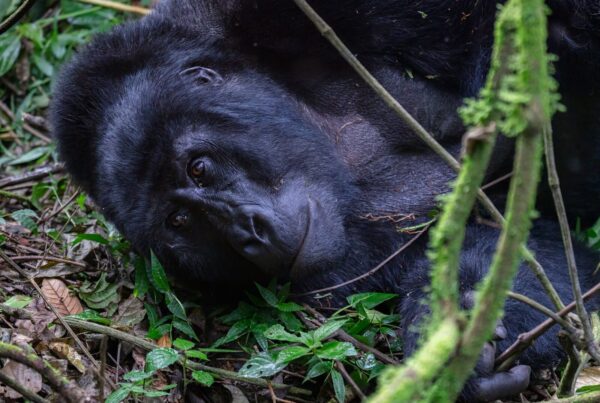
The perspective of Ugandan communities on the international visitors who travel to their highland forests to spend an hour with mountain gorillas is one of the most important and least represented dimensions of the gorilla trekking experience — a question that the travel media’s singular focus on the tourist encounter consistently omits, despite the fact that the communities who live adjacent to Bwindi Impenetrable Forest are the human context within which the entire gorilla conservation model either succeeds or fails. Ugandan opinions on gorilla tourism are varied and nuanced: the Bakiga farming communities who have seen Revenue Sharing Scheme funds build classrooms and clinics are broadly supportive of the conservation model; the former forest guides and porters whose livelihoods depend entirely on the visitor flow have a direct economic stake in it; and some community members express a more complex ambivalence about the asymmetry of the situation — foreign visitors paying USD 800 for a single hour’s experience in what was, a generation ago, a landscape their families farmed and hunted. This guide explores Ugandan community perspectives on gorilla trekking tourism. For the permit, see the permit guide.
Gorilla Tourism Through Ugandan Eyes: Key Context
- Revenue Sharing Scheme: 20% of park entry fees returned to border communities — clinics, schools, roads
- Direct employment: Porters, guides, lodge staff, community walk guides — majority from border parishes
- Permit asymmetry awareness: Communities know the USD 800 permit cost; the comparison with local wages is sharp
- Batwa displacement: The 1991 gazettement remains a live grievance for Batwa communities not adequately compensated
- Community organisation strength: Buhoma Community Programme, Nkuringo CWS — sophisticated community entities
- Porter income: USD 10-15 per trek day — significant supplementary income for Bakiga households adjacent to the park
The question is rarely asked directly. Travel writing about Uganda is full of descriptions of the gorilla encounter — the mist, the proximity, the overwhelming presence of a mountain gorilla family going about its morning — and of the community revenue-sharing programmes and conservation outcomes that surround it. What is much less often explored is how the people who live adjacent to Bwindi Impenetrable Forest, who have spent their lives sharing a landscape with these animals, actually think about the international visitors who arrive in expensive clothing to spend an hour in the forest and then fly home.
The answer, it turns out, is complex, evolving, and far more considered than either the tourism industry’s optimistic framing or a cynical reading of economic power dynamics would suggest.
Multiple Communities, Multiple Views
There is no single “Ugandan view” of gorilla tourism, any more than there is a single “British view” of anything. The communities around Bwindi are diverse — Bakiga farmers, Bafumbira communities with ties across the Rwanda border, Batwa families whose relationship with the forest predates the national park by generations, and increasingly a mobile professional class employed in tourism services whose origins may be elsewhere in Uganda entirely. Each of these groups has a different historical relationship with the park and with the tourism it generates.
Among Bakiga farming families who have lived adjacent to the park for generations, the dominant attitude toward gorilla tourism is pragmatic rather than romantic. The gorillas are a reality of daily life — animals that raid crops, leave dung in banana gardens, and occasionally cause the kind of fear that any encounter with a very large wild animal can produce. The fact that international visitors pay $800 per permit in 2027 to spend time with these same animals is comprehensible economically, even if the specific motivations of those visitors remain somewhat opaque.
The Revenue Question
The community revenue-sharing programme through which a portion of gorilla permit revenue flows to communities adjacent to the park has tangibly changed attitudes toward gorilla tourism over the past two decades. Communities that received nothing from the park in its early years — that bore all the costs of living next to a protected area without sharing in its benefits — were predictably hostile to both the park and the tourism it attracted. Communities that now receive meaningful revenue for schools, healthcare facilities, and road improvements have a different relationship with the same institution.
But the revenue question is also a source of grievance. The amounts distributed to individual communities are often perceived as insufficient relative to the economic value being generated. An individual community receiving a few million Ugandan shillings from the revenue-sharing programme in a year when hundreds of thousands of dollars in gorilla permits were sold in their sector experiences this disparity as obvious and frustrating. The mathematics of conservation tourism — the costs absorbed by the logistics chain, the international NGO overhead, the government administration — that explains why community receipts are a small fraction of permit revenue is not intuitively compelling to a farmer whose crops were raided last month by an animal that tourists pay $800 to see.
What Visitors Do and Don’t Understand
Community members who interact regularly with gorilla trekking visitors — as guides, porters, craft sellers, lodge staff — have developed nuanced views about what different categories of visitor understand and misunderstand about the place they are visiting.
The most commonly mentioned misunderstanding is the assumption that Uganda is poor in ways that require charity rather than economic exchange. Visitors who offer tips apologetically, who photograph community members without asking, who assume that all community members are enthusiastic beneficiaries of conservation generosity rather than people with complex feelings about complex situations — these visitors are noticed and discussed. The paternalism implicit in some conservation tourism framing is not invisible to the communities it is supposedly designed to benefit.
Conversely, visitors who ask questions, who engage with guides as knowledgeable experts rather than service providers, who show genuine curiosity about community life beyond the narrow gorilla encounter — these visitors are remembered positively and generate the kind of word-of-mouth recommendation that contributes to Uganda’s growing reputation as a destination for thoughtful travellers.
The Batwa Perspective
The Batwa perspective on gorilla tourism is the most historically complex. The Batwa were the original forest-dwelling inhabitants of the Bwindi landscape, living within the forest for generations before the park’s establishment in 1991 excluded them from their traditional home. The conservation that protected the gorillas came at direct cost to the Batwa community, whose livelihoods, cultural practices, and spiritual relationship with the forest were disrupted by gazetttement.
Batwa communities around Bwindi have developed cultural tourism offerings — visits to their camps, demonstrations of traditional forest skills, music and dance performances — that allow them to participate in the tourism economy without the formal employment structures that tend to favour more formally educated communities. These offerings are valuable and genuinely engaging for visitors. They are also, for many Batwa participants, a complicated relationship: presenting aspects of a forest-dwelling culture to paying visitors in communities where the forest itself is no longer accessible is an ambivalence that polished performances do not always conceal.
The Young Generation’s View
Young people in communities around Bwindi — those who grew up after gorilla trekking was established, for whom the tourism economy has always existed — have different attitudes from their parents and grandparents. For many, gorilla tourism represents opportunity: employment as guides, porters, and hospitality workers; the possibility of building businesses that serve the tourism market; exposure to international visitors that provides language skills and cultural knowledge valuable in wider economic contexts.
Several young people from Bwindi communities have used the tourism economy as a springboard for educational and career advancement that would not have been possible without it. The guide who speaks four languages, who can discuss conservation biology with a visiting researcher and cultural history with a tourist, who earns enough to send siblings through university — this person is a product of the gorilla tourism economy in ways that are genuinely transformative.
The same young generation is also the most likely to express frustration with the structural inequities of the tourism economy. They are aware that the international tour operators, lodge chains, and airlines that connect visitors to Bwindi capture the majority of the economic value that gorilla tourism generates. They are aware that permits sold to international visitors generate revenue that flows partly to Kampala-based organisations before anything reaches their communities. They want a different deal — not the abolition of tourism, but tourism structured to deliver more to the people who make it possible.
What Guides Say in Private
Gorilla trekking guides occupy a peculiar position — intermediaries between the international tourism economy and the local community, trained to represent both the park’s conservation mission and the community’s hospitality. What they say privately, when not in performance mode, reflects the complexity of this position.
Most experienced guides are genuinely proud of the gorillas and genuinely committed to their protection. The emotional connection is real — these are animals they have tracked for years, whose individual personalities they know, whose family histories they have watched unfold. The conservation motivation that drives good guiding is not manufactured for tourists; it is built through years of daily experience with animals that are, in their own way, remarkable.
The frustration most commonly expressed in private concerns recognition — the sense that the international narratives about gorilla conservation rarely include the Ugandan voices that make that conservation possible. The researcher gets cited; the ranger who found the gorilla group is unnamed. The tour operator’s website features photographs of community members but rarely tells their stories. Ugandans are the context for an international experience, not its protagonists.
What Would Change Everything
When community members around Bwindi are asked what would most improve the relationship between their communities and gorilla tourism, the answers are consistent across different groups and generations. More meaningful revenue sharing — a larger and more transparent portion of permit revenue reaching communities directly. More local ownership of accommodation and guiding services, reducing the dominance of Kampala-based and international operators. More genuine consultation about park management decisions that affect community lives. And recognition — the simple acknowledgement, in the stories that tourism tells about Uganda, that the gorillas exist in a human landscape, not a pristine wilderness, and that the people of that landscape are partners in conservation, not background scenery.
These are not unreasonable requests. They are, in fact, the conditions under which conservation tourism becomes genuinely sustainable rather than merely profitable. The communities of Bwindi have co-existed with mountain gorillas for generations. Their cooperation is not guaranteed. Their buy-in is the foundation on which everything else — the permits, the treks, the transformative encounters — depends.
Frequently Asked Questions
Communities adjacent to Bwindi Impenetrable Forest benefit from gorilla trekking tourism through several mechanisms that together represent a significant addition to the highland agricultural economy. The most visible benefits: the UWA Revenue Sharing Scheme (20% of national park entry fees returned to border parishes as direct community investment in school construction, health clinics, water infrastructure, and community road improvements); direct employment in the tourism sector (lodge employment — housekeeping, kitchen, maintenance, grounds — draws its workforce predominantly from the adjacent parishes, providing formal sector wages in an economy where most livelihoods are agricultural); porter employment on gorilla trek days (each of Bwindi’s daily trekking groups hires community porters, providing USD 10-15 per trek day per porter — a meaningful income supplement for households with limited agricultural land); and community walk programme income (the Buhoma Community Walk, Batwa Trail, and similar programmes direct tourism income to specific community organisations). The cumulative economic effect is measurable: the communities immediately surrounding Bwindi’s four sectors have significantly better social infrastructure (health facilities, schools, clean water access) than comparable Ugandan highland communities not adjacent to major tourism investment. Is there resentment in Ugandan communities about the high cost of gorilla permits for foreign visitors? The awareness of the USD 800 gorilla permit cost among communities adjacent to Bwindi is widespread — the permit price is known and discussed, and its scale relative to local wages (the average daily agricultural wage in southwestern Uganda is approximately USD 2-4) creates an inherent asymmetry that community members are aware of and occasionally comment on. The more nuanced community perspective, documented by researchers working with Bwindi border communities, is not simple resentment but a complex calculation: the permit revenue funds the ranger operation that protects the gorillas from poaching, part of the revenue returns to the community through the Revenue Sharing Scheme, and the employment the tourism generates is real and locally important. The concern that community members more consistently articulate is not the permit price itself but the distribution of the tourism income — specifically whether the lodges’ employment and procurement decisions genuinely favour local suppliers and workers, and whether the Revenue Sharing Scheme distribution is transparent and reaches the communities that bear the closest proximity costs of the park. The strongest criticism comes from the Batwa community, whose displacement from the forest in 1991 without adequate compensation remains a live grievance that the Revenue Sharing Scheme does not fully address. What do Ugandan rangers and guides think about their role in gorilla conservation? Uganda Wildlife Authority rangers and community guides at Bwindi express a strong professional identity around the gorilla conservation work that is qualitatively different from purely transactional employment attitudes. Rangers who have worked with specific habituated gorilla families over years develop genuine knowledge of individual gorillas, track family dynamics across generations, and experience the conservation outcomes directly — the birth of an infant, the recovery of an injured silverback, the gradual expansion of a family’s territory are events that rangers follow with the investment of colleagues rather than hired observers. This professional identity is reinforced by the international recognition that gorilla conservation has received and by the direct visible outcome of the work — the gorilla population’s recovery from near-extinction to over 1,000 individuals is a measurable outcome that rangers can point to as the result of their collective effort. Community guides on the Batwa Trail and community walk programmes additionally report a cultural preservation dimension to their work — the transmission of traditional knowledge to both community members and visitors keeps skills and oral history alive that would otherwise be lost within a generation. How can gorilla trekking visitors show respect and genuine interest in the local community? Gorilla trekking visitors who want to engage genuinely with the local community — rather than treating it as a backdrop to the wildlife encounter — have several practical options that produce both a more meaningful visitor experience and a more direct community benefit. Participation in the community walk programmes at each sector (Buhoma Community Walk, Batwa Trail, Nkuringo community walks) is the most structured community engagement option and provides a facilitated interaction with genuine content. Buying from the community craft markets at the sector gates — baskets, carved items, woven goods — rather than from lodge gift shops means the purchase price goes directly to the artisan rather than through a retail margin. Tipping generously, especially the porter (whose income is the most directly traceable form of tourism income for the least economically advantaged community member on the trek day), acknowledges the labour contribution the community makes to the encounter. Learning a few Rukiga words (“Agandi” — “How are you?”; “Webale” — “Thank you”) as a greeting gesture is consistently received as a positive effort by community members who understand its significance even when the grammar is imperfect. What to avoid: treating community members primarily as photographic subjects, asking to photograph without consent, or rushing through community areas as transitions between lodges without registering them as places with their own human reality. Has gorilla tourism changed Ugandan communities near Bwindi? Gorilla tourism has changed the communities adjacent to Bwindi profoundly over the three decades since the trekking programme began, in ways that are both clearly positive and more ambivalent. The clearly positive changes: improved social infrastructure (the Bwindi Community Hospital near Buhoma is a direct tourism-income legacy; primary school construction funded by Revenue Sharing; clean water infrastructure); household income diversification (porter income, lodge employment, community walk programme income supplement agricultural households that would otherwise depend entirely on subsistence farming); and growing local ownership of the conservation narrative (community organisations like the Buhoma Community Programme have become sophisticated civil society entities that negotiate directly with lodge operators and UWA on community benefit terms). The more ambivalent changes: the intensification of a cash economy in what was a subsistence agricultural community has created both opportunity and new inequality between households with tourism employment and those without; land pressure at the park boundary has intensified as the economic value of the adjacent land has risen; and cultural change associated with sustained contact with international tourism has been significant, including both the genuine expansion of opportunity (English language skills, exposure to a wider world) and the erosion of some traditional practices that are no longer transmitted across generations. Engage with Uganda’s people as well as its wildlife Gorilla Permit Guide — the permit whose revenue is the foundation of the community benefit model Uganda Gorilla Families — the families protected by the ranger workforce drawn from the same communities Bwindi Sector Guide — community walk options at each sector for direct community engagement Full Safari Cost Guide — understanding where the permit and accommodation money actually flows Safari Itineraries — Uganda itineraries that incorporate community engagement alongside the gorilla trek Further Reading What Ugandans Think of Foreign Tourists Coming to See Gorillas What Ugandans think of tourists: the warm welcome explained Travelers from Campania Say They Can’t Stop Thinking About Their Gorilla Trekking Experience in Uganda Is It Safe to Travel to Uganda? Safety Advice for Tourists What Languages Are Spoken in Uganda? Communication Tips for Tourists Uganda Gorilla Permit Categories: Foreign Resident vs Non-Resident vs East African Uganda Visa and Entry Requirements for Tourists: Complete Guide Is Uganda Safe for Tourists in 2026? An Honest Travel Safety Guide How Uganda Competes with Rwanda for Gorilla Tourists: The Battle of Volcanoes How Many Tourists Visit Uganda Each Year for Gorillas? Tourism Statistics Explained <
The awareness of the USD 800 gorilla permit cost among communities adjacent to Bwindi is widespread — the permit price is known and discussed, and its scale relative to local wages (the average daily agricultural wage in southwestern Uganda is approximately USD 2-4) creates an inherent asymmetry that community members are aware of and occasionally comment on. The more nuanced community perspective, documented by researchers working with Bwindi border communities, is not simple resentment but a complex calculation: the permit revenue funds the ranger operation that protects the gorillas from poaching, part of the revenue returns to the community through the Revenue Sharing Scheme, and the employment the tourism generates is real and locally important. The concern that community members more consistently articulate is not the permit price itself but the distribution of the tourism income — specifically whether the lodges’ employment and procurement decisions genuinely favour local suppliers and workers, and whether the Revenue Sharing Scheme distribution is transparent and reaches the communities that bear the closest proximity costs of the park. The strongest criticism comes from the Batwa community, whose displacement from the forest in 1991 without adequate compensation remains a live grievance that the Revenue Sharing Scheme does not fully address. What do Ugandan rangers and guides think about their role in gorilla conservation? Uganda Wildlife Authority rangers and community guides at Bwindi express a strong professional identity around the gorilla conservation work that is qualitatively different from purely transactional employment attitudes. Rangers who have worked with specific habituated gorilla families over years develop genuine knowledge of individual gorillas, track family dynamics across generations, and experience the conservation outcomes directly — the birth of an infant, the recovery of an injured silverback, the gradual expansion of a family’s territory are events that rangers follow with the investment of colleagues rather than hired observers. This professional identity is reinforced by the international recognition that gorilla conservation has received and by the direct visible outcome of the work — the gorilla population’s recovery from near-extinction to over 1,000 individuals is a measurable outcome that rangers can point to as the result of their collective effort. Community guides on the Batwa Trail and community walk programmes additionally report a cultural preservation dimension to their work — the transmission of traditional knowledge to both community members and visitors keeps skills and oral history alive that would otherwise be lost within a generation. How can gorilla trekking visitors show respect and genuine interest in the local community? Gorilla trekking visitors who want to engage genuinely with the local community — rather than treating it as a backdrop to the wildlife encounter — have several practical options that produce both a more meaningful visitor experience and a more direct community benefit. Participation in the community walk programmes at each sector (Buhoma Community Walk, Batwa Trail, Nkuringo community walks) is the most structured community engagement option and provides a facilitated interaction with genuine content. Buying from the community craft markets at the sector gates — baskets, carved items, woven goods — rather than from lodge gift shops means the purchase price goes directly to the artisan rather than through a retail margin. Tipping generously, especially the porter (whose income is the most directly traceable form of tourism income for the least economically advantaged community member on the trek day), acknowledges the labour contribution the community makes to the encounter. Learning a few Rukiga words (“Agandi” — “How are you?”; “Webale” — “Thank you”) as a greeting gesture is consistently received as a positive effort by community members who understand its significance even when the grammar is imperfect. What to avoid: treating community members primarily as photographic subjects, asking to photograph without consent, or rushing through community areas as transitions between lodges without registering them as places with their own human reality. Has gorilla tourism changed Ugandan communities near Bwindi? Gorilla tourism has changed the communities adjacent to Bwindi profoundly over the three decades since the trekking programme began, in ways that are both clearly positive and more ambivalent. The clearly positive changes: improved social infrastructure (the Bwindi Community Hospital near Buhoma is a direct tourism-income legacy; primary school construction funded by Revenue Sharing; clean water infrastructure); household income diversification (porter income, lodge employment, community walk programme income supplement agricultural households that would otherwise depend entirely on subsistence farming); and growing local ownership of the conservation narrative (community organisations like the Buhoma Community Programme have become sophisticated civil society entities that negotiate directly with lodge operators and UWA on community benefit terms). The more ambivalent changes: the intensification of a cash economy in what was a subsistence agricultural community has created both opportunity and new inequality between households with tourism employment and those without; land pressure at the park boundary has intensified as the economic value of the adjacent land has risen; and cultural change associated with sustained contact with international tourism has been significant, including both the genuine expansion of opportunity (English language skills, exposure to a wider world) and the erosion of some traditional practices that are no longer transmitted across generations. Engage with Uganda’s people as well as its wildlife Gorilla Permit Guide — the permit whose revenue is the foundation of the community benefit model Uganda Gorilla Families — the families protected by the ranger workforce drawn from the same communities Bwindi Sector Guide — community walk options at each sector for direct community engagement Full Safari Cost Guide — understanding where the permit and accommodation money actually flows Safari Itineraries — Uganda itineraries that incorporate community engagement alongside the gorilla trek Further Reading What Ugandans Think of Foreign Tourists Coming to See Gorillas What Ugandans think of tourists: the warm welcome explained Travelers from Campania Say They Can’t Stop Thinking About Their Gorilla Trekking Experience in Uganda Is It Safe to Travel to Uganda? Safety Advice for Tourists What Languages Are Spoken in Uganda? Communication Tips for Tourists Uganda Gorilla Permit Categories: Foreign Resident vs Non-Resident vs East African Uganda Visa and Entry Requirements for Tourists: Complete Guide Is Uganda Safe for Tourists in 2026? An Honest Travel Safety Guide How Uganda Competes with Rwanda for Gorilla Tourists: The Battle of Volcanoes How Many Tourists Visit Uganda Each Year for Gorillas? Tourism Statistics Explained <
Uganda Wildlife Authority rangers and community guides at Bwindi express a strong professional identity around the gorilla conservation work that is qualitatively different from purely transactional employment attitudes. Rangers who have worked with specific habituated gorilla families over years develop genuine knowledge of individual gorillas, track family dynamics across generations, and experience the conservation outcomes directly — the birth of an infant, the recovery of an injured silverback, the gradual expansion of a family’s territory are events that rangers follow with the investment of colleagues rather than hired observers. This professional identity is reinforced by the international recognition that gorilla conservation has received and by the direct visible outcome of the work — the gorilla population’s recovery from near-extinction to over 1,000 individuals is a measurable outcome that rangers can point to as the result of their collective effort. Community guides on the Batwa Trail and community walk programmes additionally report a cultural preservation dimension to their work — the transmission of traditional knowledge to both community members and visitors keeps skills and oral history alive that would otherwise be lost within a generation. How can gorilla trekking visitors show respect and genuine interest in the local community? Gorilla trekking visitors who want to engage genuinely with the local community — rather than treating it as a backdrop to the wildlife encounter — have several practical options that produce both a more meaningful visitor experience and a more direct community benefit. Participation in the community walk programmes at each sector (Buhoma Community Walk, Batwa Trail, Nkuringo community walks) is the most structured community engagement option and provides a facilitated interaction with genuine content. Buying from the community craft markets at the sector gates — baskets, carved items, woven goods — rather than from lodge gift shops means the purchase price goes directly to the artisan rather than through a retail margin. Tipping generously, especially the porter (whose income is the most directly traceable form of tourism income for the least economically advantaged community member on the trek day), acknowledges the labour contribution the community makes to the encounter. Learning a few Rukiga words (“Agandi” — “How are you?”; “Webale” — “Thank you”) as a greeting gesture is consistently received as a positive effort by community members who understand its significance even when the grammar is imperfect. What to avoid: treating community members primarily as photographic subjects, asking to photograph without consent, or rushing through community areas as transitions between lodges without registering them as places with their own human reality. Has gorilla tourism changed Ugandan communities near Bwindi? Gorilla tourism has changed the communities adjacent to Bwindi profoundly over the three decades since the trekking programme began, in ways that are both clearly positive and more ambivalent. The clearly positive changes: improved social infrastructure (the Bwindi Community Hospital near Buhoma is a direct tourism-income legacy; primary school construction funded by Revenue Sharing; clean water infrastructure); household income diversification (porter income, lodge employment, community walk programme income supplement agricultural households that would otherwise depend entirely on subsistence farming); and growing local ownership of the conservation narrative (community organisations like the Buhoma Community Programme have become sophisticated civil society entities that negotiate directly with lodge operators and UWA on community benefit terms). The more ambivalent changes: the intensification of a cash economy in what was a subsistence agricultural community has created both opportunity and new inequality between households with tourism employment and those without; land pressure at the park boundary has intensified as the economic value of the adjacent land has risen; and cultural change associated with sustained contact with international tourism has been significant, including both the genuine expansion of opportunity (English language skills, exposure to a wider world) and the erosion of some traditional practices that are no longer transmitted across generations. Engage with Uganda’s people as well as its wildlife Gorilla Permit Guide — the permit whose revenue is the foundation of the community benefit model Uganda Gorilla Families — the families protected by the ranger workforce drawn from the same communities Bwindi Sector Guide — community walk options at each sector for direct community engagement Full Safari Cost Guide — understanding where the permit and accommodation money actually flows Safari Itineraries — Uganda itineraries that incorporate community engagement alongside the gorilla trek Further Reading What Ugandans Think of Foreign Tourists Coming to See Gorillas What Ugandans think of tourists: the warm welcome explained Travelers from Campania Say They Can’t Stop Thinking About Their Gorilla Trekking Experience in Uganda Is It Safe to Travel to Uganda? Safety Advice for Tourists What Languages Are Spoken in Uganda? Communication Tips for Tourists Uganda Gorilla Permit Categories: Foreign Resident vs Non-Resident vs East African Uganda Visa and Entry Requirements for Tourists: Complete Guide Is Uganda Safe for Tourists in 2026? An Honest Travel Safety Guide How Uganda Competes with Rwanda for Gorilla Tourists: The Battle of Volcanoes How Many Tourists Visit Uganda Each Year for Gorillas? Tourism Statistics Explained <
Gorilla trekking visitors who want to engage genuinely with the local community — rather than treating it as a backdrop to the wildlife encounter — have several practical options that produce both a more meaningful visitor experience and a more direct community benefit. Participation in the community walk programmes at each sector (Buhoma Community Walk, Batwa Trail, Nkuringo community walks) is the most structured community engagement option and provides a facilitated interaction with genuine content. Buying from the community craft markets at the sector gates — baskets, carved items, woven goods — rather than from lodge gift shops means the purchase price goes directly to the artisan rather than through a retail margin. Tipping generously, especially the porter (whose income is the most directly traceable form of tourism income for the least economically advantaged community member on the trek day), acknowledges the labour contribution the community makes to the encounter. Learning a few Rukiga words (“Agandi” — “How are you?”; “Webale” — “Thank you”) as a greeting gesture is consistently received as a positive effort by community members who understand its significance even when the grammar is imperfect. What to avoid: treating community members primarily as photographic subjects, asking to photograph without consent, or rushing through community areas as transitions between lodges without registering them as places with their own human reality. Has gorilla tourism changed Ugandan communities near Bwindi? Gorilla tourism has changed the communities adjacent to Bwindi profoundly over the three decades since the trekking programme began, in ways that are both clearly positive and more ambivalent. The clearly positive changes: improved social infrastructure (the Bwindi Community Hospital near Buhoma is a direct tourism-income legacy; primary school construction funded by Revenue Sharing; clean water infrastructure); household income diversification (porter income, lodge employment, community walk programme income supplement agricultural households that would otherwise depend entirely on subsistence farming); and growing local ownership of the conservation narrative (community organisations like the Buhoma Community Programme have become sophisticated civil society entities that negotiate directly with lodge operators and UWA on community benefit terms). The more ambivalent changes: the intensification of a cash economy in what was a subsistence agricultural community has created both opportunity and new inequality between households with tourism employment and those without; land pressure at the park boundary has intensified as the economic value of the adjacent land has risen; and cultural change associated with sustained contact with international tourism has been significant, including both the genuine expansion of opportunity (English language skills, exposure to a wider world) and the erosion of some traditional practices that are no longer transmitted across generations. Engage with Uganda’s people as well as its wildlife Gorilla Permit Guide — the permit whose revenue is the foundation of the community benefit model Uganda Gorilla Families — the families protected by the ranger workforce drawn from the same communities Bwindi Sector Guide — community walk options at each sector for direct community engagement Full Safari Cost Guide — understanding where the permit and accommodation money actually flows Safari Itineraries — Uganda itineraries that incorporate community engagement alongside the gorilla trek Further Reading What Ugandans Think of Foreign Tourists Coming to See Gorillas What Ugandans think of tourists: the warm welcome explained Travelers from Campania Say They Can’t Stop Thinking About Their Gorilla Trekking Experience in Uganda Is It Safe to Travel to Uganda? Safety Advice for Tourists What Languages Are Spoken in Uganda? Communication Tips for Tourists Uganda Gorilla Permit Categories: Foreign Resident vs Non-Resident vs East African Uganda Visa and Entry Requirements for Tourists: Complete Guide Is Uganda Safe for Tourists in 2026? An Honest Travel Safety Guide How Uganda Competes with Rwanda for Gorilla Tourists: The Battle of Volcanoes How Many Tourists Visit Uganda Each Year for Gorillas? Tourism Statistics Explained <
Gorilla tourism has changed the communities adjacent to Bwindi profoundly over the three decades since the trekking programme began, in ways that are both clearly positive and more ambivalent. The clearly positive changes: improved social infrastructure (the Bwindi Community Hospital near Buhoma is a direct tourism-income legacy; primary school construction funded by Revenue Sharing; clean water infrastructure); household income diversification (porter income, lodge employment, community walk programme income supplement agricultural households that would otherwise depend entirely on subsistence farming); and growing local ownership of the conservation narrative (community organisations like the Buhoma Community Programme have become sophisticated civil society entities that negotiate directly with lodge operators and UWA on community benefit terms). The more ambivalent changes: the intensification of a cash economy in what was a subsistence agricultural community has created both opportunity and new inequality between households with tourism employment and those without; land pressure at the park boundary has intensified as the economic value of the adjacent land has risen; and cultural change associated with sustained contact with international tourism has been significant, including both the genuine expansion of opportunity (English language skills, exposure to a wider world) and the erosion of some traditional practices that are no longer transmitted across generations. Engage with Uganda’s people as well as its wildlife Gorilla Permit Guide — the permit whose revenue is the foundation of the community benefit model Uganda Gorilla Families — the families protected by the ranger workforce drawn from the same communities Bwindi Sector Guide — community walk options at each sector for direct community engagement Full Safari Cost Guide — understanding where the permit and accommodation money actually flows Safari Itineraries — Uganda itineraries that incorporate community engagement alongside the gorilla trek Further Reading What Ugandans Think of Foreign Tourists Coming to See Gorillas What Ugandans think of tourists: the warm welcome explained Travelers from Campania Say They Can’t Stop Thinking About Their Gorilla Trekking Experience in Uganda Is It Safe to Travel to Uganda? Safety Advice for Tourists What Languages Are Spoken in Uganda? Communication Tips for Tourists Uganda Gorilla Permit Categories: Foreign Resident vs Non-Resident vs East African Uganda Visa and Entry Requirements for Tourists: Complete Guide Is Uganda Safe for Tourists in 2026? An Honest Travel Safety Guide How Uganda Competes with Rwanda for Gorilla Tourists: The Battle of Volcanoes How Many Tourists Visit Uganda Each Year for Gorillas? Tourism Statistics Explained <