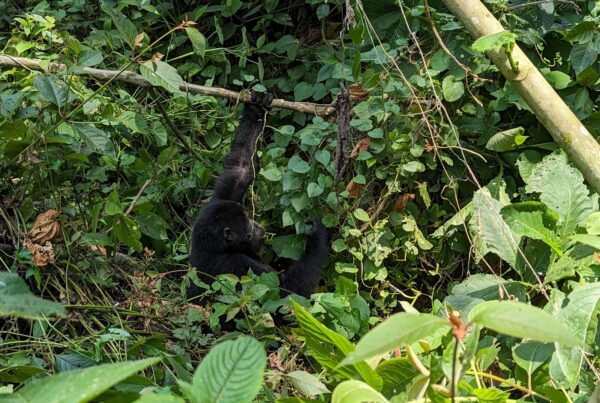
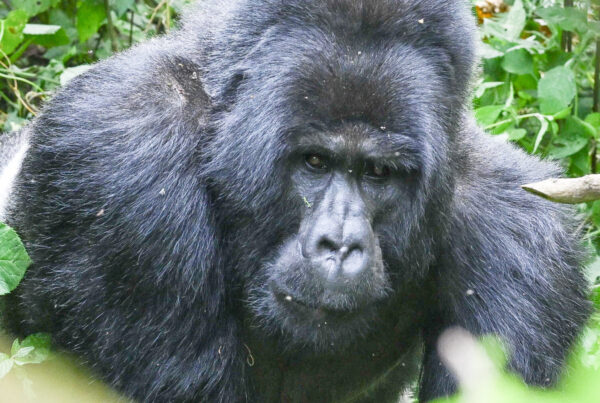
I am going to make an ambitious claim and then try to justify it. The week I spent gorilla trekking in Uganda made me a better human being. Not profoundly, not permanently, not in ways that are visible in every interaction. But measurably, durably, in specific dimensions that I can identify and that the people closest to me would recognise if I described them. This is what changed and why I think the forest was responsible.
The Dimensions of Better
Better at patience. Better at accepting uncertainty. Better at being present in a conversation rather than planning the next thing while the current thing is still happening. Better at proportioning my emotional response to the actual significance of events rather than to their proximity and urgency. Better at noticing what is actually in front of me. These are not dramatic improvements. They are incremental adjustments in the direction of a person I would rather be than the person I was before I went.
I went to Bwindi on a gorilla permit that cost $800 USD, booked through a licensed Uganda Tourism Board operator, eight months in advance. The planning itself was good for me — it established the trip as a commitment rather than a possibility and meant that when the busy-week impulse to cancel arrived, the structural barriers to cancellation were already in place. The planning was the first exercise in prioritising something that mattered over things that demanded.
What the Forest Teaches About Patience
The trek to find the gorilla family took four hours. The terrain at Ruhija sector, where I trekked, is the most demanding in Bwindi — steep, dense, altitude-demanding. The trackers, who go ahead of the trekking group each morning to locate the gorilla family before we set out, had found the Oruzogo group in a section of forest that required a descent into a valley and a long climb back up. I walked for four hours at the pace the forest dictated — not the pace I set, not the pace I preferred, but the pace that the terrain and the guide and the forest established for me.
I am impatient. This is a known fact about me. I work quickly, I think quickly, I find slow processes frustrating, I am not a person who is described by those who know me as patient. The forest did not make me patient by providing an experience of smooth, cooperative progress. It made me patient by giving me four hours during which impatience was genuinely useless — the forest was not going to respond to it, the guide was not going to walk faster because of it, the gorillas were not going to be closer because I wanted them to be. I arrived at the end of four hours having practised tolerance for a pace I did not control. The practice was useful.
What the Gorillas Teach About Presence
The hour with the Oruzogo family was an hour in which I was more completely present than I am in most hours of my life. Not because I made an effort to be present — because the gorillas demanded presence in the way that genuinely extraordinary things demand it. You cannot half-attend to a silverback gorilla eight metres away. Your attention is entirely there, not because you have disciplined it into being there but because nothing else is competitive with it.
I have been trying to practise this quality of presence in ordinary life since I came back. I am better at it than I was before the trip and worse at it than I was during the hour. The gap between ordinary-life presence and gorilla-encounter presence is large. But having experienced the higher end of the range, I have a clearer target than I had before.
On Making the Claim
I am aware that “gorilla trekking made me a better person” is the kind of claim that invites scepticism. I invite it. The alternative claim is that I would have become slightly better at patience, presence, and proportion anyway, and the Uganda trip was coincidental. I do not believe this but I cannot disprove it. What I can say is that the specific qualities I identified as having improved are traceable, in my own memory, to specific experiences in the forest. The patience to the four-hour walk. The presence to the hour with the Oruzogo group. The proportion to the silverback’s indifference. These are concrete memories connected to concrete changes. The permit is $800. The return is harder to quantify but it is real.
Frequently Asked Questions
Minimum: 3 days (arrive, travel to Bwindi, trek, return — very rushed). Recommended: 5–7 days to include proper travel time and a buffer day. If combining with Kibale chimps or a game park, allow 8–12 days. The 8-hour road journey from Kampala to Bwindi means a 3-day trip involves almost no rest.
A popular 7-day itinerary: Day 1 — Arrive Entebbe, transfer to Kampala or Entebbe hotel. Day 2 — Fly or drive to Bwindi. Days 3–4 — Gorilla trekking (one or two treks), forest walks. Day 5 — Return to Entebbe via Kampala or direct charter. Days 6–7 — Optional Entebbe or Kampala city time before departure.
Yes, but they are in different countries. A combined itinerary typically routes Entebbe (Uganda gorillas) → Nairobi or Kilimanjaro (Tanzania/Kenya safari) with a connecting flight between legs. Allow 10–14 days total. Alternatively, Uganda’s own Queen Elizabeth National Park offers excellent big game alongside the gorilla experience without the international connection.
Near Bwindi: Batwa Cultural Experience (indigenous forest walk with the Batwa community), guided birding walks (350+ species), forest nature walks, waterfall hikes, community village visits. Within 2–3 hours of Bwindi: Lake Bunyonyi (canoeing, island walks), Mgahinga (golden monkey trekking, Virunga volcano hiking).
Uganda is home to the mountain gorilla (Gorilla beringei beringei), one of two subspecies of eastern gorilla. They live exclusively in the Virunga volcanic highlands (Uganda/Rwanda/DRC) and Bwindi Impenetrable Forest (Uganda only). Mountain gorillas are the only gorilla subspecies that cannot survive in captivity — every individual you can trek is a wild animal.