The Case for Uganda’s Quieter Gorilla Park
Most travellers to Uganda go to Bwindi Impenetrable National Park for their gorilla trek. It is the larger, more famous, more visited park, and for good reasons. But a minority of visitors choose Mgahinga Gorilla National Park — the smaller, less celebrated park near the Rwandan and Congolese borders — and those who do frequently report that their choice was the right one.
Mgahinga is not Bwindi’s inferior cousin. It is a fundamentally different experience that suits specific types of travellers exceptionally well. This guide makes the honest case for choosing Mgahinga, without dismissing what Bwindi offers.
The Solitude Factor: Almost No Other Tourists
Bwindi receives hundreds of visitors daily across its four sectors. During peak season, the trailheads are busy, the lodges are full, and the sense of shared experience — while not unpleasant — can dilute the feeling of wilderness immersion. Mgahinga, by contrast, receives very few visitors by comparison. On some days, your group may be the only trekkers in the entire park.
For travellers who value solitude, the feeling of having a wild place nearly to themselves is worth more than any additional gorilla family option. The briefing is intimate, the forest feels unexplored, and the encounter with the Nyakagezi family has a private, personal quality that crowded parks cannot replicate.
The Nyakagezi Family: Predictable and Reliable
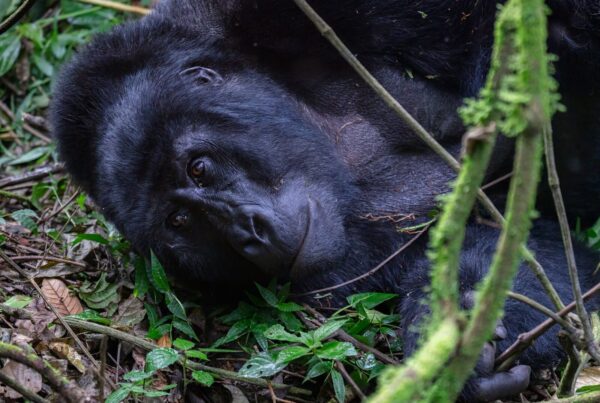
The Nyakagezi family, Mgahinga’s single habituated group, has been in contact with humans for decades and is extremely well-habituated. The family’s smaller range — Mgahinga covers only 33.9 square kilometres — and their long familiarity with rangers means they are located almost every single day. Mgahinga’s gorilla trekking success rate is effectively 100%, compared to Bwindi’s already excellent 98% plus.
The family is also reliably found within two to four hours of moderate hiking. The terrain, while hilly, is less steep and densely vegetated than much of Bwindi. For older travellers, those with mobility concerns, or anyone who wants a physically less demanding experience without sacrificing the gorilla encounter, Mgahinga has a genuine advantage.
The Volcanic Landscape: Scenery That Bwindi Cannot Match
Mgahinga sits within the Virunga Massif, the chain of volcanoes shared with Rwanda and Congo. The park’s landscape is defined by three of these volcanoes: Mount Gahinga (3,474m), Mount Sabyinyo (3,669m), and Mount Muhavura (4,127m). The backdrop of dramatic volcanic peaks against which gorilla trekking takes place is simply not available at Bwindi.
On clear mornings, views from the park boundary extend across the volcanic chain into Rwanda and Congo. The landscape has a geological drama — ancient volcanic eruptions shaped it, and the gorillas evolved within it — that Bwindi’s enclosed ancient forest does not provide. Travellers who combine gorilla trekking with an appreciation of dramatic African landscapes will find Mgahinga visually unforgettable.
Golden Monkeys: An Exclusive Bonus
Mgahinga is one of only two places in Uganda where you can see the golden monkey (Cercopithecus kandti), an Albertine Rift endemic that lives exclusively in the Virunga bamboo forests. The golden monkey trekking experience at Mgahinga costs $60 per person, making it an affordable add-on to the gorilla trek.
Spending one day on gorillas and another on golden monkeys in the same park gives Mgahinga a two-for-one primate experience that Bwindi cannot offer. Golden monkeys are visually spectacular — their bright orange patches against the bamboo forest are as photogenic as any wildlife encounter in East Africa — and far less expensive than a second gorilla permit.
Bwindi does not have golden monkeys. For primate diversity without the cost of travelling between parks, Mgahinga is the clear winner.
Volcano Hiking: Third Activity Bwindi Lacks
Mgahinga offers guided hiking on all three of its volcanoes. Mount Muhavura, at 4,127 metres, is a full-day challenge that rewards summit hikers with views across four countries (Uganda, Rwanda, DRC, and on very clear days Tanzania). The hike costs approximately $60 per person and requires reasonable fitness.
Mount Sabyinyo’s summit sits on the triple border between Uganda, Rwanda, and Congo — you can stand with one foot in each country. This geography makes Mgahinga uniquely positioned as a cross-border landscape destination that happens also to have mountain gorillas.
The Rwanda Connection: Gateway Convenience
For travellers flying into Kigali, Rwanda, and wanting to trek gorillas in Uganda, Mgahinga is the logical choice. The park is approximately three to four hours by road from Kigali, compared to five to six hours for southern Bwindi or eight to nine for Buhoma. Combining Rwanda’s Volcanoes National Park with Uganda’s Mgahinga in a single trip is practical and efficient, creating a cross-border gorilla itinerary that showcases both countries’ conservation achievements.
A Quieter, More Intimate Ranger-Guide Relationship
Because Mgahinga receives fewer visitors, the ratio of guides to visitors is more favourable, and the rangers have more time to share knowledge, observations, and personal insights. The briefing is less rushed, the trackers know the Nyakagezi family intimately, and the guides often share stories about individual gorillas that they have observed for years. This intimacy of knowledge — possible only when rangers work with the same small family consistently — gives Mgahinga encounters a personal depth that larger operations can struggle to replicate.
When Mgahinga Is the Right Choice
Choose Mgahinga over Bwindi when you want the most private, solitary gorilla trekking experience. When you are combining with a visit to Kigali or Rwanda’s Volcanoes NP and want to minimise travel time. When you want to add golden monkey trekking or volcano hiking without travelling between parks. When you prefer shorter, less physically demanding forest trekking. When dramatic volcanic scenery matters to you as much as the gorilla encounter itself.
Final Thoughts
Mgahinga is not Bwindi with fewer gorilla families. It is a complete, distinctive national park experience that happens to include mountain gorillas, volcanic landscapes, golden monkeys, and the kind of solitude that Uganda’s most famous park cannot always offer. For the right traveller, it is not second choice — it is the first choice that others haven’t discovered yet.