Updated
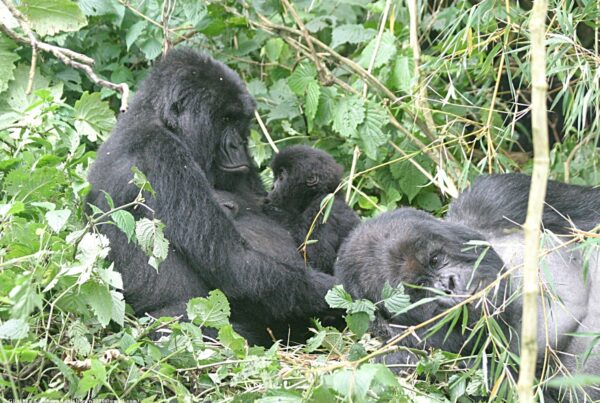
The Mubare gorilla family has lived in the northern sector of Bwindi Impenetrable National Park, near Buhoma village, for longer than any other habituated family in Uganda. They were the first gorilla group in Bwindi to complete the habituation process, in 1993, and the first to be visited by paying tourists in 1994. In the three decades since, the Mubare family has been at the centre of an economic and cultural transformation in Buhoma that has changed almost everything about how the community around them lives. This post explores what that family means — not to tourists who visit briefly, but to the people who have lived alongside them for 30 years.
The Mubare Family: Who They Are
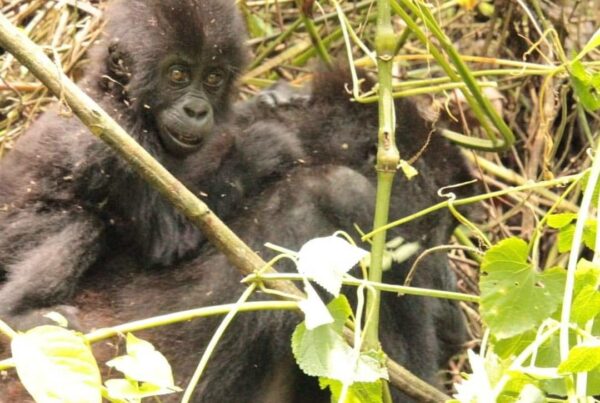
In 2027, the Mubare family consists of approximately 18 individuals: one dominant silverback, two blackbacks, several adult females, and a number of juveniles and infants. The family has changed significantly over 30 years — members have died, been born, and in some cases transferred to other families. The current silverback, Kanyonyi, took over family leadership in 2020 after the death of the previous dominant male, Rwema, who had led the family since 2012.
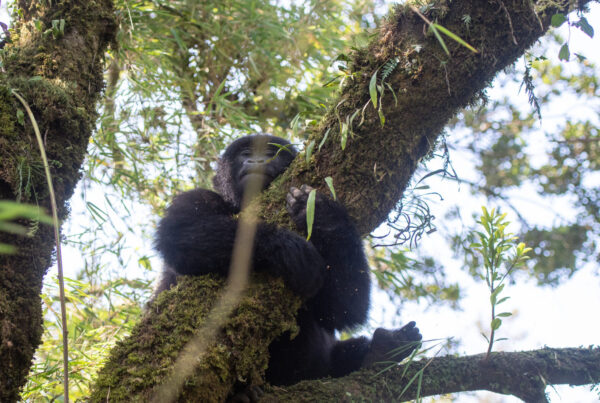
The Mubare family’s home range covers approximately 30 square kilometres in the northern sector of Bwindi, overlapping heavily with the area adjacent to Buhoma village. Community members who have farmed fields on the park boundary for decades have watched the Mubare family from a distance throughout their lives. They know Kanyonyi by sight. They know which females have recently given birth. They track the family’s movements through the sounds the forest makes — the vocalisations, the movement of undergrowth — with a casual intimacy that comes only from 30 years of proximity.
What the Mubare Family Has Meant Economically
The economic history of Buhoma village is inseparable from the Mubare family. The first tourist lodge in Buhoma was built in anticipation of the Mubare habituation being completed. The first ranger jobs, the first porter registrations, the first craft market stalls — all of these followed the arrival of paying tourists who came specifically to see the Mubare family. Every subsequent development in Buhoma’s tourism economy traces back to that first paying visitor in 1994.
By 2027, the Mubare sector supports an estimated 300 direct jobs in guiding, portering, hospitality, and conservation. It generates several hundred thousand USD per year in permit revenue, of which 20 percent flows to community development funds. The school, the health centre, the water system, the community craft cooperative — every piece of infrastructure in Buhoma that was built with CRS funding exists because the Mubare family allowed themselves to become habituated and because tourists came to see them.
Cultural Significance: Beyond Economics
The economic case for gorilla conservation in Buhoma is clear. Less discussed is the cultural significance of the Mubare family to the community around them. Community elders in Buhoma speak of the gorillas not as wildlife managed for tourism, but as permanent residents with whom the community has a relationship — an unequal one in terms of power and legal protection, but a genuine relationship nonetheless.
When Rwema, the previous silverback, died in 2020 after a period of illness, community members who had watched him from farmland edges for eight years described genuine grief. A village elder conducted an informal ceremony at the forest boundary — not prescribed by any conservation protocol, but arising from a felt sense that the death of a being the community had lived alongside for so long warranted acknowledgment. This is not unique to Buhoma. Similar responses to the deaths of known gorilla individuals have been documented in communities across Bwindi.
The Mubare Family and You in 2027
When you trek the Mubare family in 2027, you are meeting a gorilla group with a 30-year recorded history, surrounded by a community that has been shaped by their presence in ways that are still unfolding. The guide who leads your trek knows this family not from a briefing document but from years of daily observation. The community members you pass on the way to the briefing point have watched these gorillas from their farm edges for decades. The infrastructure that makes your visit comfortable — the lodge, the road, the briefing facility — exists because the Mubare family chose this part of the forest as their home and agreed, in whatever way gorillas agree to things, to be looked at.
Contact us to book your trek with the Mubare family for 2027. This is not just a wildlife encounter. It is an encounter with the longest-running experiment in gorilla conservation and community development in East Africa.