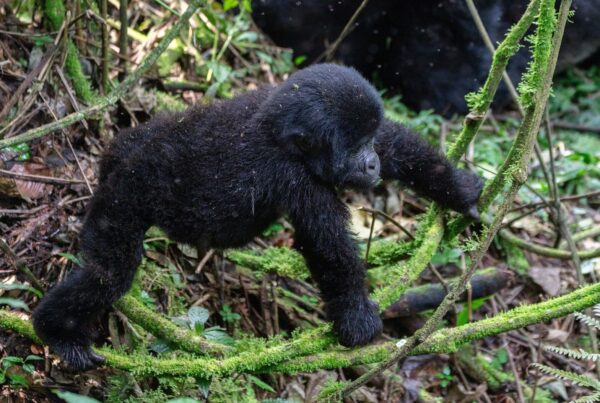
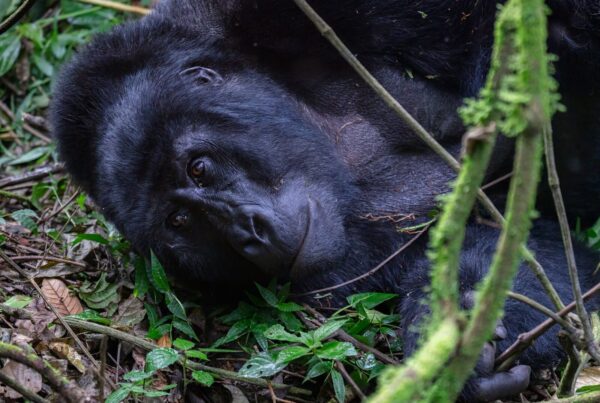
The moment of leadership transition in a mountain gorilla group — when a new silverback assumes dominance over a family — is one of the most consequential events in gorilla social life. The new dominant male’s behaviour in the first weeks and months of his tenure determines the group’s stability, the retention of its females, and the long-term viability of the family as a reproductive unit. The documented cases of succession in Bwindi’s habituated groups, observed by researchers over decades, provide a detailed picture of how this transition works — and how variable its outcomes can be.
The Routes to Dominance
A new silverback can take control of a gorilla group through several routes. The most orderly is internal succession: a blackback or subordinate silverback within an existing group rises to dominance as the existing dominant male ages, declines, or dies. This route maintains group continuity and minimises female dispersal because the new dominant is already familiar to the group’s females. The Nshongi group’s succession in 2014 followed this pattern and resulted in a relatively stable transition.
A more disruptive route is takeover by an external male — a solitary silverback who fights or displays for dominance over a group whose silverback has died or departed. External males are strangers to the group’s females and must establish both physical dominance and social credibility quickly to prevent female dispersal. Their success rate at retaining the group intact is lower than internal successors.
Infanticide and Its Context
A documented behaviour in some gorilla takeover scenarios — infanticide by the new dominant male — is among the most discussed topics in gorilla biology. The evolutionary logic is well-established: infants fathered by the previous silverback represent a reproductive cost to the new male, and their removal accelerates the return of nursing females to reproductive cycling. However, infanticide is not universal in gorilla group takeovers. It is more common in external takeovers than in internal successions, and it appears to depend on the specific social dynamics of the group and the behaviour of individual females.
In Bwindi’s habituated groups, the documented cases of infanticide during succession have been carefully recorded by researchers. The data show that infanticide occurred in approximately thirty percent of external takeover scenarios where infants under two years were present at the time of the transition. In internal succession scenarios, the rate was substantially lower. Female behaviour — specifically whether females actively defended their infants and whether other group members supported them — influenced the outcome.
The Stabilisation Period
Following a successful transition — whether internal or external — the new dominant male typically undergoes a period of several months during which the group’s social structure restabilises. Female transfers in and out of the group are more common during this period than at other times. The new silverback’s dominance display behaviour is more frequent as he establishes the consistent authority that his predecessor had accumulated over years.
Researchers observe that groups with experienced trackers who know the group’s individuals well are better monitored during this critical period — behavioural changes that indicate stress or instability are detected more quickly, and Gorilla Doctors can be notified of potential welfare concerns before they become crises. Gorilla trekking in Uganda in 2027 takes visitors to groups whose social histories include these transitions. The permit costs $800. The dominant silverback you observe has earned his position. The story of how is part of the living record that researchers continue to document.
Frequently Asked Questions
A silverback is a mature male mountain gorilla (12+ years old) whose saddle-area back hair has turned silver-grey — a visible sign of adulthood. The silverback leads and protects his family group, decides when and where the group moves, and mediates conflicts. Each habituated gorilla family in Uganda has at least one silverback.
Adult male mountain gorillas weigh 140–200kg and stand 1.5–1.8m tall. Their arm span can reach 2.3 metres. Females are significantly smaller at 70–113kg. Mountain gorillas are the largest living primates. Despite their size, mountain gorillas are generally peaceful and only become aggressive if threatened.
Habituated silverbacks are accustomed to small groups of human visitors and generally ignore the trekking group. You may see the silverback feeding, resting, grooming family members, or moving the group through the forest. Direct eye contact should be avoided. If a silverback charges or bluff-charges, rangers instruct visitors to crouch down, avoid eye contact, and stay still.
A blackback is a sub-adult male gorilla (8–12 years old) whose hair has not yet turned silver. Blackbacks have not reached full maturity and typically live in the family group until they leave to establish their own. A silverback is a fully mature male, larger, dominant, and recognisable by the silver saddle. Both may be present in a single habituated family.
Uganda is home to the mountain gorilla (Gorilla beringei beringei), one of two subspecies of eastern gorilla. They live exclusively in the Virunga volcanic highlands (Uganda/Rwanda/DRC) and Bwindi Impenetrable Forest (Uganda only). Mountain gorillas are the only gorilla subspecies that cannot survive in captivity — every individual you can trek is a wild animal.