Updated
blackback gorilla challenge silverback Bwindi Uganda is a subject central to Uganda’s wildlife tourism, where mountain gorilla conservation and responsible visitor experiences go hand in hand. In every healthy gorilla group, the dominant silverback’s authority rests on a combination of physical dominance and social credibility accumulated over years. That authority is periodically tested by maturing blackbacks — young adult males who are approaching the age and size at which challenging for dominance becomes a viable strategy. Most challenges end without physical contact: the display phase is sufficient to confirm the silverback’s dominance and the blackback accepts subordinate status or eventually departs to become a solitary male. The documented case of a blackback challenge within one of Bwindi’s most closely monitored habituated groups — and what happened to the challenger in the years that followed — is a detailed record of gorilla social negotiation.
The Blackback Who Challenged the Silverback and Lost: What Happened Next
The Development of a Challenge
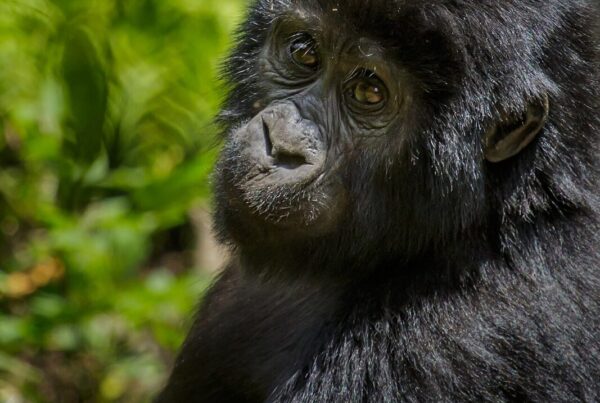
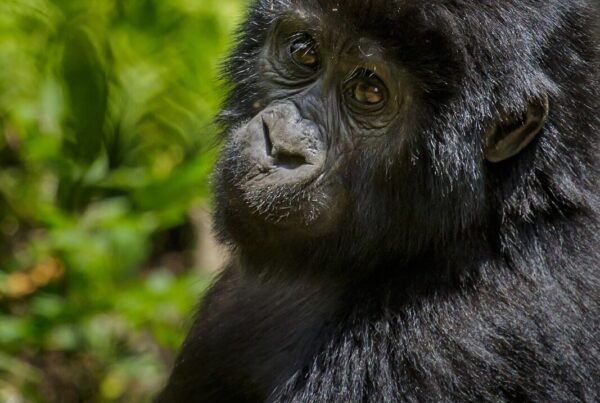
Blackbacks in a gorilla group begin displaying competitive behaviour from approximately ten years of age. Initially this is directed at other subordinate males or juveniles — practice dominance behaviour that imposes no real cost on the dominant silverback. As the blackback approaches twelve to fourteen years of age and begins developing the silver saddle that marks physical maturity, interactions with the dominant male become more frequent and occasionally more direct.
The blackback in this account was observed by researchers to have been displaying increasingly confident behaviour toward the group’s silverback from approximately age thirteen. The silverback’s response was initially mild — a brief chest beat, a direct look, a posture that communicated dominance without investing significant energy in the interaction. Over approximately eighteen months, the researchers documented a gradual escalation in the frequency and intensity of these interactions.
The Confrontation
The confrontation that ended the challenge occurred on a morning when the trekking group was not present — it was documented by the tracker team assigned to the group. The blackback initiated a direct charge at the silverback in a feeding area. The silverback met it. The physical contact was brief — approximately fifteen seconds — and ended with the blackback disengaging and retreating to the group’s edge. He received a bite to his left shoulder. The silverback sustained no injuries visible to observers.
The blackback’s defeat was definitive. Researchers observed a complete reversal of his previous assertive behaviour in the days following the confrontation — submission postures, avoidance of direct proximity to the silverback, reduced confidence in interactions with other group members. The social cost of a failed challenge is substantial and visible.
What Happened Next
The blackback remained in the group for approximately fourteen months following the failed challenge. During this period he occupied the lowest status position among the adult males. His shoulder wound was treated by Gorilla Doctors — a minor intervention — and healed without complication. He eventually departed the group as a solitary male and was last monitored moving toward the eastern section of the park, outside the regular monitoring area of the group he had left.
Solitary males sometimes go on to found new groups, as the story of the Bweza group’s silverback illustrates. Some remain solitary. The outcome depends on factors — luck, timing, the availability of females willing to transfer — that cannot be predicted. The blackback’s story continues in a part of the forest that is less well monitored. The gorilla permit costs $800. The group he left continues to be visited by trekkers at Bwindi. The silverback who defeated him is still its dominant male.
Frequently Asked Questions
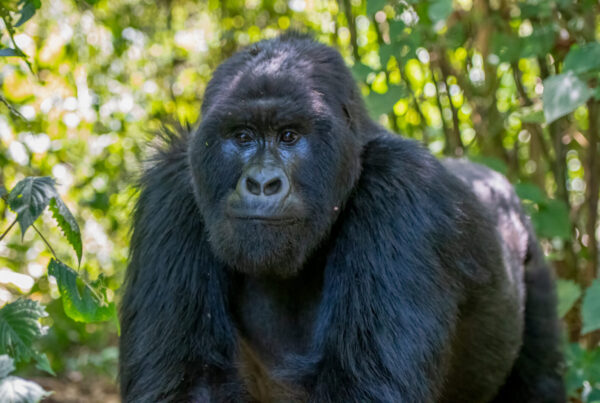
A silverback is a mature male mountain gorilla (12+ years old) whose saddle-area back hair has turned silver-grey — a visible sign of adulthood. The silverback leads and protects his family group, decides when and where the group moves, and mediates conflicts. Each habituated gorilla family in Uganda has at least one silverback.
Adult male mountain gorillas weigh 140–200kg and stand 1.5–1.8m tall. Their arm span can reach 2.3 metres. Females are significantly smaller at 70–113kg. Mountain gorillas are the largest living primates. Despite their size, mountain gorillas are generally peaceful and only become aggressive if threatened.
Habituated silverbacks are accustomed to small groups of human visitors and generally ignore the trekking group. You may see the silverback feeding, resting, grooming family members, or moving the group through the forest. Direct eye contact should be avoided. If a silverback charges or bluff-charges, rangers instruct visitors to crouch down, avoid eye contact, and stay still.
A blackback is a sub-adult male gorilla (8–12 years old) whose hair has not yet turned silver. Blackbacks have not reached full maturity and typically live in the family group until they leave to establish their own. A silverback is a fully mature male, larger, dominant, and recognisable by the silver saddle. Both may be present in a single habituated family.
Uganda is home to the mountain gorilla (Gorilla beringei beringei), one of two subspecies of eastern gorilla. They live exclusively in the Virunga volcanic highlands (Uganda/Rwanda/DRC) and Bwindi Impenetrable Forest (Uganda only). Mountain gorillas are the only gorilla subspecies that cannot survive in captivity — every individual you can trek is a wild animal.