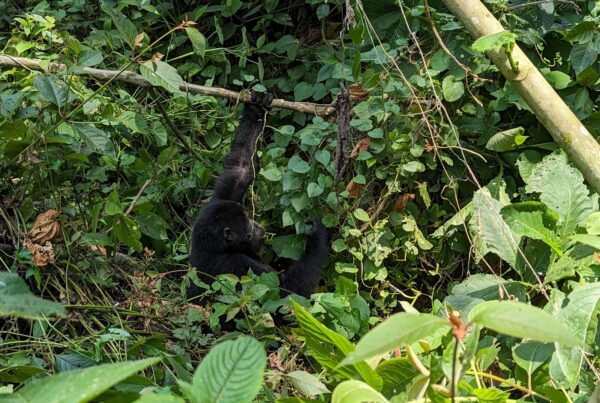
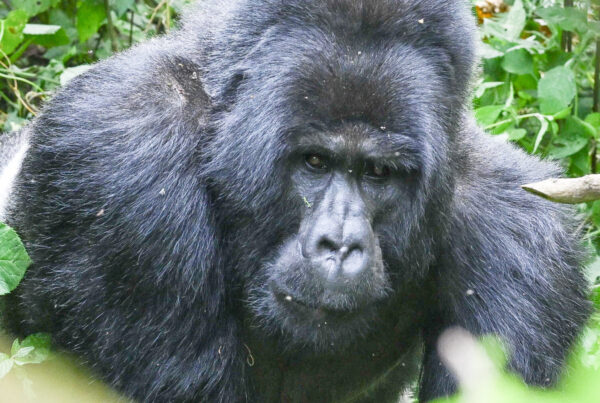
The death of a silverback is a biological event with cascading consequences for his gorilla family. It is also, in communities adjacent to Bwindi where specific silverbacks have been known by name and observed for years, a cultural event that communities respond to with something that resembles grief. This post examines both dimensions — what happens ecologically when a dominant silverback dies, and what the death of a known individual means to the human communities that have lived alongside him. It is a story about the unusual intimacy that develops between people and wildlife when they share a landscape for long enough.
The Ecological Consequences of a Silverback’s Death
A dominant silverback is the social centre of his gorilla family. His death triggers a period of instability that can, in the worst cases, result in infanticide, family fragmentation, and significant stress for all family members. The specific outcome depends on the family’s composition at the time of death. If there is an established blackback who has been building social relationships within the family, he may assume dominance relatively quickly with minimal disruption. If there is no obvious successor, the family may fragment into smaller groups, each following a different adult male.
In habituated families, rangers and trackers monitor the post-death period with heightened intensity. Infant protection is the primary concern: unrelated males who move into the family from outside may commit infanticide as a reproductive strategy. UWA’s response protocol for the death of a dominant silverback in a habituated family includes immediate increase in daily monitoring frequency and the deployment of veterinary surveillance if any family members show signs of stress-related illness.
When Rwema Died: The Mubare Family in 2020
Rwema, the dominant silverback of the Mubare family from 2012 to 2020, died in August 2020 after several months of declining health. He was estimated to be 35 to 40 years old — elderly for a silverback — and his decline had been observed and monitored by UWA and MGVP veterinarians over his final year. His death was natural and was confirmed by trackers who found his body in the family’s sleeping area. He had died in the night, surrounded by family members.
The rangers who had tracked Rwema for eight years described his death in terms that went beyond professional reporting. The senior tracker, Robert, had named his youngest son Rwema in 2014 — after the gorilla — a gesture of affection and identification that is unusual but not unheard of in communities where specific gorillas are known over long periods. He learned of the silverback’s death while on patrol and said nothing for the remainder of the shift. “He was there when I started. He will not be here tomorrow. That is something,” he said in a debrief the following day.
Community Response: The Informal Memorial
News of Rwema’s death spread through Buhoma village within hours. The village elder conducted an informal gathering at the forest boundary — not prescribed by any protocol, not organised by UWA, but arising from the felt sense of people who had lived alongside this gorilla for a decade that his death warranted acknowledgment. Several community members left offerings of plantain and forest flowers at the boundary marker. The gathering lasted about 20 minutes. It was not reported in any press release.
This response cannot be fully explained by economics. Community members who left offerings had no economic relationship with Rwema specifically — they were not employed directly on his trekking days, did not receive income calibrated to his survival. Their response was cultural: the recognition of a known individual whose presence had been part of the texture of their daily landscape for years. It is a response that reveals something important about what long proximity between humans and wildlife can produce when conditions allow it — not just economic interdependence, but a kind of shared existence that neither side consciously chooses but that shapes both.
The Family After Rwema: Kanyonyi Takes Over
The Mubare family’s transition after Rwema’s death was managed better than most. Kanyonyi, a blackback who had been in the family for six years and had established strong social bonds with the adult females, assumed dominance within three weeks without significant conflict. No infants were harmed. The family remained cohesive. By late 2020, the Mubare family was trekked again after a brief closure during the transition period. Kanyonyi’s first encounter with a tourist group was observed by seven people who watched a new silverback establish his authority over a family they had specifically come to see — an encounter shaped by the biological drama of succession and made possible by the monitoring and management that allowed a smooth transition.
In 2027, Kanyonyi leads the Mubare family through the same forest his predecessor ranged for eight years. He is known by name to every guide and tracker in the Buhoma sector. In time, he too will be part of the shared landscape of a community whose story has become, over 30 years, inseparable from the gorillas beside them.
Frequently Asked Questions
The global mountain gorilla population is approximately 1,100 individuals — one of the smallest populations of any great ape. They exist in two separate populations: one in the Virunga Massif spanning Uganda, Rwanda, and DRC; and one in Bwindi Impenetrable Forest (Uganda only). The population has grown from approximately 620 in the 1980s, largely due to tourism-funded conservation.
Uganda Wildlife Authority directs 20% of every gorilla permit fee to communities adjacent to Bwindi and Mgahinga. These funds pay for school construction, healthcare programmes, borehole maintenance, and community microfinance. Permit revenue also funds ranger salaries, anti-poaching patrols, and the research teams that monitor gorilla health daily.
The Batwa (also called Twa) are an indigenous forest people who lived inside Bwindi for thousands of years until it was gazetted as a national park in 1991. Conservation displaced them from their ancestral forest. Gorilla tourism revenue now funds Batwa cultural programmes and livelihoods. The Batwa Cultural Trail at Buhoma sector is run by the Batwa community and is one of the most authentic cultural experiences near Bwindi.
Mountain gorillas are classified as Endangered on the IUCN Red List — one step down from Critically Endangered, which they held until 2018. Their population has grown consistently since the 1980s, making them one of the few great ape populations increasing in number. This recovery is directly attributed to the conservation funding generated by gorilla tourism.
Uganda is home to the mountain gorilla (Gorilla beringei beringei), one of two subspecies of eastern gorilla. They live exclusively in the Virunga volcanic highlands (Uganda/Rwanda/DRC) and Bwindi Impenetrable Forest (Uganda only). Mountain gorillas are the only gorilla subspecies that cannot survive in captivity — every individual you can trek is a wild animal.