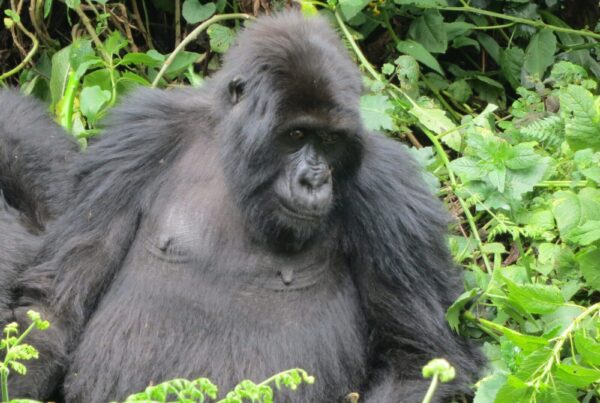
The fear of spending USD $800 and trekking for hours without finding the gorillas is the most common anxiety cited by first-time Uganda gorilla trekking planners — and it is also, in practice, one of the least likely outcomes on the entire safari: UWA and independent operator data consistently show a 98–99% gorilla encounter success rate across all Bwindi sectors and all seasons, because the daily tracking system that sends dedicated ranger teams into the forest before dawn to locate each habituated family from their overnight nest sites means visitor groups are directed toward known gorilla positions rather than searching blind, and the rare miss cases (0.5–1% of visits) are typically handled under UWA’s rescheduling policy at no additional permit cost. This guide covers how the tracking system actually works, what happens on the rare days when the gorillas cannot be reached, what your legal rights are as a permit holder if the encounter fails, and the honest statistical picture of encounter success by sector and season. Understanding this clearly before you book replaces the anxiety of “what if” with accurate probability — and the accurate probability is overwhelmingly in your favour. For the full permit system, see the permit guide.
Gorilla Encounter Success: Key Facts
- Success rate: 98–99% across all Bwindi sectors — tracking system starts from overnight nest location
- Why it works: dedicated tracker teams locate each family from last night’s nests before visitors depart
- If not found: UWA policy allows one-time permit rescheduling at no additional permit cost
- Most common cause of rare misses: family moved to distant range section overnight — not permanent disappearance
- Not a refund situation: UWA does not issue cash refunds — rescheduling is the standard remedy
- Travel insurance covering permit loss due to unsuccessful trek is strongly recommended
After months of planning, thousands of dollars in flights and permits, and hours of hiking through dense forest, every gorilla trekker shares the same unspoken fear. What if we do not find them? What if the gorillas move too far, too fast? What if the trackers lose the trail? What if today is the day that the ninety-five percent success rate fails?
This fear is natural and rational. You are not visiting animals in an enclosure with guaranteed viewing times. You are tracking wild mountain gorillas through one hundred and twenty-five square kilometres of dense rainforest, searching for individuals who move freely, change direction unpredictably, and possess no obligation to be found. Understanding what actually happens when gorillas prove elusive requires separating myth from reality, and examining how UWA’s tracking system works, what protocols exist for failed encounters, and what your rights and options are as a permit holder.
How Trackers Find Gorillas Every Morning
To understand why gorillas are almost always found, you need to understand the tracking system that operates before you even arrive at the briefing point. Every morning before dawn, while trekkers are still sleeping in their lodges, advance teams of UWA trackers and guides enter the forest. These trackers know their assigned gorilla families intimately. They know yesterday’s nesting location, the family’s typical ranging patterns, and the individual characteristics of each silverback, female, and juvenile.
The trackers begin at the previous night’s nests. Gorillas build new sleeping nests every evening, and these nests are relatively easy to identify. A fresh nest contains warm dung, crushed vegetation still releasing sap, and sometimes stray hairs. From the nest site, trackers follow the morning trail, reading subtle signs that an untrained eye would never notice. Bent vegetation, snapped twigs at a specific height, footprints in soft mud, and discarded food remains all form a narrative that experienced trackers can read as fluently as you read this sentence.
The trail left by a gorilla family is surprisingly distinctive. An adult silverback weighs up to two hundred kilograms and moves through vegetation with force that leaves obvious marks. Females and juveniles leave smaller but still identifiable signs. Trackers can often determine not just the direction of travel but the approximate time since passage, the speed at which the family was moving, and even whether they were feeding, travelling, or playing.
By the time your briefing concludes at eight in the morning, trackers have typically been following the gorillas for three or four hours. They radio their location and progress to your guide, who receives updates throughout the trek. In most cases, the trackers have already located the gorillas by the time your group enters the forest, and your hike is essentially a guided walk to a known destination.
Why Gorillas Sometimes Cannot Be Found
Despite this sophisticated tracking system, circumstances occasionally conspire against even the most experienced trackers. The most common reason for extended searches is simply that the gorillas moved further than expected between nest site and current location. A family that was feeding in a valley yesterday may have climbed to a ridge top this morning, adding several kilometres to the tracking distance.
Weather significantly affects tracking. Heavy rain overnight can wash away footprints and dung, leaving fewer signs to follow. Wind can scatter vegetation damage, making it harder to distinguish fresh gorilla passage from older disturbances. Fog reduces visibility and can cause trackers to miss visual cues that would normally guide them.
Gorilla families sometimes split temporarily. A dominant silverback may take several females and juveniles in one direction while subordinate males or nursing mothers remain in another area. Trackers assigned to the main group may not immediately notice that some individuals have separated, leading them to follow the wrong trail initially.
The most challenging situation occurs when gorillas cross into areas of extremely dense vegetation or steep terrain where trackers cannot follow easily. Bwindi’s terrain includes cliffs, ravines, and thickets of vegetation so dense that even trackers struggle to pass. Gorillas navigate these areas with ease using their strength and agility, but human trackers may need to find circuitous routes around obstacles, adding significant time to the search.
The Timeline of a Typical Search
When trackers radio that they have not yet located the gorillas, your guide faces a decision. The protocol depends on how much time has elapsed, how close the trackers are to a confirmed location, and the physical condition of your trekking group.
If trackers report that they are close to finding the gorillas, perhaps within thirty minutes of confirmed location, your guide will typically continue leading the group forward at a normal pace. You may take additional rest stops while waiting for confirmation, turning the trek into a more leisurely forest walk with occasional radio conversations.
If trackers have lost the trail entirely or the gorillas have moved into inaccessible terrain, your guide will assess the situation. Some guides send a faster scout ahead to assist the trackers while the main group proceeds slowly. Others may decide to redirect the group toward a different gorilla family if one is known to be in a more accessible location.
UWA does not enforce a strict time limit for how long groups will search. In practice, most guides will continue searching for three to four hours of hiking before recommending that the group turn back. By this point, trekkers are typically fatigued, and the likelihood of finding the gorillas and still having meaningful viewing time diminishes.
What Happens When Gorillas Truly Cannot Be Found
In the rare event that your group does not locate gorillas after a reasonable search effort, UWA has established protocols. Your guide will explain the situation clearly and recommend returning to the trailhead. There is no dramatic alternative ending, no compensation offered on the spot, and no guarantee of success the following day unless you hold a permit for another trek.
UWA’s official policy states that permit holders who do not see gorillas due to the animals’ movements may request a partial refund or reschedule, subject to specific conditions. The partial refund is typically fifty percent of the permit fee, meaning four hundred dollars refunded from an eight-hundred-dollar foreign non-resident permit. To qualify, you must have completed the full trekking effort and been turned back by your guide due to inability to locate the gorillas, not due to your own decision to quit.
The rescheduling option allows you to apply your permit to another available trekking date. This option depends entirely on permit availability, which during peak season may be zero for weeks. During low season, rescheduling is more feasible. Neither refunds nor rescheduling are automatic; they require formal application to UWA with documentation from your guide confirming that the gorillas were not found.
It is important to understand that these policies exist precisely because failed encounters are so uncommon. If gorillas were frequently missed, UWA could not sustain a business model based on non-refundable permits. The fact that they offer partial protection for the rare failures is a testament to how reliable the tracking system usually is.
The Actual Statistics
UWA does not publish official annual statistics on gorilla encounter rates, but conservation researchers and tour operators consistently estimate the success rate at between ninety-three and ninety-eight percent. The variation reflects different definitions of success. Some operators count any visual contact, even brief glimpses through vegetation, while others count only full, sustained encounters.
The small percentage of unsuccessful treks is not randomly distributed. Certain factors increase the likelihood of a failed encounter. Trekking during the heaviest rainy season, when trails wash out and gorillas move unpredictably, carries slightly higher risk. Families that have recently experienced social disruption, such as a silverback takeover or the death of an infant, may range more widely than usual as they establish new territories or grieving patterns.
Nyakagezi, the single habituated family in Mgahinga Gorilla National Park, has historically been slightly less reliable to locate than Bwindi’s families because their territory spans volcanic slopes where tracking is more difficult. However, improvements in tracking techniques have reduced this gap in recent years.
How to Minimise Your Risk
While no strategy guarantees a successful encounter, certain choices tilt the odds in your favour. Booking during the dry seasons of June through September or December through February reduces weather-related tracking difficulties. Trekking with an experienced operator who maintains good relationships with UWA trackers can sometimes provide informal advantages, such as advance knowledge of which families are ranging close to trailheads.
Being physically fit enough to sustain the trek for several hours increases the window of time available for searching. Groups that need to turn back due to fatigue close their own window of opportunity. Hiring a porter ensures that you conserve energy for the search itself rather than exhausting yourself carrying gear.
Flexibility with dates helps if you are booking during periods when permit availability is not tight. If your first day fails, having buffer days in your itinerary allows you to book a second permit if one becomes available due to cancellation.
The Mental Approach to Uncertainty
Perhaps the most important preparation is psychological. Gorilla trekking is not a theme park ride with guaranteed outcomes. It is a wild animal encounter in a remote ecosystem, and the uncertainty is part of what makes it meaningful. The very fact that success is not guaranteed makes the moment of first contact more profound.
Experienced wildlife travellers understand that a day spent searching for gorillas in Bwindi Impenetrable Forest is still a day spent in one of the planet’s most remarkable ecosystems. You will see other primates, hear extraordinary bird calls, walk through vegetation that exists almost nowhere else on Earth, and experience the physical and mental challenge of moving through truly wild terrain. These experiences have value independent of whether gorillas appear.
If your trek is unsuccessful, the disappointment is real and valid. Allow yourself to feel it. But do not let it define your entire Uganda experience. The country offers extraordinary wildlife encounters beyond gorillas, from chimpanzee tracking in Kibale to game drives in Queen Elizabeth National Park to boat cruises on the Nile. A failed gorilla trek is a chapter, not the whole story.
Conclusion
The honest truth is that most gorilla treks succeed. The tracking system is sophisticated, the trackers are skilled, and the gorillas’ daily movements are predictable enough that experienced teams can find them with remarkable consistency. When treks do fail, it is usually due to circumstances beyond anyone’s control: weather, unexpected gorilla movements, or terrain that humans cannot navigate as easily as gorillas.
UWA’s refund and rescheduling policies provide a partial safety net for the rare failures, though neither option fully compensates for the disappointment of missing the encounter you travelled across the world to experience. The best protection is understanding the risks, preparing physically and mentally, and embracing the uncertainty as part of the wildness that makes gorilla trekking extraordinary.
When you step into Bwindi’s forest, you are entering the gorillas’ world on their terms. Sometimes they reveal themselves. Sometimes they remain hidden in the green depths. Either way, you have walked where mountain gorillas walk, breathed the air they breathe, and shared space with a world that most humans will never experience. That is worth something, even on the rare days when the gorillas themselves remain unseen.
Frequently Asked Questions
The probability of not encountering gorillas on a scheduled Uganda gorilla trek is approximately 1–2% across all sectors and seasons — meaning 98–99% of all visits produce a gorilla encounter. This success rate is consistent year-round and across wet and dry seasons because the tracking system starts from the known overnight nest location rather than requiring a full-forest search. The 1–2% failure scenarios are concentrated in specific circumstances: the gorilla family crossing into the national park’s most remote terrain overnight, the tracker team being unable to follow rapidly due to unusually difficult vegetation or weather, or inter-group conflict that causes a family to move erratically over a large distance in a short time. None of these are predictable by the visitor or the operator — they are inherent to managing access to genuinely wild animals in a large protected area. What does UWA do if they cannot find the gorillas on my permit day? If gorillas are not found on your scheduled trek day, Uganda Wildlife Authority’s formal policy is to offer a one-time rescheduling of the permit to another available date within the current permit year (June to June UWA financial year) at no additional permit fee. This is the standard remedy — UWA does not issue cash refunds for unsuccessful treks as a general policy. The rescheduled date must be mutually agreed between the permit holder and UWA based on available permit dates and the visitor’s travel schedule. In practice, rescheduling requires flexibility in your travel dates — if you have a fixed departure flight the day after your trek, rescheduling may not be practically achievable. This is why travel insurance that includes trip disruption and activity cancellation cover is strongly recommended for gorilla trekking — the insurance can cover the economic value of the lost permit if rescheduling is not possible. Can I get a refund on a gorilla permit if the trek fails? UWA’s standard policy does not include cash refunds for unsuccessful gorilla treks — the remedy is rescheduling to another available date. Some tour operators offer their own financial remedy (partial trip credit, accommodation waiver) for unsuccessful treks as part of their service guarantee, separate from the UWA permit rescheduling. If you book directly through UWA without an operator and the trek fails, the rescheduling policy is the only available remedy. If you book through a licensed operator, check their specific policy for unsuccessful trek compensation at the time of booking — this is a contractual term you want clarity on before paying, not after an unsuccessful day. For significant economic protection against the possibility of a failed trek, travel insurance is the appropriate financial instrument. Do some sectors or seasons have better gorilla encounter reliability? Encounter success rates are consistently high across all Bwindi sectors regardless of season — the 98–99% success figure applies to Buhoma, Ruhija, Rushaga, and Nkuringo in both wet and dry seasons. Dry season (June–September, December–February) treks tend to be physically easier because trails are firmer and approach distances may be shorter if families range closer to the forest edge near water sources. Wet season treks are more physically challenging but the gorillas are equally present and equally findable — the tracking system works in all weather conditions. The one factor that meaningfully affects encounter quality (not success rate) is weather during the encounter itself: clear dry season mornings produce better photography light than overcast wet season conditions, but the animals are present and the visit is equally valid regardless of light quality. What happens during the trek if the gorillas move away before the group arrives? If the gorilla family moves significantly between the tracker’s morning report and the visitor group’s arrival at the tracked position, the trackers continue following the family and radio updated GPS positions to the ranger leading the visitor group. The visitor group adjusts route accordingly and continues toward the updated position. This dynamic tracking and rerouting happens on most treks to some degree — it is the normal operation of the system, not a warning sign of an imminent unsuccessful visit. The 60-minute encounter timer does not start until the visitor group actually contacts the gorillas, regardless of how many times the route has been adjusted. Visitors who are trekking and see the ranger pause to radio in are observing the tracking system’s normal mid-trek communication — not a crisis. Book your trek with confidence Uganda Gorilla Families — the habituated families with 98–99% daily encounter reliability Gorilla Permit Guide — book the permit; the tracking system handles the rest Bwindi Sector Guide — sector choice by terrain preference, not by success rate variation Full Safari Cost Guide — travel insurance as a line item in the trip budget Safari Itineraries — build flexibility days into the itinerary for rescheduling if needed Further Reading What Happens If Gorillas Are Not Found on Trek? The Truth Gorilla Myths and Fascinating Facts: Unveiling the Truth About Africa’s Gentle Giants Is Uganda Gorilla Trekking Right for You? The Honest Self-Assessment What Happens If It Rains on Your Trekking Day? Are Gorillas Dangerous? The Truth About Gorilla Aggression What Happens at the Gorilla Trekking Briefing? A Complete Walkthrough What Happens If It Rains During Gorilla Trekking? Rainy Day Guide What Happens If You Don’t See Gorillas? Failed Trek Protocol Explained Gorilla Trekking Myths vs Facts: Separating Truth From Fiction What Happens If It Rains on My Gorilla Trek? Complete Guide <
If gorillas are not found on your scheduled trek day, Uganda Wildlife Authority’s formal policy is to offer a one-time rescheduling of the permit to another available date within the current permit year (June to June UWA financial year) at no additional permit fee. This is the standard remedy — UWA does not issue cash refunds for unsuccessful treks as a general policy. The rescheduled date must be mutually agreed between the permit holder and UWA based on available permit dates and the visitor’s travel schedule. In practice, rescheduling requires flexibility in your travel dates — if you have a fixed departure flight the day after your trek, rescheduling may not be practically achievable. This is why travel insurance that includes trip disruption and activity cancellation cover is strongly recommended for gorilla trekking — the insurance can cover the economic value of the lost permit if rescheduling is not possible. Can I get a refund on a gorilla permit if the trek fails? UWA’s standard policy does not include cash refunds for unsuccessful gorilla treks — the remedy is rescheduling to another available date. Some tour operators offer their own financial remedy (partial trip credit, accommodation waiver) for unsuccessful treks as part of their service guarantee, separate from the UWA permit rescheduling. If you book directly through UWA without an operator and the trek fails, the rescheduling policy is the only available remedy. If you book through a licensed operator, check their specific policy for unsuccessful trek compensation at the time of booking — this is a contractual term you want clarity on before paying, not after an unsuccessful day. For significant economic protection against the possibility of a failed trek, travel insurance is the appropriate financial instrument. Do some sectors or seasons have better gorilla encounter reliability? Encounter success rates are consistently high across all Bwindi sectors regardless of season — the 98–99% success figure applies to Buhoma, Ruhija, Rushaga, and Nkuringo in both wet and dry seasons. Dry season (June–September, December–February) treks tend to be physically easier because trails are firmer and approach distances may be shorter if families range closer to the forest edge near water sources. Wet season treks are more physically challenging but the gorillas are equally present and equally findable — the tracking system works in all weather conditions. The one factor that meaningfully affects encounter quality (not success rate) is weather during the encounter itself: clear dry season mornings produce better photography light than overcast wet season conditions, but the animals are present and the visit is equally valid regardless of light quality. What happens during the trek if the gorillas move away before the group arrives? If the gorilla family moves significantly between the tracker’s morning report and the visitor group’s arrival at the tracked position, the trackers continue following the family and radio updated GPS positions to the ranger leading the visitor group. The visitor group adjusts route accordingly and continues toward the updated position. This dynamic tracking and rerouting happens on most treks to some degree — it is the normal operation of the system, not a warning sign of an imminent unsuccessful visit. The 60-minute encounter timer does not start until the visitor group actually contacts the gorillas, regardless of how many times the route has been adjusted. Visitors who are trekking and see the ranger pause to radio in are observing the tracking system’s normal mid-trek communication — not a crisis. Book your trek with confidence Uganda Gorilla Families — the habituated families with 98–99% daily encounter reliability Gorilla Permit Guide — book the permit; the tracking system handles the rest Bwindi Sector Guide — sector choice by terrain preference, not by success rate variation Full Safari Cost Guide — travel insurance as a line item in the trip budget Safari Itineraries — build flexibility days into the itinerary for rescheduling if needed Further Reading What Happens If Gorillas Are Not Found on Trek? The Truth Gorilla Myths and Fascinating Facts: Unveiling the Truth About Africa’s Gentle Giants Is Uganda Gorilla Trekking Right for You? The Honest Self-Assessment What Happens If It Rains on Your Trekking Day? Are Gorillas Dangerous? The Truth About Gorilla Aggression What Happens at the Gorilla Trekking Briefing? A Complete Walkthrough What Happens If It Rains During Gorilla Trekking? Rainy Day Guide What Happens If You Don’t See Gorillas? Failed Trek Protocol Explained Gorilla Trekking Myths vs Facts: Separating Truth From Fiction What Happens If It Rains on My Gorilla Trek? Complete Guide <
UWA’s standard policy does not include cash refunds for unsuccessful gorilla treks — the remedy is rescheduling to another available date. Some tour operators offer their own financial remedy (partial trip credit, accommodation waiver) for unsuccessful treks as part of their service guarantee, separate from the UWA permit rescheduling. If you book directly through UWA without an operator and the trek fails, the rescheduling policy is the only available remedy. If you book through a licensed operator, check their specific policy for unsuccessful trek compensation at the time of booking — this is a contractual term you want clarity on before paying, not after an unsuccessful day. For significant economic protection against the possibility of a failed trek, travel insurance is the appropriate financial instrument. Do some sectors or seasons have better gorilla encounter reliability? Encounter success rates are consistently high across all Bwindi sectors regardless of season — the 98–99% success figure applies to Buhoma, Ruhija, Rushaga, and Nkuringo in both wet and dry seasons. Dry season (June–September, December–February) treks tend to be physically easier because trails are firmer and approach distances may be shorter if families range closer to the forest edge near water sources. Wet season treks are more physically challenging but the gorillas are equally present and equally findable — the tracking system works in all weather conditions. The one factor that meaningfully affects encounter quality (not success rate) is weather during the encounter itself: clear dry season mornings produce better photography light than overcast wet season conditions, but the animals are present and the visit is equally valid regardless of light quality. What happens during the trek if the gorillas move away before the group arrives? If the gorilla family moves significantly between the tracker’s morning report and the visitor group’s arrival at the tracked position, the trackers continue following the family and radio updated GPS positions to the ranger leading the visitor group. The visitor group adjusts route accordingly and continues toward the updated position. This dynamic tracking and rerouting happens on most treks to some degree — it is the normal operation of the system, not a warning sign of an imminent unsuccessful visit. The 60-minute encounter timer does not start until the visitor group actually contacts the gorillas, regardless of how many times the route has been adjusted. Visitors who are trekking and see the ranger pause to radio in are observing the tracking system’s normal mid-trek communication — not a crisis. Book your trek with confidence Uganda Gorilla Families — the habituated families with 98–99% daily encounter reliability Gorilla Permit Guide — book the permit; the tracking system handles the rest Bwindi Sector Guide — sector choice by terrain preference, not by success rate variation Full Safari Cost Guide — travel insurance as a line item in the trip budget Safari Itineraries — build flexibility days into the itinerary for rescheduling if needed Further Reading What Happens If Gorillas Are Not Found on Trek? The Truth Gorilla Myths and Fascinating Facts: Unveiling the Truth About Africa’s Gentle Giants Is Uganda Gorilla Trekking Right for You? The Honest Self-Assessment What Happens If It Rains on Your Trekking Day? Are Gorillas Dangerous? The Truth About Gorilla Aggression What Happens at the Gorilla Trekking Briefing? A Complete Walkthrough What Happens If It Rains During Gorilla Trekking? Rainy Day Guide What Happens If You Don’t See Gorillas? Failed Trek Protocol Explained Gorilla Trekking Myths vs Facts: Separating Truth From Fiction What Happens If It Rains on My Gorilla Trek? Complete Guide <
Encounter success rates are consistently high across all Bwindi sectors regardless of season — the 98–99% success figure applies to Buhoma, Ruhija, Rushaga, and Nkuringo in both wet and dry seasons. Dry season (June–September, December–February) treks tend to be physically easier because trails are firmer and approach distances may be shorter if families range closer to the forest edge near water sources. Wet season treks are more physically challenging but the gorillas are equally present and equally findable — the tracking system works in all weather conditions. The one factor that meaningfully affects encounter quality (not success rate) is weather during the encounter itself: clear dry season mornings produce better photography light than overcast wet season conditions, but the animals are present and the visit is equally valid regardless of light quality. What happens during the trek if the gorillas move away before the group arrives? If the gorilla family moves significantly between the tracker’s morning report and the visitor group’s arrival at the tracked position, the trackers continue following the family and radio updated GPS positions to the ranger leading the visitor group. The visitor group adjusts route accordingly and continues toward the updated position. This dynamic tracking and rerouting happens on most treks to some degree — it is the normal operation of the system, not a warning sign of an imminent unsuccessful visit. The 60-minute encounter timer does not start until the visitor group actually contacts the gorillas, regardless of how many times the route has been adjusted. Visitors who are trekking and see the ranger pause to radio in are observing the tracking system’s normal mid-trek communication — not a crisis. Book your trek with confidence Uganda Gorilla Families — the habituated families with 98–99% daily encounter reliability Gorilla Permit Guide — book the permit; the tracking system handles the rest Bwindi Sector Guide — sector choice by terrain preference, not by success rate variation Full Safari Cost Guide — travel insurance as a line item in the trip budget Safari Itineraries — build flexibility days into the itinerary for rescheduling if needed Further Reading What Happens If Gorillas Are Not Found on Trek? The Truth Gorilla Myths and Fascinating Facts: Unveiling the Truth About Africa’s Gentle Giants Is Uganda Gorilla Trekking Right for You? The Honest Self-Assessment What Happens If It Rains on Your Trekking Day? Are Gorillas Dangerous? The Truth About Gorilla Aggression What Happens at the Gorilla Trekking Briefing? A Complete Walkthrough What Happens If It Rains During Gorilla Trekking? Rainy Day Guide What Happens If You Don’t See Gorillas? Failed Trek Protocol Explained Gorilla Trekking Myths vs Facts: Separating Truth From Fiction What Happens If It Rains on My Gorilla Trek? Complete Guide <
If the gorilla family moves significantly between the tracker’s morning report and the visitor group’s arrival at the tracked position, the trackers continue following the family and radio updated GPS positions to the ranger leading the visitor group. The visitor group adjusts route accordingly and continues toward the updated position. This dynamic tracking and rerouting happens on most treks to some degree — it is the normal operation of the system, not a warning sign of an imminent unsuccessful visit. The 60-minute encounter timer does not start until the visitor group actually contacts the gorillas, regardless of how many times the route has been adjusted. Visitors who are trekking and see the ranger pause to radio in are observing the tracking system’s normal mid-trek communication — not a crisis. Book your trek with confidence Uganda Gorilla Families — the habituated families with 98–99% daily encounter reliability Gorilla Permit Guide — book the permit; the tracking system handles the rest Bwindi Sector Guide — sector choice by terrain preference, not by success rate variation Full Safari Cost Guide — travel insurance as a line item in the trip budget Safari Itineraries — build flexibility days into the itinerary for rescheduling if needed Further Reading What Happens If Gorillas Are Not Found on Trek? The Truth Gorilla Myths and Fascinating Facts: Unveiling the Truth About Africa’s Gentle Giants Is Uganda Gorilla Trekking Right for You? The Honest Self-Assessment What Happens If It Rains on Your Trekking Day? Are Gorillas Dangerous? The Truth About Gorilla Aggression What Happens at the Gorilla Trekking Briefing? A Complete Walkthrough What Happens If It Rains During Gorilla Trekking? Rainy Day Guide What Happens If You Don’t See Gorillas? Failed Trek Protocol Explained Gorilla Trekking Myths vs Facts: Separating Truth From Fiction What Happens If It Rains on My Gorilla Trek? Complete Guide <