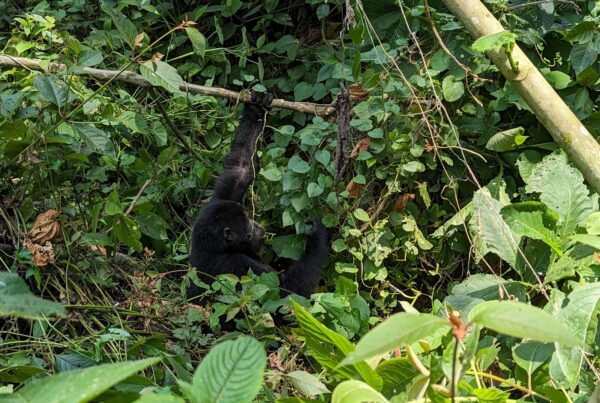
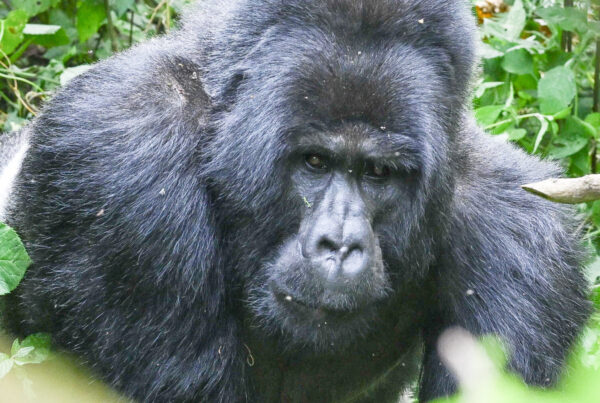
Mountain gorilla conservation is one of the most studied, most funded, and most publicised conservation efforts in Africa. It is also one of the most successful: from a low point of approximately 254 individuals in 1989, the global mountain gorilla population has grown to over 1,000 by 2027. But the statistics tell only part of the story. The 30-year period of recovery has involved decisions, mistakes, arguments, setbacks, and pivots that are not captured in population counts. This post examines what gorilla conservation actually looked like on the ground in Uganda between 1994 and 2027 — the period in which trekking tourism became the primary conservation financing mechanism — based on conversations with rangers, researchers, and community members who were part of it.
The 1990s: Building the Foundation on Uncertain Ground
The introduction of gorilla trekking tourism in Bwindi in 1994 was an experiment. There was no guarantee that tourists would pay the fees being charged, that the habituation process would succeed with additional families, or that communities displaced by the park’s gazettement in 1991 would tolerate the presence of tourists on land they felt had been taken from them. The first rangers were recruited from communities with minimal prior wildlife management experience. The first permits were sold tentatively to a small number of operators who were themselves uncertain about the market.
The first decade was marked by staffing instability, community conflict, and infrastructure deficits that made Uganda a less attractive gorilla destination than Rwanda, which had invested more heavily in road access and lodge quality. Rangers in the early years recalled patrol conditions that were improvised: equipment was limited, communication was unreliable, and pay was irregular. The anti-poaching effort that was so critical to gorilla population recovery in this period was sustained as much by individual ranger commitment as by institutional support.
The 2000s: Crisis, Recovery, and the Community Dividend
The decade began badly. The March 1999 Bwindi massacre — in which eight tourists and a ranger were killed by Rwandan Hutu rebels who crossed the border and attacked a trekking group — temporarily devastated gorilla tourism. Bookings collapsed. Operators who had invested in the sector faced severe financial pressure. The rangers who continued patrolling in the immediate aftermath did so at personal risk that was not adequately compensated. The recovery took four years and required sustained marketing investment by the Ugandan government and the gorilla tourism operators who believed the sector had a future.
The 1999 crisis also accelerated a shift in how gorilla tourism was marketed: away from individual tour operators toward a more coordinated national narrative about Uganda’s safety, conservation achievements, and community benefit. The introduction of formal community revenue sharing mechanisms in the late 1990s, expanded and formalised through the 2000s, created the community stakeholder base that became gorilla conservation’s most durable long-term protection. By 2010, the communities adjacent to Bwindi that had been most hostile to the park’s gazettement in 1991 were among the strongest local advocates for gorilla conservation — because the conservation economy had given them material reasons to be.
The 2010s: Scaling Up and the Habituation Expansion
The 2010s were the decade of gorilla conservation confidence. Population counts confirmed that the habituation and protection effort was working. Additional gorilla families were brought into the trekking programme as the habituation process was extended to new groups. Permit prices were raised — to USD 500, then USD 600, and eventually USD 700 — partly to control demand and partly to increase conservation financing. The increased revenue funded ranger salary improvements, upgraded patrol infrastructure, and expanded the veterinary monitoring programme.
The 2010s also saw the professionalisation of the guiding sector. Guide training became more systematic, English language requirements were formalised, and the gap between the best guides and the average widened as experienced guides built 10 and 15-year track records that could be evaluated and rewarded. The quality of gorilla trekking experiences improved measurably over this decade, producing the traveller reviews that have driven much of the sector’s growth through word-of-mouth and digital recommendation.
The 2020s: COVID, Recovery, and the Next Thirty Years
The COVID-19 pandemic closed Uganda’s national parks for extended periods in 2020 and 2021, collapsing gorilla tourism revenue and threatening the conservation financing model. Rangers continued working on reduced pay. Community benefit distributions were cut. Some operators went out of business. The recovery, when it came, was faster than many expected: pent-up demand from travellers who had deferred significant trips brought gorilla trekking bookings back to near pre-pandemic levels by 2023.
The pandemic exposed the vulnerability of a conservation model dependent on tourism revenue. Efforts to diversify gorilla conservation financing — through conservation bonds, private foundation endowments, and carbon credit mechanisms — have accelerated since 2021. Whether these diversification efforts succeed will determine how gorilla conservation weathers the next inevitable crisis. In 2027, the gorillas are more numerous, better protected, and more embedded in a community support system than at any point in the 30-year history described here. That is, by any measure, an extraordinary achievement. Sustaining it requires the same commitment — from rangers, communities, researchers, governments, and travellers — that built it.
Frequently Asked Questions
The global mountain gorilla population is approximately 1,100 individuals — one of the smallest populations of any great ape. They exist in two separate populations: one in the Virunga Massif spanning Uganda, Rwanda, and DRC; and one in Bwindi Impenetrable Forest (Uganda only). The population has grown from approximately 620 in the 1980s, largely due to tourism-funded conservation.
Uganda Wildlife Authority directs 20% of every gorilla permit fee to communities adjacent to Bwindi and Mgahinga. These funds pay for school construction, healthcare programmes, borehole maintenance, and community microfinance. Permit revenue also funds ranger salaries, anti-poaching patrols, and the research teams that monitor gorilla health daily.
The Batwa (also called Twa) are an indigenous forest people who lived inside Bwindi for thousands of years until it was gazetted as a national park in 1991. Conservation displaced them from their ancestral forest. Gorilla tourism revenue now funds Batwa cultural programmes and livelihoods. The Batwa Cultural Trail at Buhoma sector is run by the Batwa community and is one of the most authentic cultural experiences near Bwindi.
Mountain gorillas are classified as Endangered on the IUCN Red List — one step down from Critically Endangered, which they held until 2018. Their population has grown consistently since the 1980s, making them one of the few great ape populations increasing in number. This recovery is directly attributed to the conservation funding generated by gorilla tourism.
Uganda is home to the mountain gorilla (Gorilla beringei beringei), one of two subspecies of eastern gorilla. They live exclusively in the Virunga volcanic highlands (Uganda/Rwanda/DRC) and Bwindi Impenetrable Forest (Uganda only). Mountain gorillas are the only gorilla subspecies that cannot survive in captivity — every individual you can trek is a wild animal.