Updated
Uganda Visa Requirements: Entry Guide for Gorilla Trekkers
Getting Your Uganda Visa
Uganda visa requirements gorilla trekking is one of Africa’s most extraordinary wildlife experiences, connecting travellers with mountain gorillas in their natural forest habitat. Visiting Uganda for gorilla trekking requires a valid entry visa for most international nationalities. Understanding the Uganda visa system — the types available, the application process, the costs, and the requirements — before you travel prevents delays and complications at Entebbe International Airport that could disrupt your carefully planned gorilla trekking itinerary. This guide covers everything international visitors need to know about Uganda entry requirements.
Who Needs a Visa
Most international nationalities require a visa to enter Uganda. Citizens of East African Community member states — Uganda (obviously), Kenya, Tanzania, Rwanda, Burundi, South Sudan, and the Democratic Republic of Congo — do not require a visa for entry and can travel with a national ID card or passport. A growing number of other African nationalities also have visa-free or visa-on-arrival arrangements with Uganda — check the Uganda Directorate of Citizenship and Immigration Control website for the current list of visa-exempt nationalities, as agreements change.
For nationals of countries requiring a visa, three main options are available: the Uganda e-visa (applied for online before travel), the visa on arrival at Entebbe International Airport, and visas from Uganda embassies or high commissions. The e-visa is strongly recommended for most international visitors and has largely superseded the paper embassy visa for countries with access to the online system.
The Uganda E-Visa
Uganda’s e-visa system, accessible through the official Uganda e-visa portal, allows most nationalities to apply for a Uganda visa online before travel and receive an electronic visa approval to present at the airport on arrival. The application process involves submitting a completed online application form, uploading a passport-format photograph, uploading a passport scan (valid for at least 6 months beyond your Uganda travel dates), providing travel details, and paying the visa fee by credit or debit card.
Processing time for the Uganda e-visa is typically 3 to 5 business days, though it can take longer in peak periods. Apply at least 2 weeks before your travel date to allow time for processing and any corrections if your application requires revision. The approved e-visa is emailed to you as a PDF document — print a copy and present it alongside your passport at immigration on arrival at Entebbe. The physical print-out is important; while the e-visa is electronic, immigration officers verify it against a physical document.
Single Entry vs Tourist Visa
Uganda issues single-entry tourist visas valid for 90 days from the date of first entry. This covers the vast majority of gorilla trekking visits, which are typically 7 to 14 days. If your Uganda itinerary involves cross-border travel to Rwanda or Kenya and return to Uganda (for example, gorilla trekking in both Uganda and Rwanda on a single trip), you will need either a multiple-entry visa or a new visa for re-entry. Confirm your specific needs with the Uganda immigration authority or a Uganda travel specialist if your itinerary involves leaving and re-entering Uganda.
The East Africa Tourist Visa — a single visa covering Uganda, Kenya, and Rwanda valid for 90 days — is available to nationals of countries from which it is offered. This visa is particularly convenient for visitors combining all three countries on a single East Africa circuit, as it eliminates the need for separate national visas. Check current eligibility and application procedures through the Uganda Immigration website.
Visa Costs
The current Uganda single-entry tourist visa fee for most nationalities is $50 USD, payable online (e-visa) or at the airport (visa on arrival). Citizens of certain nationalities pay different fees based on reciprocal arrangements — US citizens historically paid $100 for a single-entry Uganda visa under a reciprocal arrangement that may change. Verify the current fee for your specific nationality before applying, as fees are updated periodically. The East Africa Tourist Visa (Uganda, Kenya, Rwanda) is typically $100 USD.
Visa on Arrival
Nationals of most countries can obtain a Uganda visa on arrival at Entebbe International Airport, paying the fee in USD cash or by credit card at the immigration counter. While this option is technically available, it is strongly recommended to obtain the e-visa before travel to avoid potential queues at immigration on arrival, to ensure you have the visa secured before boarding international flights, and to avoid any issues with the on-arrival processing during busy arrival periods. Airlines may also request evidence of a visa before allowing boarding — an e-visa approval document satisfies this requirement; an intention to obtain a visa on arrival does not.
Yellow Fever Vaccination Certificate
Separately from the visa, Uganda requires evidence of yellow fever vaccination for all incoming international travellers. The International Certificate of Vaccination — the yellow card — showing a yellow fever vaccination administered at least 10 days before entry is checked at Entebbe on arrival and must be in your possession. This is a separate requirement from the visa and applies regardless of your nationality or visa type. Ensure your yellow fever vaccination is up to date and that you carry the physical yellow card — a smartphone photo of the certificate is not accepted at Uganda immigration.
Passport Validity Requirements
Your passport must be valid for at least 6 months beyond your planned Uganda departure date when applying for the e-visa and on entry at Entebbe. If your passport expires within 6 months of your travel, renew it before travel. Ensure you have at least 2 blank pages in your passport for Uganda entry stamps and any cross-border stamps if your itinerary includes Rwanda or DRC.
Entry by Land Border
Visitors entering Uganda by land — for example, crossing from Rwanda via the Cyanika or Katuna border crossings as part of a cross-border gorilla trekking itinerary — also require a visa, which can be an e-visa obtained in advance or a visa issued at the land border crossing. Major Uganda land borders including Cyanika, Malaba (Kenya), Busia (Kenya), and Katuna (Rwanda) can issue visas on arrival. However, e-visa is still recommended for reliability and speed at land crossings.
Practical Tips
Apply for your Uganda e-visa as early as possible — allow at least 2 weeks for processing and potential corrections. Print your e-visa approval before travel and keep it with your passport and yellow fever certificate in your carry-on luggage, not in checked bags that might be inaccessible on arrival. Carry USD cash for any additional fees or tips at the airport (some airport services are cash-based). If you are uncertain about your specific visa requirements, consult a Uganda embassy, the Uganda Immigration website, or a reputable Uganda tour operator who can confirm current requirements for your nationality.
Final Thoughts
Uganda’s visa system is straightforward for most nationalities, and the e-visa has made the process more convenient than ever. The most important actions are: apply early, carry your yellow fever certificate, and ensure your passport validity covers your trip plus 6 months. With these requirements satisfied, your arrival at Entebbe International Airport is a formality rather than an obstacle, and gorilla trekking country awaits.
Frequently Asked Questions
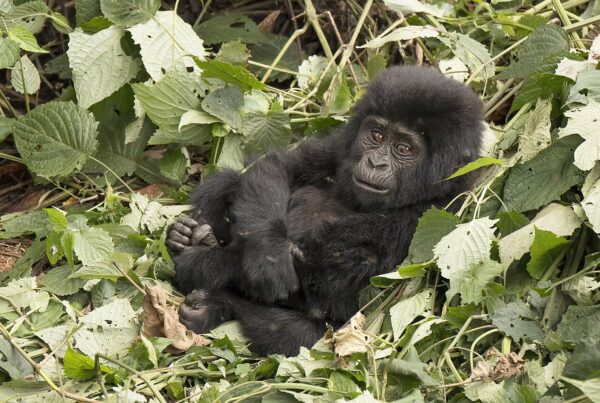
Uganda is home to the mountain gorilla (Gorilla beringei beringei), one of two subspecies of eastern gorilla. They live exclusively in the Virunga volcanic highlands (Uganda/Rwanda/DRC) and Bwindi Impenetrable Forest (Uganda only). Mountain gorillas are the only gorilla subspecies that cannot survive in captivity — every individual you can trek is a wild animal.
The standard gorilla trekking permit gives you exactly 1 hour with the gorilla family. This time begins when you make first contact with the family — the ranger signals the start. The Gorilla Habituation Experience gives 4 hours with a semi-wild family. The walk to find the gorillas can take 30 minutes to 5 hours depending on where the family has moved.
Stay calm, crouch down slowly, avoid direct eye contact, and remain quiet. Do not run — running triggers a chase response. Rangers accompanying your group manage close approaches. Habituated gorillas are accustomed to humans and almost never make contact, but a charging silverback is managed by staying still and following ranger instructions immediately.
A maximum of 8 visitors per habituated gorilla family per day for standard trekking. The Gorilla Habituation Experience has a maximum of 4 visitors per family per day. These limits are set by UWA to minimise stress on the gorilla families and maintain the quality of the experience.
Uganda is home to the mountain gorilla (Gorilla beringei beringei), one of two subspecies of eastern gorilla. They live exclusively in the Virunga volcanic highlands (Uganda/Rwanda/DRC) and Bwindi Impenetrable Forest (Uganda only). Mountain gorillas are the only gorilla subspecies that cannot survive in captivity — every individual you can trek is a wild animal.