Updated
gorilla trekking experience no photograph prepares you is one of Africa’s most extraordinary wildlife experiences, connecting travellers with mountain gorillas in their natural forest habitat. Wildlife photography is extraordinary. The best wildlife photographs — a lion silhouetted against a burning African sunset, a whale shark filling the frame with a diver dwarfed beside it, a humpback breaching at full extension — communicate the scale, beauty, and presence of wild animals with a fidelity that the written word cannot match. But there is one wildlife experience for which photography, no matter how good, fails as preparation: gorilla trekking in Uganda. Every trekker who has done it, when asked whether photographs prepared them for the encounter, says some version of no. This post examines why.
The Wildlife Experience That No Photograph Can Prepare You For
What Photography Can Capture
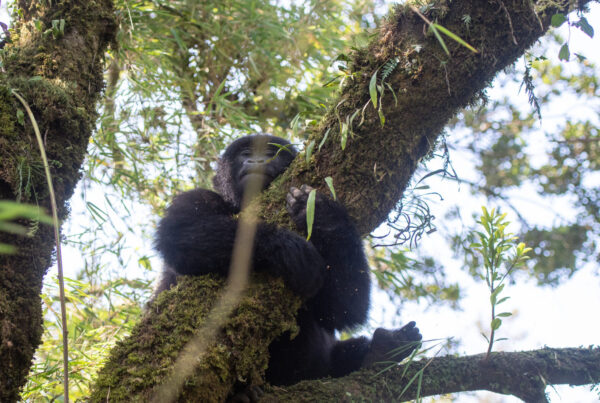
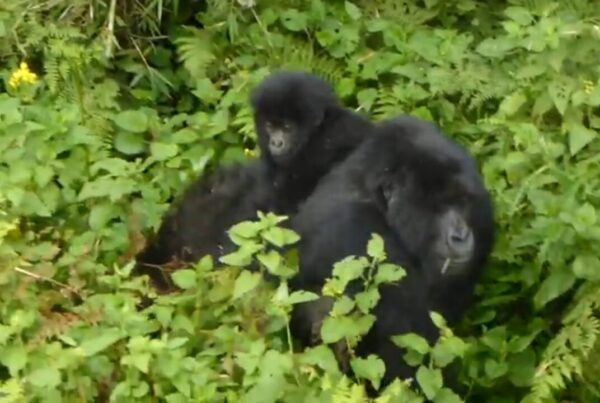
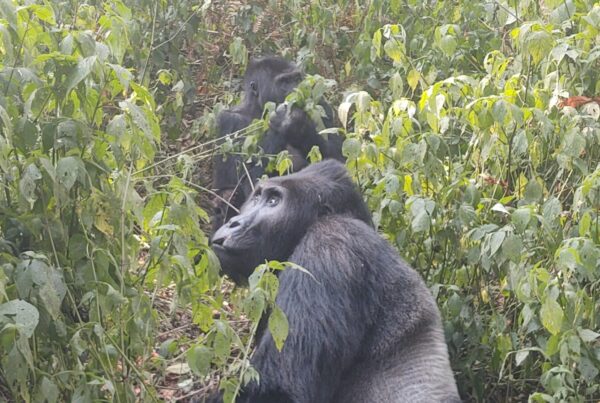
A great gorilla photograph captures the face of an individual — the brown eyes, the saddle of silver hair, the expression that seems to communicate something just beyond language. It captures the social scene: a mother nursing an infant, a juvenile climbing, a silverback resting with his family around him. It captures the environment: the dense forest, the shafts of light, the green complexity of Bwindi. All of this is real and communicates something genuine about what gorilla trekking involves.
What photography cannot capture is the physical presence of the encounter — the scale of a silverback experienced in person rather than at one remove through a screen. Silverbacks weigh 140 to 200 kilograms. They are built like armoured vehicles covered in hair, with arms whose reach extends beyond human athletic possibility. At five metres, a resting silverback fills your visual field in a way that no photograph conveys. The animal is larger, denser, and more physically real than any image suggests.
The Smell and Sound Dimension
Photography is visual and silent. Gorilla trekking is multisensory. The smell of gorillas in close proximity — a musky, warm, animal smell that is neither unpleasant nor familiar — registers immediately as “alive” in a way that triggers an instinctive response that looking at a photograph of a gorilla cannot produce. The sounds of the family around you — the low rumbling of the silverback, the movement of vegetation as individuals shift position, the vocalisations of juveniles playing — all contribute to a sensory environment that photographs cannot represent.
The sounds in particular are important. The silverback’s chest beat — which you may hear before you see him, if he has been disturbed by the approach — is a sound that produces a physical response before the rational mind has processed what it is. It is too deep to be called a sound in the ordinary sense. It is felt as much as heard. No photograph, no wildlife documentary audio track, nothing short of the actual encounter prepares you for what that sound does to the human nervous system at close range.
The Quality of Being Seen
The most significant failure of photography as preparation for gorilla trekking is that photographs cannot convey the experience of being looked at by a gorilla. A photograph shows you a gorilla looking at a camera. It does not give you the experience of a gorilla looking at you — directly at you, specifically at you, with what reads unmistakably as attention and assessment. The experience of being in the gaze of a gorilla is something that no image can replicate because the image shows you looking at the gorilla. In the forest, the gorilla is looking back.
What Happens After the Encounter
What Happens After the Encounter
Trekkers who have just returned from a gorilla encounter are almost universally inarticulate about it for the first hour. They sit in the briefing shelter, or they stand at the trailhead, and they do not talk or they talk too much, and what they say does not quite correspond to what they experienced. The gap between the experience and language for it is wider than for almost any other wildlife encounter. This is, in part, because the encounter is pre-verbal — it operates at a level below the analytical mind that language serves. Photography, which is a linguistic act in visual form, cannot reach it either.
The only preparation for gorilla trekking that actually works is going. Contact us to plan your 2027 trek. Bring your camera. Take your photographs. And understand in advance that what you photograph will not be the thing you experienced. The thing you experienced will be yours alone.
Frequently Asked Questions
A versatile zoom lens in the 24–200mm range (or equivalent on crop sensor) works for most forest conditions. A fast lens (f/2.8) handles the low light under the forest canopy. Mirrorless cameras with fast autofocus track gorilla movement well. Flash is strictly prohibited. Bring a rain cover — the forest is damp year-round.
Set: Shutter priority at minimum 1/250s (to freeze movement), Auto ISO with a ceiling of 6400, continuous autofocus, burst mode. Shoot in RAW for post-processing flexibility. In the dense understorey, light is limited — prioritise shutter speed over aperture. Wide-angle shots require patience as gorillas occasionally approach very close.
UWA guidelines require a minimum 7-metre distance from gorillas at all times. In practice, gorillas regularly approach the human group on their own — rangers manage this by repositioning the group when needed. Most trekkers end up photographing gorillas at 3–10 metres. Infant gorillas sometimes approach even closer, which rangers discourage gently.
Yes — video cameras and smartphone video are permitted. Flash is the only restriction. A monopod is useful for steadier video in low light. If you plan serious video work (wildlife documentary standard), consider the Gorilla Habituation Experience ($1,800) which gives 4 hours to film natural behaviour in a smaller group of just 4 visitors.
Uganda is home to the mountain gorilla (Gorilla beringei beringei), one of two subspecies of eastern gorilla. They live exclusively in the Virunga volcanic highlands (Uganda/Rwanda/DRC) and Bwindi Impenetrable Forest (Uganda only). Mountain gorillas are the only gorilla subspecies that cannot survive in captivity — every individual you can trek is a wild animal.