Updated
gorilla trekking Uganda couples relationship is one of Africa’s most extraordinary wildlife experiences, connecting travellers with mountain gorillas in their natural forest habitat. My husband and I have been together for sixteen years. We travel well together — we have tested this extensively. We have also, over sixteen years, accumulated the specific sediment of a long relationship: the known patterns, the comfortable assumptions, the predictable responses, the way each of us performs our established role in the story of us. Gorilla trekking in Uganda disrupted all of this in the best possible way, and I want to describe exactly how, because I think it is relevant to anyone who is wondering what to do with a relationship that has become so familiar it has started to feel slightly invisible.
How Gorilla Trekking Changed My Relationship With My Husband
What Long Relationships Do to Novelty
The problem with very familiar people is not that they are not interesting. It is that you stop seeing them freshly. You know how they will respond to most situations. You know what they will find funny, what will frustrate them, what they will want to do and what they will avoid. This knowledge is one of the great gifts of long partnership. It is also, when the relationship’s environment never changes, a gradual narrowing of the person you know into the person you expect.
Travel helps with this — new places produce new responses and you see your partner responding to things they have not encountered before. But not all travel is equally disruptive. Gorilla trekking in Uganda at $800 per permit is sufficiently far outside both our ordinary experiences that we encountered it, genuinely, as strangers to it. Which meant we encountered each other, for the duration of the experience, as something closer to strangers too. This was valuable in ways I did not anticipate.
What We Did Not Expect From Each Other
My husband is not a person who cries. He is warm and expressive in other ways but the specific response of tears to emotional stimulation is not something he does. He cried during the gorilla encounter. Not dramatically — a brief presence of tears, quickly controlled, but present and real and visible to me because I was standing next to him. I had not seen this in sixteen years. I looked at him and saw someone I did not fully know responding to something in a way I had not predicted.
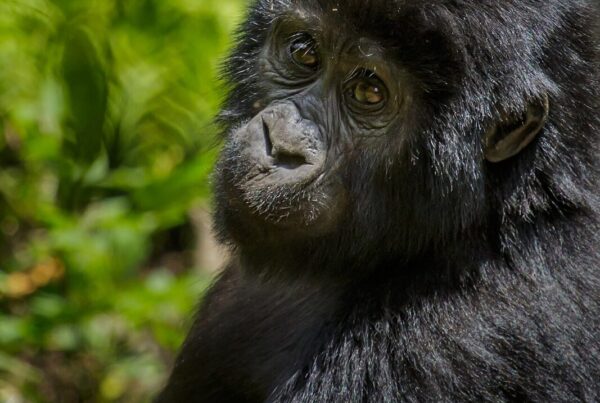
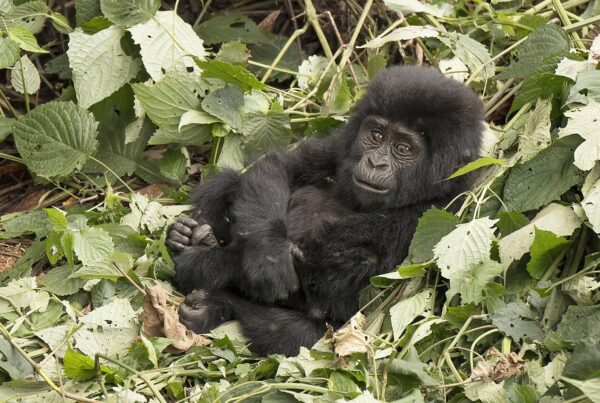
He told me later — that evening, on the lodge veranda, with the forest below us and more honesty than we sometimes manage in the comfortable familiarity of home — that the moment that produced the tears was watching a female gorilla with her infant. The way the female held the infant. The way the infant clung. Something about it had reached him in a way he had not been prepared for. We talked about this for two hours. It was the longest sustained, genuinely exploratory conversation we had had in years — not because we do not talk, but because the familiar environment of home gives familiar frameworks to conversations and the forest had removed the frameworks.
The Trek as Shared Physical Challenge
The trek to find the gorilla family took three and a half hours through demanding terrain. We walked it together and separately — the trail is single-file in sections, the concentration required is individual, the physical experience is yours alone even when you are walking with someone. But the shared effort of arriving — the physical accomplishment of having done the same hard thing together — produced a specific quality of shared experience that the comfortable shared experiences of long partnership do not produce. We were both tired, both exhilarated, both changed by the forest in ways we were still processing. We arrived at the gorilla family as two people who had done something difficult together, and this is a different quality of togetherness than two people who have done something easy together for sixteen years.
What Changed
We have been back to Uganda once since the first trip. We are planning a third. The relationship benefit of the trips is not that they fixed anything — our relationship did not need fixing. It is that they disrupted the sediment sufficiently that we kept seeing each other freshly for months after coming back. The person who cried at the gorilla family is still my husband. I just know him slightly better now. And he knows that I know.
Two permits at $800 each. A three-hour trek through ancient forest. Sixteen years of partnership, slightly renewed. Contact us to plan your 2027 trip.
Frequently Asked Questions
Uganda is home to the mountain gorilla (Gorilla beringei beringei), one of two subspecies of eastern gorilla. They live exclusively in the Virunga volcanic highlands (Uganda/Rwanda/DRC) and Bwindi Impenetrable Forest (Uganda only). Mountain gorillas are the only gorilla subspecies that cannot survive in captivity — every individual you can trek is a wild animal.
The standard gorilla trekking permit gives you exactly 1 hour with the gorilla family. This time begins when you make first contact with the family — the ranger signals the start. The Gorilla Habituation Experience gives 4 hours with a semi-wild family. The walk to find the gorillas can take 30 minutes to 5 hours depending on where the family has moved.
Stay calm, crouch down slowly, avoid direct eye contact, and remain quiet. Do not run — running triggers a chase response. Rangers accompanying your group manage close approaches. Habituated gorillas are accustomed to humans and almost never make contact, but a charging silverback is managed by staying still and following ranger instructions immediately.
A maximum of 8 visitors per habituated gorilla family per day for standard trekking. The Gorilla Habituation Experience has a maximum of 4 visitors per family per day. These limits are set by UWA to minimise stress on the gorilla families and maintain the quality of the experience.
Uganda is home to the mountain gorilla (Gorilla beringei beringei), one of two subspecies of eastern gorilla. They live exclusively in the Virunga volcanic highlands (Uganda/Rwanda/DRC) and Bwindi Impenetrable Forest (Uganda only). Mountain gorillas are the only gorilla subspecies that cannot survive in captivity — every individual you can trek is a wild animal.