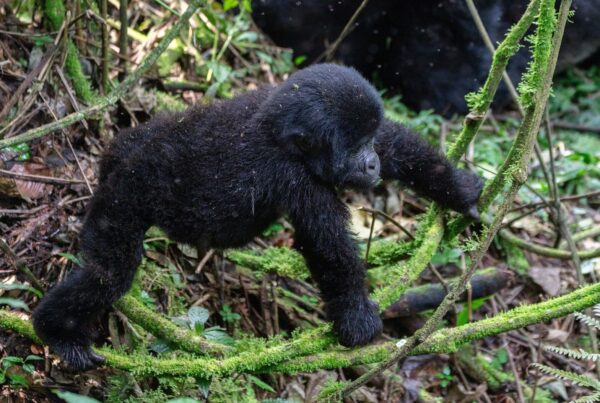
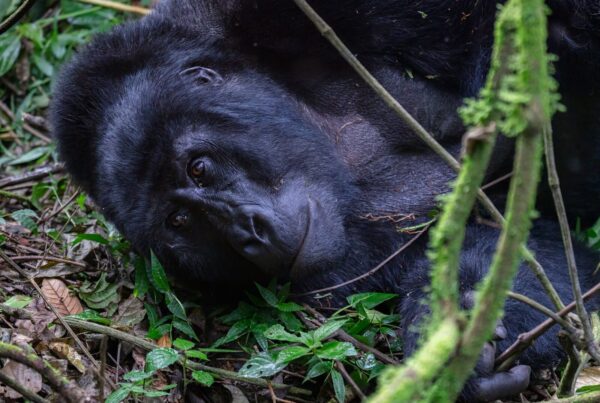
Among the habituated gorilla families in Bwindi Impenetrable National Park, few individuals have attracted as much attention from researchers as the silverback who became the foundation of the Bweza group. His story — of losing a dominant position, spending years as a solitary male, and eventually building an entirely new family from nothing — is one of the most complete documented examples of gorilla social resilience in the research literature, and it is a story that plays out in the forest that gorilla trekking Uganda visitors walk through today.
How Silverbacks Lose Their Groups
A dominant silverback’s tenure in a gorilla group is not guaranteed. It can be ended by challenge from a rival silverback — including rivals from within the same group as blackbacks mature — or by age and declining physical capacity. When a silverback loses dominance, the females in the group face a choice: remain with the new dominant male, transfer to another group, or, rarely, follow the deposed silverback if he retains enough social capital to attract followers.
The silverback who would become the Bweza group’s founder lost his dominant position in the Nshongi group during the 2015 fission. When the group divided, the females reorganised around the new dominant male. The departing silverback — a large male in his mid-twenties — left with no females. He became, in the research literature, a solitary male: a category that accounts for a significant proportion of adult male gorillas at any given time, but one that is associated with reduced reproductive success and elevated vulnerability.
The Solitary Years
Solitary silverbacks are monitored by UWA rangers and researchers but do not receive trekking visitors — the unpredictability of a lone male without the stabilising social context of a family group makes managed human proximity more difficult. The silverback’s movements during his solitary period were tracked, however, and the record shows a male covering an unusually large home range, apparently seeking females from multiple existing groups.
Solitary males attract females primarily through direct encounters with existing groups — a male who can demonstrate physical dominance and social competence during a controlled encounter may persuade a female to transfer. This process is slow, uncertain, and requires repeated interactions over months or years. The silverback persisted through approximately two and a half years of solitary status before achieving his first successful female recruitment.
Building the Bweza Group
The first female to transfer to the emerging Bweza group was a young adult who had been on the periphery of an established habituated family. Her transfer in 2018 marked the beginning of the group’s formation. A second female followed within four months. The silverback, now with two females and a demonstrated capacity to protect them, became eligible for habituated group status — a process that took an additional eighteen months of controlled ranger observation before the group was considered sufficiently accustomed to human presence for tourist visits.
By 2020 the Bweza group had been formally habituated and was receiving gorilla trekking visitors at Buhoma sector. The founding silverback, the same male who had left the Nshongi group with nothing in 2015, was now the dominant male of a growing family. The group has continued to expand and is a regular trekking destination for visitors in 2027.
What the Story Means for Trekkers
When you visit the Bweza group on a gorilla trek in Uganda, the silverback you observe has a history that most visitors do not know. His calm authority in the clearing did not come without cost. His family was built through years of solitary persistence following a significant loss. The gorilla permit costs $800. What you are observing is not just a wildlife encounter — it is the current chapter of an ongoing story that the researchers and rangers of Bwindi have been following for years.