Africa is the only continent on earth where it is possible to see all four of the world’s great ape species — gorillas, chimpanzees, bonobos, and orangutans are often listed together, but orangutans are Asian. The four African great apes are the western gorilla, the eastern gorilla (of which the mountain gorilla is a subspecies), the common chimpanzee, and the bonobo. Seeing all four in the wild is one of the most ambitious wildlife objectives a traveller can pursue, requiring visits to multiple countries and some genuinely remote destinations. This is the guide to where and how.
Mountain Gorilla: Uganda and Rwanda
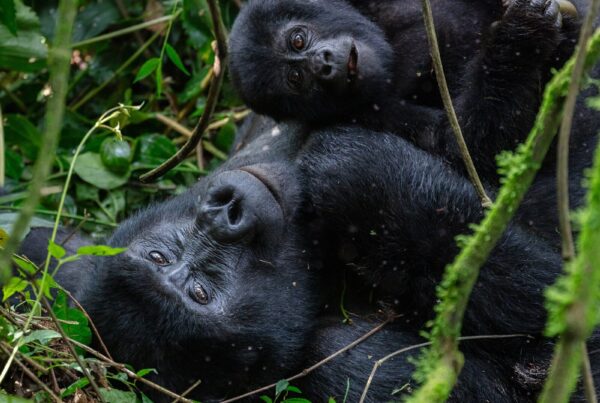
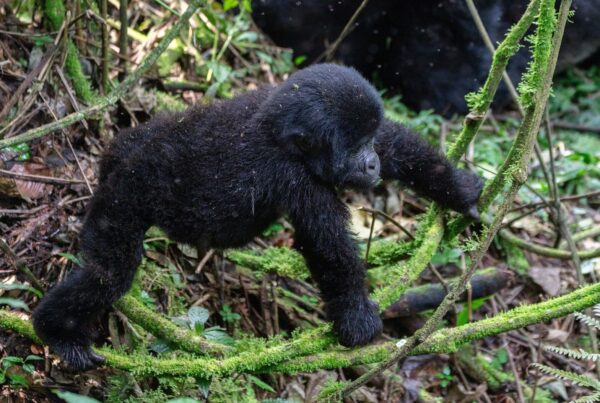
The mountain gorilla (Gorilla beringei beringei) is the most accessible of the four African great apes for organised wildlife tourism. Habituated families in Uganda’s Bwindi Impenetrable National Park and Mgahinga Gorilla National Park can be visited under the Uganda Wildlife Authority’s permit system — $800 USD per person for international visitors in 2027. Rwanda’s Volcanoes National Park offers the same mountain gorilla subspecies at a higher permit price ($1,500 USD per person) but with slightly easier logistics from Kigali. Both destinations offer high-quality, intimate encounters with gorilla families that have been habituated over years of patient work by ranger teams.
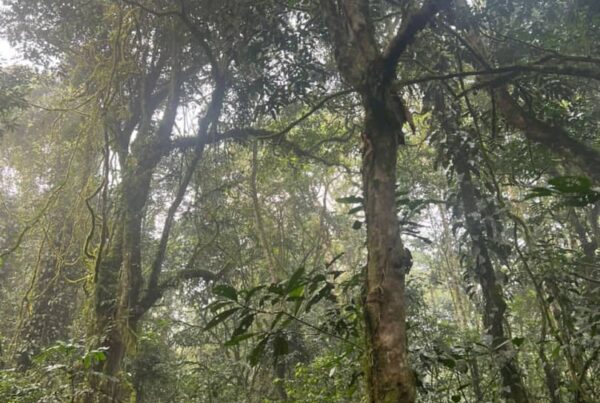
The Bwindi gorilla population is the larger of the two — approximately 500 individuals in Uganda out of the total global population of around 1,100. The experience of trekking in Bwindi’s ancient rainforest to reach a gorilla family is one of the most compelling wildlife encounters available anywhere.
Eastern Lowland Gorilla: DRC
The eastern lowland gorilla (Gorilla beringei graueri), also known as Grauer’s gorilla, is the largest gorilla subspecies and lives primarily in the eastern DRC. The most accessible site for habituated trekking is Kahuzi-Biega National Park, accessible from Bukavu. Political instability in eastern DRC has made access difficult and sometimes impossible in recent years, and safety assessments should be made on a current basis before planning a visit. When conditions allow, the Kahuzi-Biega gorillas offer an encounter with a different gorilla subspecies in a different forest type — lower altitude, warmer, and with different vegetation from Bwindi or the Virungas.
Western Gorilla: Gabon, Republic of Congo, Cameroon
The western gorilla (Gorilla gorilla) is the most numerous gorilla species, with a total population estimated at over 100,000, primarily in the Congo Basin forests of Gabon, the Republic of Congo, Cameroon, and the Central African Republic. Habituated western gorilla families are available for trekking at Bai Hokou in Dzanga-Sangha Special Reserve in the Central African Republic (when access is possible) and in the Republic of Congo at sites including Odzala-Kokoua National Park. Access to these sites is logistically complex and requires specialist operators.
The western gorilla encounter is different in character from the mountain gorilla experience. Western lowland gorillas are generally larger-bodied but less intensively studied than the Bwindi or Virunga families. The forests they inhabit are lower-altitude, warmer, and less scenically dramatic than Bwindi but biologically extraordinary. Seeing a western gorilla in Gabon or the Republic of Congo is a genuinely rare and demanding travel achievement.
Chimpanzee: Uganda, Tanzania, Guinea
Common chimpanzees (Pan troglodytes) are distributed across a wide range of Central and West African forests, with habituated populations available for trekking in several countries. Uganda’s Kibale National Park offers the best chimpanzee tracking experience in East Africa — the Kanyawara and Ngogo communities are among the most intensively studied wild chimpanzee populations on earth, and the tracking success rate and encounter quality are exceptionally high. Tanzania’s Gombe Stream and Mahale Mountains national parks offer the historical research context of Jane Goodall’s original study site and the magnificently remote Mahale setting on Lake Tanganyika. Guinea’s Bossou site, where chimpanzees use tools to crack nuts, is the only place where this specific behaviour can be routinely observed.
Bonobo: DRC Only
The bonobo (Pan paniscus) is the most difficult of the four African great apes to see in the wild. It exists only in the DRC, south of the Congo River, and in accessible tourism conditions only at a small number of sites including Lola ya Bonobo sanctuary near Kinshasa (not wild) and Lomako Forest in the Congo Basin (genuinely wild but extremely remote). The Kokolopori Bonobo Reserve in the equatorial forest north of Kinshasa has developed a habituation programme and offers trekking for visitors willing to make the complex journey — several days of river travel and forest hiking from any accessible city.
The bonobo is the most closely related species to humans alongside the chimpanzee, and its social system — female-dominated, conflict-resolving through sexual behaviour, and notably peaceful compared to chimpanzees — makes it a fascinating subject for anyone interested in primate behaviour. But the logistical complexity of bonobo encounters means that most travellers who attempt the full four-species list do so over multiple African trips rather than in a single itinerary.
Starting With Uganda
For anyone beginning the four-species challenge, Uganda is the logical starting point. Mountain gorilla trekking at Bwindi combined with chimpanzee tracking at Kibale delivers two of the four species in one country visit, in high-quality conditions, with straightforward logistics. The remaining two — western gorilla and bonobo — require more specialist planning and longer journeys, but beginning with Uganda establishes the experiential baseline and the practical knowledge of great ape encounters that makes the later, more demanding visits more rewarding.