Review volume and quality in gorilla trekking Uganda reflects the fundamental truth of service quality in an experience where everything has to work: permit access, physical preparation, guide expertise, and on-the-ground support when things go unexpectedly. Here is what the five-star review record reveals about what makes a gorilla trekking operator genuinely excellent.
What Drives Five-Star Reviews in Gorilla Trekking
Analysing the patterns in five-star gorilla trekking Uganda reviews reveals six consistent drivers. First: pre-trip communication quality — operators who respond quickly, provide detailed preparation information, and set accurate expectations generate better reviews than those who promise broadly and deliver narrowly. Second: accurate sector and family assignment — matching the trekker’s fitness level to the appropriate terrain produces a better experience and better reviews. Third: guide expertise — rangers and driver-guides who are knowledgeable, warm, and communicative generate specific, appreciative mentions in reviews. Fourth: problem resolution — operators who respond quickly and effectively when something goes wrong (flight delays, permit logistics issues, accommodation problems) generate loyalty and positive reviews even from trips that had complications. Fifth: the porter recommendation — operators who proactively recommend and organise porter hire for all clients consistently generate better physical experience reviews. Sixth: post-trip engagement — follow-up after the client returns home creates a relationship that translates to review submission rates.
What the High-Volume Review Record Reflects
A large volume of reviews over time is itself significant — it means the operator has been sending consistent numbers of travellers to Bwindi over multiple years. In a niche market like Uganda gorilla trekking, review volume is a proxy for experience and operational maturity. An operator with 20 reviews may have had an excellent three months; an operator with 300 reviews has maintained quality across seasons, across different gorilla family assignments, and across diverse client profiles. Volume with quality is the meaningful measure — not one alone.
Why We Focus on Honest Review Generation
We invite all clients to review their experience honestly, not just those who had exceptional trips. This approach produces a more representative picture of our service quality than soliciting reviews only from clients we know were particularly satisfied. The negative reviews in our profile are as informative as the positive ones: they tell future clients what our failure modes are, how we handled them, and whether we learned from them. An operator with only five-star reviews either has a very short review history or is curating selectively. We believe the complete, honest record is the most trustworthy basis for a prospective client’s booking decision. Contact us to join our review record and share your honest experience of gorilla trekking Uganda.
Frequently Asked Questions
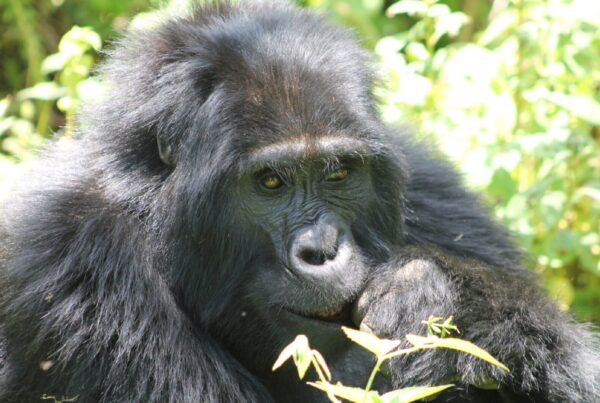
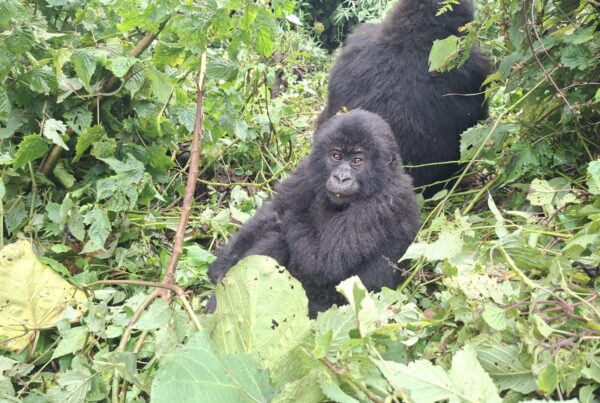
Uganda is home to the mountain gorilla (Gorilla beringei beringei), one of two subspecies of eastern gorilla. They live exclusively in the Virunga volcanic highlands (Uganda/Rwanda/DRC) and Bwindi Impenetrable Forest (Uganda only). Mountain gorillas are the only gorilla subspecies that cannot survive in captivity — every individual you can trek is a wild animal.
The standard gorilla trekking permit gives you exactly 1 hour with the gorilla family. This time begins when you make first contact with the family — the ranger signals the start. The Gorilla Habituation Experience gives 4 hours with a semi-wild family. The walk to find the gorillas can take 30 minutes to 5 hours depending on where the family has moved.
Stay calm, crouch down slowly, avoid direct eye contact, and remain quiet. Do not run — running triggers a chase response. Rangers accompanying your group manage close approaches. Habituated gorillas are accustomed to humans and almost never make contact, but a charging silverback is managed by staying still and following ranger instructions immediately.
A maximum of 8 visitors per habituated gorilla family per day for standard trekking. The Gorilla Habituation Experience has a maximum of 4 visitors per family per day. These limits are set by UWA to minimise stress on the gorilla families and maintain the quality of the experience.
Uganda is home to the mountain gorilla (Gorilla beringei beringei), one of two subspecies of eastern gorilla. They live exclusively in the Virunga volcanic highlands (Uganda/Rwanda/DRC) and Bwindi Impenetrable Forest (Uganda only). Mountain gorillas are the only gorilla subspecies that cannot survive in captivity — every individual you can trek is a wild animal.