Updated
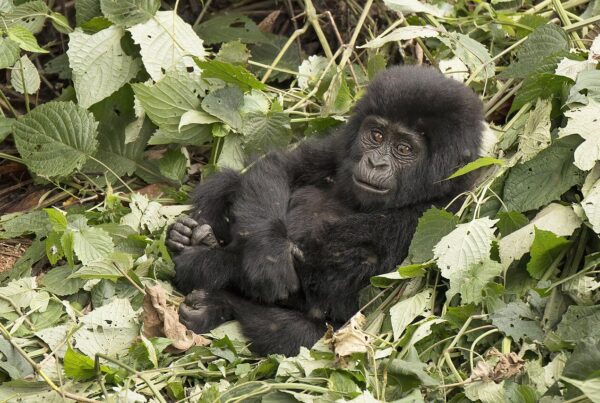
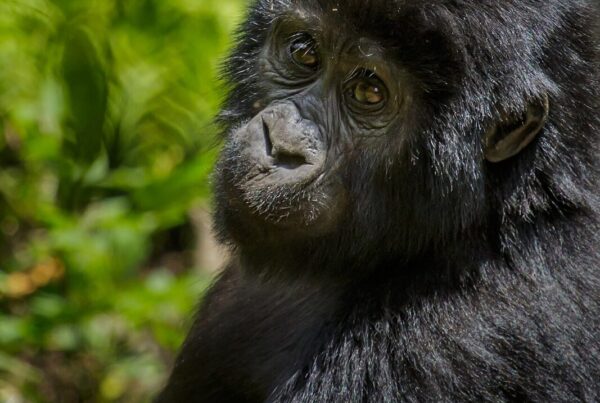
The gorilla family disappeared Bwindi Uganda altitude search is one of the habituated mountain gorilla groups that trekkers can visit in Uganda or Rwanda, offering an intimate encounter with these remarkable primates. Habituated gorilla families in Bwindi are monitored daily by UWA tracker teams — rangers trained to locate specific gorilla groups in forest terrain by following trails, identifying feeding sign, and interpreting the sounds and smells that indicate recent gorilla activity. Most mornings the trackers locate their assigned group within a few hours. Occasionally, particularly after sudden atmospheric changes or unusual disturbances, a group will move further and faster than expected. The three-day disappearance of one of Bwindi’s most closely monitored habituated groups in 2022 — and their eventual discovery at an altitude they had not been recorded at before — prompted both an immediate search operation and a longer-term research question about mountain gorilla altitudinal range.
The Gorilla Family That Disappeared for 3 Days and Was Found at Higher Altitude
What Triggers Unusual Movement
Mountain gorillas have documented altitudinal ranges that extend from approximately 1,160 metres at Bwindi’s lower edges to over 2,600 metres in the Virunga population. Within Bwindi, the habituated groups typically move within established home ranges that the tracker teams know well. Departures from these ranges are associated with several conditions: territorial pressure from other groups, unusually rich food availability at the range edge, or the movement of a new dominant male who has not yet established stable range boundaries.
In the 2022 case, the group’s unexpected movement coincided with an extended period of unusually cold weather at their normal altitude. Researchers have documented altitudinal shifts in mountain gorilla groups during temperature anomalies — gorillas at higher altitude in cold weather will sometimes descend to lower, warmer zones; gorillas at lower altitude in unusual heat will sometimes ascend. The 2022 movement was an ascent, suggesting that a factor other than cold was responsible — potentially range pressure from a neighbouring group.
The Search Operation
When a habituated group is not located within two days of its last known position, UWA activates an expanded search protocol. The tracker team for the missing group is reinforced by trackers from adjacent areas, and the search radius is expanded systematically from the last known position. Radio communication coordinates simultaneous searches across multiple forest sectors.
The group was located on the third day by a tracker team that had extended the search to the upper reaches of the park — an area of high-altitude forest above 2,200 metres that the group had not been recorded visiting previously. The trackers found the group foraging on a type of vegetation that is more abundant at higher altitude, suggesting that the move had been food-motivated rather than stress-driven. All members of the group were accounted for and appeared healthy.
The Research Significance
The 2022 incident is documented in UWA monitoring records as evidence of altitudinal flexibility in the habituated Bwindi population. Researchers studying the potential impact of climate change on mountain gorilla habitat use the incident as one of several data points suggesting that gorillas can, and do, adjust their altitudinal range in response to environmental conditions. As Bwindi’s lower-altitude vegetation responds to long-term temperature changes, this flexibility may become increasingly important for the population’s ability to track suitable habitat upward.
Gorilla trekking in Uganda in 2027 takes visitors into a landscape that is the subject of active, ongoing research. The permit costs $800. The tracker who found the group on the third day of the search had been working the same sector for fourteen years. Some of what your permit pays for is that kind of accumulated knowledge.
Frequently Asked Questions
Minimum: 3 days (arrive, travel to Bwindi, trek, return — very rushed). Recommended: 5–7 days to include proper travel time and a buffer day. If combining with Kibale chimps or a game park, allow 8–12 days. The 8-hour road journey from Kampala to Bwindi means a 3-day trip involves almost no rest.
A popular 7-day itinerary: Day 1 — Arrive Entebbe, transfer to Kampala or Entebbe hotel. Day 2 — Fly or drive to Bwindi. Days 3–4 — Gorilla trekking (one or two treks), forest walks. Day 5 — Return to Entebbe via Kampala or direct charter. Days 6–7 — Optional Entebbe or Kampala city time before departure.
Yes, but they are in different countries. A combined itinerary typically routes Entebbe (Uganda gorillas) → Nairobi or Kilimanjaro (Tanzania/Kenya safari) with a connecting flight between legs. Allow 10–14 days total. Alternatively, Uganda’s own Queen Elizabeth National Park offers excellent big game alongside the gorilla experience without the international connection.
Near Bwindi: Batwa Cultural Experience (indigenous forest walk with the Batwa community), guided birding walks (350+ species), forest nature walks, waterfall hikes, community village visits. Within 2–3 hours of Bwindi: Lake Bunyonyi (canoeing, island walks), Mgahinga (golden monkey trekking, Virunga volcano hiking).
Uganda is home to the mountain gorilla (Gorilla beringei beringei), one of two subspecies of eastern gorilla. They live exclusively in the Virunga volcanic highlands (Uganda/Rwanda/DRC) and Bwindi Impenetrable Forest (Uganda only). Mountain gorillas are the only gorilla subspecies that cannot survive in captivity — every individual you can trek is a wild animal.