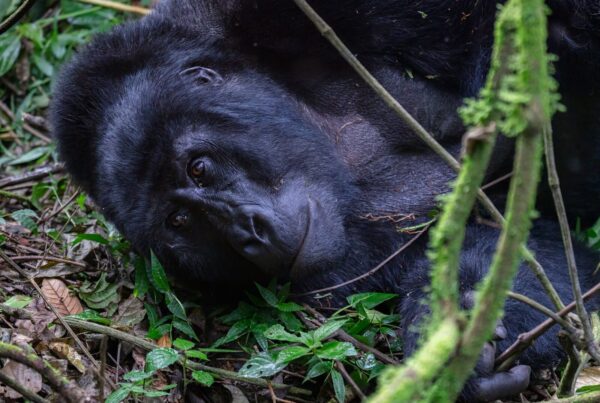
Bwindi Impenetrable National Park is surrounded by one of the most densely populated agricultural landscapes in Africa. The forest’s edge is a boundary between protected wilderness and intensively farmed community land, and the management of that boundary — preventing encroachment, managing human-wildlife conflict, and protecting the forest from fire — is one of the most demanding aspects of the park’s operational reality. The dry season fires that periodically threaten the park’s edges have produced documented responses from UWA rangers that illustrate both the vulnerability of the forest and the effectiveness of its protection infrastructure.
Fire Risk at the Forest Edge
The communities surrounding Bwindi use fire as a land management tool — burning crop residue, clearing land for new cultivation, and managing grassland areas. In dry seasons, when the vegetation on community land is desiccated and wind conditions can change quickly, these fires occasionally breach the park boundary. The forest edge at Bwindi is not entirely fireproof — the dense undergrowth and accumulated leaf litter at the boundary zone can carry fire into the forest interior if conditions are right.
The threat to gorillas from fire is primarily indirect. Adult gorillas will move away from smoke and fire, and their ability to move through the forest quickly is sufficient to keep them ahead of most fire fronts. The real risk is to juveniles and infants who may become separated from their groups during rapid movement, and to the habitat itself — a fire that kills the undergrowth and young trees in a section of forest reduces the feeding quality of that area for months or years.
The 2019 Boundary Fire
A dry-season fire in the community land adjacent to the Buhoma sector boundary in August 2019 breached the park edge when wind direction changed during the afternoon. The UWA ranger station at Buhoma received notification from the community conservation wardens — local rangers employed specifically to monitor the park-community interface — within thirty minutes of the breach. Rangers were deployed to the fire front immediately.
The response involved two simultaneous activities: fire suppression at the boundary using the standard tools available to ranger teams in remote forest — back-burning, vegetation clearing, manual suppression — and monitoring of the Mubare and Rushegura gorilla groups, whose home ranges overlapped with the affected area. The tracker teams assigned to these groups reported the groups’ locations by radio and confirmed that both groups were moving away from the fire area.
The Containment
The fire was contained before it reached the primary habitat of either gorilla group. The containment required approximately six hours of sustained effort by the ranger team and support from community members who assisted with fire-line creation at the boundary. The area of forest affected was estimated at approximately four hectares — significant but not severe in terms of habitat loss, and in an area that had been previously affected and was regenerating.
The gorilla monitoring teams confirmed both groups had moved to unaffected areas of their ranges and returned to normal foraging activity within forty-eight hours of the fire’s containment. No gorillas were injured.
The Community Conservation Model
The rapid response to the 2019 fire was possible in part because of the community conservation wardens programme — local community members employed by UWA to monitor the park boundary and maintain relationships with surrounding communities. This programme is funded by gorilla tourism revenue distributed to community benefit schemes. The gorilla permit costs $800. Part of what that maintains is the relationship between the park and the communities around it — the relationship that meant someone noticed the fire and called it in before it became catastrophic.