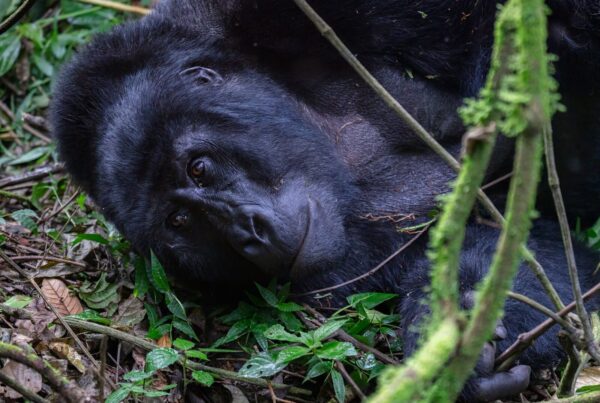
The road that runs through the buffer zone adjacent to Bwindi Impenetrable National Park’s Buhoma sector is used daily by vehicles serving the lodges, communities, and trekking operations of the area. It is not a major highway — it is a dirt road maintained for local traffic — but it represents the kind of human infrastructure that wildlife are increasingly required to navigate in protected area landscapes. The documented crossing of this road by a habituated gorilla family in 2022, and the response of the drivers who encountered them, is a story about the specific character of Bwindi’s human-wildlife interface at its most benign.
Why Gorillas Cross Roads
Mountain gorillas have home ranges that were established before roads existed. The habituated families of Bwindi’s Buhoma sector have ranges that in some cases include areas on both sides of infrastructure built in the last two decades. When their normal movement patterns take them across a road, they cross it. The silverback leads; the family follows. The road, from the gorilla’s perspective, is simply a feature of the terrain — harder underfoot than forest floor, smelling of exhaust and rubber, but navigable.
UWA rangers are aware of the home ranges of habituated families and know which groups have established crossing patterns at particular road sections. Community conservation wardens monitor these crossing areas, particularly during the periods of day when gorilla movement is most likely. The crossing in 2022 occurred in the mid-morning — within normal gorilla movement time — and was detected by a community warden who was already at the crossing point, having anticipated the group’s likely trajectory.
The Crossing
The warden stopped two vehicles approaching from the east side — a lodge transfer vehicle and a supply truck — and explained the situation. The drivers turned off their engines. The Rushegura family — seventeen gorillas — emerged from the forest edge and crossed the road in a group that took approximately eight minutes to complete the crossing. The silverback crossed last, as is typical — he positions himself at the rear to protect the family during vulnerable moments.
The drivers and passengers in the stopped vehicles observed the crossing from a distance of approximately twenty metres. The accounts collected by the warden afterwards describe the response uniformly: no one spoke during the crossing. The supply truck driver, a man who drove that road daily, said it was the first time in twelve years that he had been stopped for gorillas. He sat in his cab with both hands on the steering wheel, watching the silverback cross, and said nothing until the family had disappeared into the forest on the other side.
What This Illustrates About Conservation Success
A habituated gorilla family crossing a road in broad daylight, in view of stopped vehicles, without apparent stress or aggression, is a specific kind of conservation success story. It is not the dramatic rescue of an individual or the documented recovery of a population. It is the daily, ordinary coexistence of a wild animal family and a human landscape that has learned to accommodate them — a warden who anticipated the crossing, drivers who stopped and waited, a silverback who led his family across a road as if vehicles were simply another variety of weather.
Gorilla trekking in Uganda in 2027 takes you to families that are part of this ordinary extraordinary world. The permit costs $800. The road crossing costs nothing. The supply truck driver has told the story many times since.