Updated
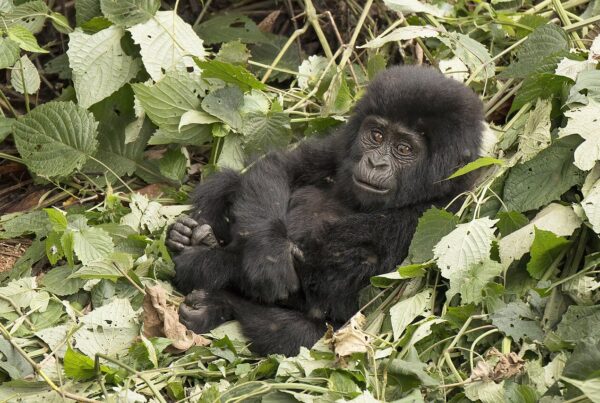
The Bweza gorilla group at Buhoma sector, Bwindi Impenetrable National Park, had an extraordinarily difficult year in 2019. Three group members were found with snare injuries within a six-month period — a clustering of incidents that UWA and Gorilla Doctors identified as linked to a specific section of the park boundary where poaching pressure had increased. The response to these incidents — veterinary intervention for all three affected animals, an intensified anti-poaching operation, and a community engagement programme that addressed the economic conditions driving the snare setting — is documented as one of the most comprehensive conservation responses to a localised threat in Bwindi’s recent history. The Bweza group’s recovery from these incidents is equally remarkable.
The Three Incidents
The first snare injury was detected in April 2019 — a wire snare around the left ankle of an adult female. Gorilla Doctors intervened within forty-eight hours of detection; the snare was removed under anaesthesia and the wound treated. The female recovered full mobility within three weeks. The second incident in June involved a juvenile male with a snare around his right wrist — similar intervention, similar successful outcome. The third, in September, was the most serious: a subadult female with a snare that had been in place for an estimated three to four days, causing significant constriction and early tissue damage. This third case required a more complex surgical intervention and a longer recovery period.
Three snare incidents in one group in six months was statistically anomalous. UWA’s analysis identified a specific stretch of the park boundary near the Bweza group’s range as the source — a boundary section where community land use had shifted, increasing foot traffic near the park edge and creating conditions for casual snare placement by farmers targeting small animals that raid crops.
The Anti-Poaching Response
UWA responded with an intensified patrol programme in the affected boundary section and a coordinated snare sweep — a systematic clearing of the forest undergrowth for wire snares across the Bweza group’s home range. The sweep recovered forty-seven snares over three days — a number that indicated the density of the poaching pressure and the effectiveness of the clearing operation. Rangers conducted community meetings in the adjacent villages, explaining the link between snare incidents and the tourism revenue that supported community benefit programmes, and working with local leaders on land use practices that reduced the incentive for snare placement.
The Recovery
All three affected animals recovered. The subadult female — whose injury had been the most severe — was monitored intensively for six weeks following her intervention. At the two-month assessment she had regained full use of her affected limb and was reintegrated into normal group social activity. The monitoring team documented no long-term behavioural effects from the incident in any of the three animals.
The Bweza group received no further snare incidents following the 2019 response. The gorilla permit costs $800. Part of what it funds is the anti-poaching patrol capacity that cleared forty-seven snares from the Bweza group’s range and the community engagement that reduced the incentive to set them. The three animals who were snared in 2019 are all members of the group that trekkers visit today.
Snare Injury Recovery and Long-Term Monitoring
The Bweza family’s recovery from the 2019 snare incident required an 18-month monitoring programme by the Gorilla Doctors team, during which the injured individual’s wound sites were assessed at each tracking session and veterinary intervention was made available if the recovery plateaued or deteriorated. The recovery’s success depended not just on the veterinary intervention but on the family’s social environment — the continued presence of the silverback and adult females who maintained normal social contact with the injured individual during the recovery period provided the psychological stability that isolation from the group would have undermined. The long-term monitoring protocol that was established for the Bweza family after the incident has since been applied to other injured individuals as a standard of care, formalising the lessons learned from the family’s specific recovery into an improved general protocol.
The welfare monitoring protocol developed from the Bweza family’s 2019 incident has been documented by the Gorilla Doctors programme and shared with veterinary teams in Rwanda and the DRC as part of the cross-border conservation coordination that the International Gorilla Conservation Programme facilitates. The protocol’s specific innovation — a scoring system for wound recovery status that can be assessed by the ranger during the daily monitoring session without veterinary presence — allows early detection of recovery stalls that would previously have required a veterinary visit to identify. The ranger-assessed scoring system has reduced the average time between injury detection and veterinary intervention for subsequent snare injury cases across all three countries.