Updated
Bwindi Impenetrable National Park receives between 1,100 and 2,390 millimetres of rainfall annually, distributed across two wet seasons. Rain is not an exceptional event in the forest — it is the defining feature of the environment that has produced the biological complexity that makes Bwindi one of the most diverse forests in Africa. Mountain gorillas have spent their entire evolutionary history in this wet environment, and their behavioural responses to rainfall — documented by researchers across decades of observation — reveal a species with a sophisticated and sometimes surprisingly human-seeming relationship with getting wet.
The Gorilla’s Relationship With Rain
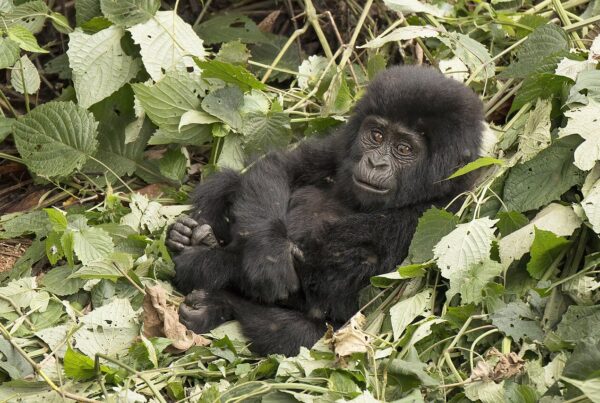
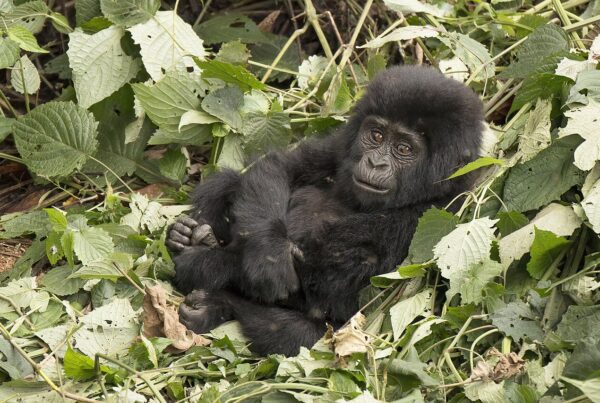
Mountain gorillas do not like rain. This is stated flatly by researchers who have observed gorilla groups across multiple wet seasons: gorillas exposed to heavy rainfall display clear behavioural signs of discomfort and actively seek shelter when it is available. They are not the stoic forest creatures that popular imagination sometimes constructs. They huddle. They grimace. They pull vegetation over themselves in a behaviour that researchers describe as a rudimentary form of shelter-seeking. Silverbacks have been observed sitting with their backs to rain, hunched, with an expression that experienced guides describe as universally recognisable.
This rain aversion is behaviourally interesting because it is at odds with the gorillas’ physical adaptation to the wet environment. Mountain gorillas have the dense, water-shedding coat of an animal that evolved in high-altitude forest. They are not physiologically ill-equipped for rain. Their discomfort with it appears to be a preference rather than a necessity — the preference of a creature that, given the choice, would rather be dry.
Shelter Behaviour
When rain begins during a gorilla trek in Uganda, the gorillas’ behaviour changes noticeably. Feeding activity typically reduces or stops. Animals move toward the canopy and the areas of densest overhead cover. Juveniles, which are the most active members of the group during dry conditions, cluster close to their mothers. The silverback typically finds a large-canopied tree or rocky overhang and positions himself beneath it — the most consistent rain shelter seeker in the group, which experienced guides attribute to his greater surface area and the additional discomfort of being the group’s largest and most exposed member.
Trekking in rain at Bwindi is a common experience and experienced guides note that rainy-day treks often produce closer, more sustained views of gorilla groups — because the gorillas, sheltering under dense canopy, are concentrated in specific locations and less likely to move away. The challenge for the trekking group is the same as the challenge for the gorillas: staying dry enough to fully engage with what is happening in front of you.
What Rain Reveals About Gorillas
There is something specifically affecting about watching a gorilla family navigate heavy rainfall. The silverback hunched under his tree. The females pulling leaves over their infants’ heads. The juveniles trying briefly to continue playing before the rain defeats their optimism and they retreat to maternal warmth. These behaviours are legible to human observers in a way that is unusual in wildlife viewing — they are the behaviours of creatures who, in this particular context, seem very much like us in their preferences and their limited options for addressing the weather.
Gorilla trekking in Uganda in 2027 operates in all weather conditions. The permit costs $800. Rain is not a refundable event. In the guides’ experience, the guests who trek in rain remember it more clearly and more fondly than those who trek in sunshine. The gorillas, huddled in their canopy, have no opinion on the matter. They are simply cold and wet and waiting for it to stop, like everyone else.
Gorilla families develop specific behavioural responses to heavy rain that trekkers fortunate enough to observe describe as among the most compelling wildlife moments of their visit. The family typically clusters closer together during rainfall, with infants and juveniles seeking contact with their mothers or older siblings. The silverback may position himself at the group’s edge, facing outward in a posture that communicates protective alertness rather than threat. When the rain stops, the family often shakes excess water from its fur in a rapid, full-body movement before resuming its feeding routine — a brief but remarkably expressive behaviour that emphasises the physiological and social parallels between gorilla family life and our own.
Experienced rangers time the approach to the gorilla family to coincide with the post-rain resumption of normal activity, when the family’s relative proximity and settled state create the ideal conditions for the one-hour observation window.
The ranger team’s observation notes from rain events in the habituated families provide a cumulative record of this behaviour across different families and seasons, making Bwindi one of the few sites globally where gorilla rain response is documented at sufficient resolution to track individual variation within and between family groups.