Gorilla trekking operator questions — what to ask before committing your deposit
Choosing a gorilla trekking operator is one of the most important decisions in planning a Uganda safari. The operator’s knowledge, systems, and Uganda Wildlife Authority relationships will determine whether your permit is confirmed reliably, whether your accommodation matches your expectations, and whether problems that arise during your trip are resolved quickly or allowed to compound. These three questions — asked directly and evaluated by the specificity and credibility of the answers you receive — will tell you more about the quality of an operator than any amount of website browsing or marketing material reading.
Question 1: How do you confirm gorilla trekking permits?
The answer you are looking for is specific and operational: the operator should be able to describe their direct relationship with Uganda Wildlife Authority’s permit booking system, the process by which they submit permit reservations, and the timeframe within which they receive and share written UWA confirmation with the client. A good answer sounds like: “We submit permit reservations directly to Uganda Wildlife Authority through our operator account. Once your deposit clears, we typically receive UWA confirmation within a few hours on a business day and we forward that confirmation to you the same day.” A poor answer sounds like: “We work with trusted local partners who handle the permits” — which means your permit confirmation passes through at least one additional layer you know nothing about, with the associated increase in information latency and potential for miscommunication.
The follow-up question on permit failure
Ask: “What happens if the permit you have booked for me is not honoured by Uganda Wildlife Authority on the day?” A serious operator will have an answer to this question based on actual experience of the rare cases when this occurs — system errors, double-bookings, or unexpected permit allocation changes. The answer should include a process for resolution, whether that is a same-day alternative permit, a refund, or a rescheduled date. An operator who has never encountered this situation — or who dismisses the question as irrelevant — is less reassuring than one who has a clear protocol and who has invoked it successfully.
Question 2: Can you provide contact details for three recent clients I can speak to?
Any reputable operator with a genuine history of satisfied clients should be able to provide you with contact details for two or three recent clients who have agreed to receive enquiries from prospective clients. The conversations you have with these referees are more valuable than any review on any platform — you can ask specific questions about the quality of the booking process, the accommodation, the ranger quality, the problem resolution in cases where things did not go perfectly, and the overall value for money. An operator who cannot or will not provide client references — citing privacy concerns that could easily be managed by obtaining client consent — is an operator who lacks the track record of satisfied clients that would make references possible.
Question 3: What is your cancellation and refund policy in full?
The quality of an operator’s cancellation and refund policy tells you a great deal about the balance of risk they are prepared to share with clients. A policy that is entirely non-refundable regardless of circumstances puts all of the risk on the client and suggests an operator more focused on protecting their revenue than on building relationships with clients. A policy that is entirely refundable on short notice is either financially unsustainable (if it does not account for the non-refundable costs the operator incurs with suppliers) or a signal that the operator’s supplier relationships are based on fully flexible bookings that provide less certainty of supply. The right answer is a graduated policy: refundable with more notice, progressively less refundable as the departure date approaches, with specific provisions for documented emergencies that reflect a genuine attempt to be fair to clients whose cancellations are not voluntary choices.
Ask these questions of every operator you are considering. The quality and specificity of the answers will tell you more than any amount of website content. We welcome these questions from prospective clients and will provide answers to all three in our initial response — because we have the operations, the track record, and the policies that make honest answers possible.
Frequently Asked Questions
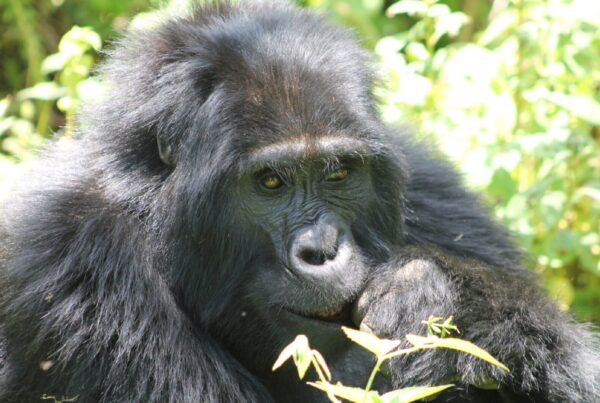
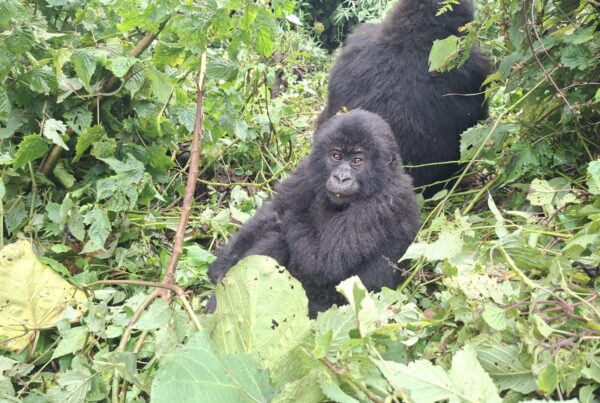
Uganda is home to the mountain gorilla (Gorilla beringei beringei), one of two subspecies of eastern gorilla. They live exclusively in the Virunga volcanic highlands (Uganda/Rwanda/DRC) and Bwindi Impenetrable Forest (Uganda only). Mountain gorillas are the only gorilla subspecies that cannot survive in captivity — every individual you can trek is a wild animal.
The standard gorilla trekking permit gives you exactly 1 hour with the gorilla family. This time begins when you make first contact with the family — the ranger signals the start. The Gorilla Habituation Experience gives 4 hours with a semi-wild family. The walk to find the gorillas can take 30 minutes to 5 hours depending on where the family has moved.
Stay calm, crouch down slowly, avoid direct eye contact, and remain quiet. Do not run — running triggers a chase response. Rangers accompanying your group manage close approaches. Habituated gorillas are accustomed to humans and almost never make contact, but a charging silverback is managed by staying still and following ranger instructions immediately.
A maximum of 8 visitors per habituated gorilla family per day for standard trekking. The Gorilla Habituation Experience has a maximum of 4 visitors per family per day. These limits are set by UWA to minimise stress on the gorilla families and maintain the quality of the experience.
Uganda is home to the mountain gorilla (Gorilla beringei beringei), one of two subspecies of eastern gorilla. They live exclusively in the Virunga volcanic highlands (Uganda/Rwanda/DRC) and Bwindi Impenetrable Forest (Uganda only). Mountain gorillas are the only gorilla subspecies that cannot survive in captivity — every individual you can trek is a wild animal.