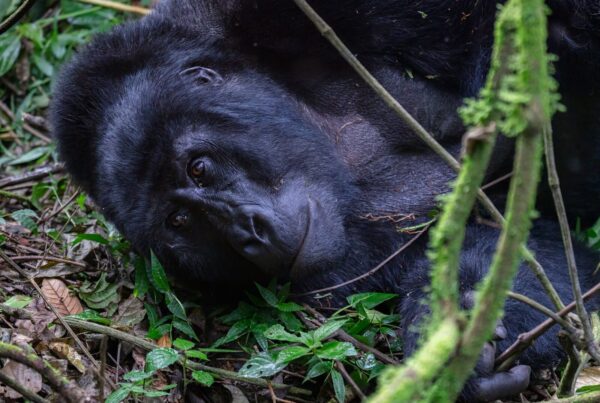
A return business class flight from London to Nairobi costs approximately USD 3,000 to 5,000 in 2027. A gorilla trekking permit in Uganda costs USD 700. A quality 7-day Uganda gorilla trekking trip, including permit, lodge, transport, and guide fees, costs approximately USD 3,000 to 5,000 per person. In other words, the entire gorilla trekking experience can be had for roughly the same price as upgrading your seat on a long-haul flight. This comparison is not rhetorical. It is a genuine question about how to allocate a travel budget when the absolute spend is similar: do you invest in the journey or the destination? And in the specific case of gorilla trekking in Uganda, is the experience worth it?
What Business Class Actually Provides
Business class on a quality airline provides: a flat-bed seat for sleeping, premium food and wine service, priority boarding, dedicated check-in and lounge access, and a more comfortable arrival after a long-haul flight. For journeys of 8 to 12 hours, these comforts are genuinely significant — arriving in good shape rather than depleted matters for how you spend the days that follow. Business class is not an indulgence for its own sake; it is a practical investment in travel quality for long journeys.
It is also an investment that is consumed in 8 to 12 hours, provides no lasting experience beyond that of being comfortable during transit, and is forgotten within 24 hours of landing. The memory of a business class flight is, for most travellers, essentially zero. You remember that you were comfortable. You do not remember the specific food, the specific seat, the specific movie you watched. The experience fades completely within days.
What Gorilla Trekking Provides
Gorilla trekking provides: a physical experience in one of the world’s most ancient and biodiverse forests, an encounter with non-human intelligence that 30 years of travel writers have consistently described as among the most profound wildlife experiences available, a direct contribution to the conservation of an endangered species whose population is actively recovering, and a memory that most trekkers describe as one of the defining experiences of their lives — vivid years and decades later.
The memory of a gorilla trekking experience does not fade. Trekkers who did their trek five, ten, or fifteen years ago describe it with specific, emotional clarity. They remember the silverback’s face, the quality of the morning light, the moment the juvenile approached. The experience does not just last; it grows richer in memory as the full weight of what happened becomes more apparent over time.
The Marginal Cost Framework
If you are travelling from Europe or North America to Uganda, the gorilla trekking cost is not the largest line in your budget — the intercontinental flight is. The gorilla trek represents an incremental cost above what you are already spending on the flight. The question of whether to do the trek is therefore not “is USD 700 + ground costs worth a gorilla trekking experience?” It is “is USD 700 + ground costs worth adding the finest wildlife experience in Africa to a trip I am already taking to the region?” Framed this way, the answer is almost always yes.
Even if you are specifically asking about business class vs economy class + gorilla trekking: the upgrade offers 12 hours of comfort that will not be remembered. The gorilla trekking offers one hour that will not be forgotten. The hedonic calculus, for most travellers, strongly favours the gorilla. Contact us to plan your 2027 Uganda gorilla trekking expedition — the experience you will remember long after you have forgotten every flight you have ever taken.