Updated
The Rushegura gorilla family habituation Uganda Bwindi tourists is one of the habituated mountain gorilla groups that trekkers can visit in Uganda or Rwanda, offering an intimate encounter with these remarkable primates. The process of habituating a wild mountain gorilla group to human presence takes two years under standard Uganda Wildlife Authority protocols. What happens over the subsequent fifteen years — how the group’s relationship with human visitors evolves, how individual gorillas develop their own patterns of response to trekking groups, and what the long-term effects of regular human contact are on gorilla behaviour — is a question that the Rushegura family’s history at Buhoma sector allows researchers and guides to answer with unusual precision.
How the Rushegura Family Adapted to Tourists Over 15 Years
Habituation and Its Limits
Habituation is not domestication. A habituated gorilla group has been brought to a state of tolerance for human presence — specifically for the particular pattern of human presence that the habituation process trains them to expect: a small group of people who maintain distance, move slowly, and produce no threatening behaviour. Outside this pattern — a sudden movement, an unexpected sound, an approach that deviates from the established norm — a habituated gorilla’s response can still be defensive. The seven-metre rule, the prohibition on flash photography, the requirement to remain in a contained group — these exist because the limits of habituation are real and must be respected.
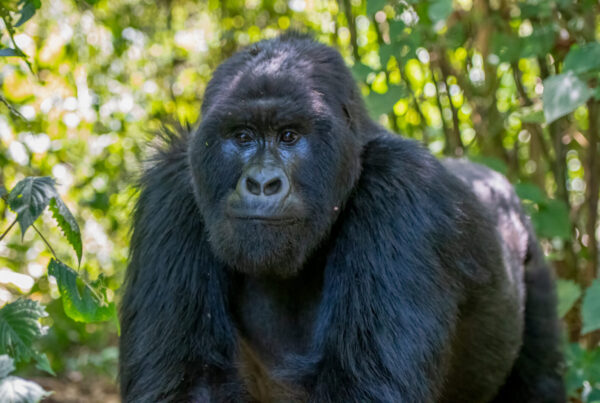
Within those limits, however, the documented behaviour of the Rushegura group over fifteen years of regular tourism visits shows a family that has developed a stable and in some cases nuanced relationship with the human visitors who enter their range daily. Guides who have worked with the Rushegura group for years describe individual gorillas who have developed their own characteristic responses to trekking groups — varying from complete indifference to the mild curiosity of young animals investigating something familiar but still interesting.
Generational Change
The gorillas who were adults at the Rushegura group’s habituation completion in approximately 2009 are now elderly by gorilla standards or have died. The current adult members of the group are primarily gorillas who were born into a habituated group — who have known human presence as a feature of their environment from birth. These individuals show, in the observation of the guides who work with them daily, a qualitatively different relationship to trekking groups than the founding habituated animals did.
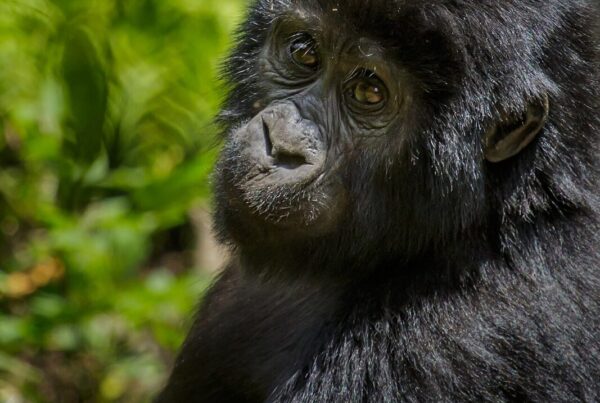
The most striking difference, guides report, is in the juveniles. Gorillas born into the habituated group who have grown up around regular trekking visits display greater curiosity toward visitors and less wariness than the founding generation showed even after years of habituation. This is consistent with behavioural research on habituation in other great ape populations: habituation, once established, becomes self-reinforcing through generations of animals who inherit the behavioural norm of tolerance rather than acquiring it through individual experience.
What Long-Term Habituated Groups Give Trekkers
A gorilla family that has been receiving visitors for fifteen years offers a different quality of encounter than a newly habituated group. The calm is deeper. The tolerance of proximity is more consistent. The individual animals have had enough exposure to human presence that the novelty has dissipated, and what remains is something closer to genuine coexistence — each species aware of the other, neither threatened by the other, both going about their respective business in the same section of ancient forest.
Gorilla trekking in Uganda in 2027 at Buhoma sector takes you to families that have been part of this coexistence model for over a decade. The permit costs $800. What fifteen years of daily human visits has produced in the Rushegura family is something that no amount of money spent elsewhere in wildlife tourism can replicate. It takes time to build. The time has been spent. The result is available.
Frequently Asked Questions
Children aged 15 and older can trek. Uganda Wildlife Authority has a strict minimum age of 15 for all gorilla trekking and the Gorilla Habituation Experience — no exceptions. For families travelling with children under 15, alternative Uganda activities include chimpanzee trekking (age 12+ for standard chimp trekking), game drives, birding, and cultural experiences.
Gorilla trekking involves walking in steep, dense forest — sometimes for several hours at altitude. Fitness matters more than age. Many visitors in their 60s and 70s complete successful treks. Those with knee, heart, or breathing conditions should consult their doctor before booking. Porters are available to assist with carrying and provide physical support on difficult terrain — hiring one is strongly recommended.
Buhoma sector is generally considered the most accessible — the gorilla families there are often found on lower, less steep terrain. Nkuringo sector involves the steepest descent in Bwindi and is the most physically challenging. Ruhija sits at high altitude (2,300m+) which can affect visitors with respiratory conditions. Discuss your fitness level with your operator when choosing a sector.
Uganda is home to the mountain gorilla (Gorilla beringei beringei), one of two subspecies of eastern gorilla. They live exclusively in the Virunga volcanic highlands (Uganda/Rwanda/DRC) and Bwindi Impenetrable Forest (Uganda only). Mountain gorillas are the only gorilla subspecies that cannot survive in captivity — every individual you can trek is a wild animal.
The standard gorilla trekking permit gives you exactly 1 hour with the gorilla family. This time begins when you make first contact with the family — the ranger signals the start. The Gorilla Habituation Experience gives 4 hours with a semi-wild family. The walk to find the gorillas can take 30 minutes to 5 hours depending on where the family has moved.