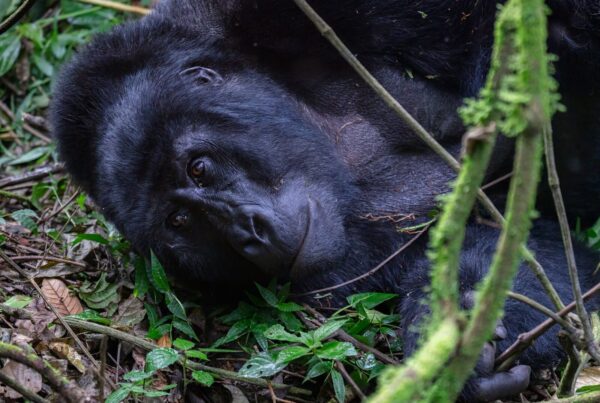
The Distance That Protects Both Species
During the mandatory pre-trek briefing, rangers emphasise one rule more insistently than all others: maintain a minimum distance of seven metres from the gorillas at all times. This rule is not arbitrary. It is the product of decades of research into gorilla behaviour, disease transmission risk, and the psychology of human-wildlife interaction. Understanding why the seven-metre rule exists, how it is enforced, what happens when it is accidentally or deliberately broken, and why it sometimes seems to be violated by the gorillas themselves, is essential for every trekker who wants to be a responsible participant in mountain gorilla conservation.
This guide examines the seven-metre rule from multiple perspectives: the scientific rationale, the practical challenges of enforcement in dense forest, the emotional tension it creates when gorillas approach closer, and the broader conservation philosophy that the rule represents.
The Scientific Basis for Seven Metres
The seven-metre distance was established through research conducted by primatologists studying habituated gorilla groups in Rwanda, Uganda, and DRC. Studies showed that this distance significantly reduces the risk of disease transmission from humans to gorillas while still allowing clear observation and photography. Mountain gorillas share approximately ninety-eight percent of their DNA with humans, making them extraordinarily susceptible to human pathogens.
Respiratory viruses, including common colds and influenza, can be transmitted through droplets expelled during coughing, sneezing, or even normal breathing. At distances closer than seven metres, the concentration of potentially infectious particles in the air increases substantially. The seven-metre buffer provides reasonable protection against airborne transmission while still permitting the intimate visual encounter that trekkers seek.
The distance also reduces stress on gorillas. While habituated gorillas tolerate human presence, they are still wild animals with personal space requirements. Constant close proximity elevates cortisol levels, which over time can affect immune function, reproductive success, and social behaviour. The seven-metre rule is not merely about disease; it is about maintaining the psychological wellbeing of animals whose daily lives already include an hour of unavoidable human contact.
Enforcement in Practice
Guides enforce the seven-metre rule through verbal instructions and physical positioning. When the group first approaches a gorilla family, the guide positions the eight trekkers in a loose semicircle or line at approximately seven metres from the nearest gorilla. As gorillas move, the guide directs the group to adjust their positions, maintaining the buffer distance.
Enforcement becomes challenging when gorillas move toward the group, which happens regularly. Juveniles are particularly curious and may approach within arm’s reach, sometimes touching trekkers before their mothers recall them. Silverbacks occasionally walk through the middle of the group, forcing trekkers to part like a school of fish around a shark. In these moments, the rule inverts: the humans must retreat to maintain distance from the approaching gorillas.
Guides handle these close approaches calmly but firmly. They instruct trekkers to remain still, avoid direct eye contact with silverbacks, and allow the gorilla to pass. Touching a gorilla is strictly prohibited and can result in immediate termination of the encounter. Rangers carry this prohibition seriously because physical contact poses the highest disease transmission risk.
Why Gorillas Sometimes Approach Closer
Gorillas do not understand human rules. They move through their habitat according to their own needs: feeding, socialising, resting, and travelling. When a gorilla family moves in your direction, it is not because they want to interact with you. It is because their path happens to intersect with your position.
Juveniles approach out of curiosity, the same curiosity that drives young humans to investigate unfamiliar things. Their mothers usually tolerate brief investigations before calling them back with a grunt or gentle pull. Silverbacks may approach to assert dominance, to assess whether your group poses a threat, or simply because they are moving through their territory and you happen to be in it.
These close approaches are among the most thrilling moments of the encounter, but they require discipline from trekkers. The temptation to reach out, to make eye contact, or to photograph from an even closer angle is strong. Resisting this temptation is part of what it means to be a responsible wildlife tourist.
Photography and the Seven-Metre Rule
Seven metres is an excellent distance for gorilla photography. Modern cameras and smartphones capture detailed images at this range, and the slight distance allows you to compose shots that include the gorilla’s surroundings rather than just filling the frame with fur. Some of the most compelling gorilla photographs are taken at seven metres because the photographer has room to include context: the vegetation, the lighting, the social group.
When gorillas approach closer, photographers face a dilemma. The closer proximity offers spectacular detail but reduces compositional options. The best approach is to capture the close approach with a wider lens or smartphone, then resume normal shooting once the gorilla retreats. Do not use a gorilla’s close approach as an excuse to move closer yourself when it leaves.
What Happens If You Break the Rule
Deliberately approaching closer than seven metres can result in serious consequences. Guides may terminate the encounter immediately if they believe a trekker is endangering the gorillas or compromising the habituation process. In extreme cases, rangers may escort the offending trekker from the forest and report the violation to UWA, which can result in fines or future permit restrictions.
More commonly, guides use verbal warnings and repositioning to maintain the distance. They understand that in dense forest, maintaining exactly seven metres at all times is practically impossible. What they look for is intent and attitude. Trekkers who are genuinely trying to respect the distance but are occasionally caught off-guard by gorilla movements are treated with patience. Trekkers who deliberately push closer for better photos or who ignore guide instructions face sterner responses.
Final Thoughts
The seven-metre rule is not a barrier between you and the gorillas. It is a bridge that makes the encounter possible. Without this minimum distance, disease transmission would decimate gorilla populations, stress would erode their health, and the delicate trust that habituation has built would collapse. The rule protects the gorillas from you, but it also protects the experience for future trekkers by ensuring that gorilla tourism remains sustainable.
When you stand seven metres from a silverback, close enough to see individual hairs, to notice scars and expressions, to smell the forest on his coat, you are close enough. Any closer would not improve the encounter; it would only increase the risk. The seven metres forces you to observe rather than intrude, to witness rather than impose. That distance, maintained with respect, is what allows wild gorillas to remain wild while sharing their world with humans who come in peace.