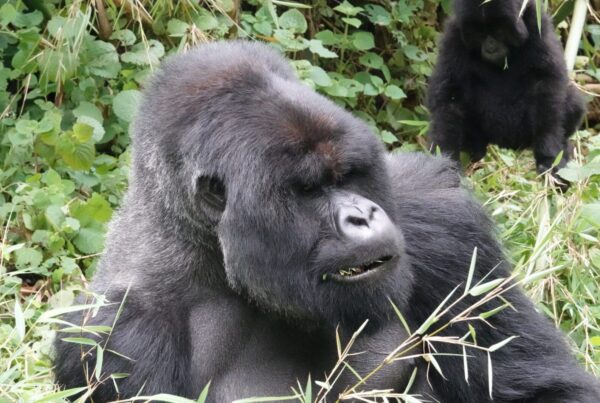
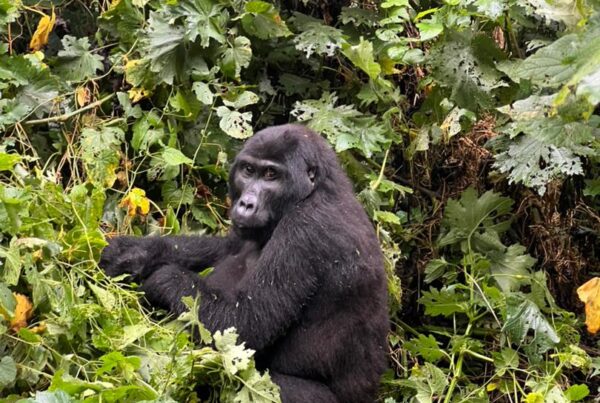
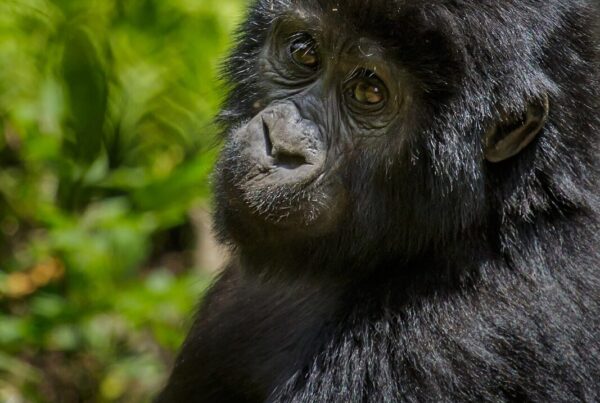
Gorillas build a brand new nest every single night, and every single morning of their lives they sleep in a structure that was not there the day before. This remarkable nesting behaviour — constructing a fresh sleeping platform from bent branches and leaves before dark, sleeping in it, and then abandoning it permanently the following morning — is one of the most distinctive aspects of gorilla life and one of the most useful for the rangers and researchers who track these animals daily. Understanding why gorillas build new nests, what the nests tell researchers, and what happens to the nests after the gorillas leave them reveals a detailed picture of gorilla life that goes well beyond the hour that trekking visitors spend with the family in daylight.
What a Gorilla Nest Is
A gorilla nest is a sleeping platform constructed from local vegetation — typically branches bent to create a foundation, with leaves and finer plant material added for comfort. Ground nests are constructed by bending surrounding vegetation inward to create a roughly circular platform at ground level. Tree nests are built on large horizontal branches, using the same basic technique of bending and weaving vegetation to create a stable surface.
The construction takes between five and thirty minutes, depending on the individual gorilla’s experience and the availability of suitable material. Adult gorillas construct their nests efficiently and with apparent preference for specific materials — certain leaf species are selected consistently, suggesting aesthetic or comfort criteria beyond simple availability.
Ground vs. Tree Nests
Silverbacks almost exclusively nest on the ground — their size makes tree nesting impractical and potentially dangerous. Adult females may nest in trees or on the ground depending on the local forest structure. Juveniles and sub-adults frequently nest in trees, where their smaller size makes it feasible and where some researchers suggest predator avoidance may have historically been a factor (though mountain gorillas have no significant natural predators today).
Infants sleep with their mothers rather than building separate nests until approximately three years of age, when they begin practising nest construction alongside the adult.
Why New Nests Every Night
The daily nest construction is one of the behaviours that distinguishes mountain gorillas from some other great ape species — chimpanzees also build nests, but the “new nest every night” pattern is more consistently observed in gorillas. Several explanations have been proposed.
Parasite and Hygiene Management
The most widely accepted explanation is parasite management. A used nest accumulates the fecal matter, shed hair, skin cells, and the arthropods (mites, lice, flies) that are attracted to these. A new nest is clean. Building in a new location each evening avoids sleeping in the accumulated contamination of previous nights.
Studies of nest cleanliness have found that used gorilla nests have significantly higher parasite loads than fresh nests, supporting this hypothesis. The behaviour is, in this reading, a hygiene practice that reduces ectoparasite exposure during the animal’s most vulnerable period — sleep.
Thermoregulation
Fresh vegetation retains more insulating capacity than aged vegetation, which compresses and loses loft over time. In the cold, high-altitude environment of mountain gorilla habitat, the insulating quality of the nest material is important for thermoregulation overnight. Building fresh nests each evening maintains insulation quality that would degrade over repeated use.
Comfort and Safety
The daily nest construction also ensures that each night’s sleeping location is optimally positioned relative to the day’s final feeding location, the current position of the family group, and the terrain. A gorilla family moving through their range during the day is in a different location each evening, and building locally means sleeping in the right place rather than travelling back to a fixed nest site.
What Nests Tell Researchers
Old gorilla nests are among the most valuable tools available to gorilla researchers working in difficult terrain. They can be found and examined after the animals have moved on, providing information about the family without requiring direct observation.
Population Surveys
The most significant use of nests for research is population surveys. When direct observation of gorilla numbers is impossible — in dense vegetation, over large areas, or in habituated populations across a wide range — researchers count nests from previous nights as a proxy for individual count. The number of nests in a cluster corresponds to the number of adults and large juveniles in the group (infants sharing maternal nests are accounted for separately). By surveying nests across a forest area, researchers can estimate population size and distribution without needing to see each individual gorilla directly.
Individual Identification
Nest surveys can identify specific individuals through analysis of the plant materials used, the construction style, and the traces left in the nest — hair, fecal samples, skin cells — that can be matched to known individuals through DNA analysis.
Health Monitoring
Fecal matter in old nests can be collected and analysed for parasite loads, hormonal markers (including stress indicators), diet composition, and pathogen presence. This non-invasive monitoring method provides health data without requiring direct animal contact — particularly valuable for populations that are not habituated to close human approach.
The Trackers Who Read the Nests
The morning trackers at Bwindi begin their day by finding the previous night’s nesting site before moving to locate the family’s current position. The nests tell them several things: how many individuals were present, whether all expected group members were accounted for, whether any signs of stress or illness are visible, and which direction the group moved when it left in the morning.
Experienced trackers can estimate how long ago the family left a nest site from the condition of the disturbed vegetation and the temperature of any residual warmth in the nest material. This narrows the search for the current family position and contributes to the efficiency of morning tracking that makes tourist trek scheduling possible.
What You Can See on a Trek
Your guide may show you a nest site from a previous night on the walk to the family’s current location. Old nests are visually distinctive — the bent and woven vegetation platform, the shallow impression where the animal slept, sometimes fecal matter at the edge. They are worth pausing at, both for what they tell you about gorilla behaviour and for the reminder that the animals you are going to meet have been here all night, in this forest, doing what they do in the hours before you arrive.
Uganda gorilla trekking permits are $800 per person. Contact Uganda Gorilla Trekking to book your permit and plan your visit. The gorillas built new nests last night. They are already in the forest. The trackers have found them. Your guide is waiting.