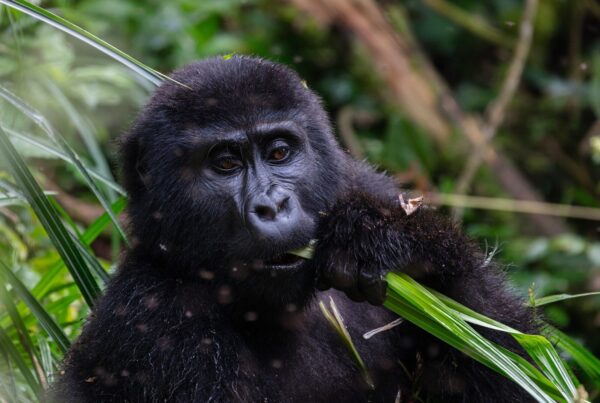
Gorilla trekking rules exist for one reason: mountain gorillas share 98.3% of their DNA with humans, which means a human cold can kill a gorilla — and the strict protocols around distance, behaviour, and health protect animals whose total wild population is fewer than 1,100 individuals. Uganda Wildlife Authority enforces these regulations on every trek in Bwindi Impenetrable National Park and Mgahinga Gorilla National Park. Violating them results in permit cancellation without refund and removal from the forest. This guide covers all ten rules, explains the biology and conservation logic behind each one, and tells you exactly what to do if a gorilla approaches or charges.
10 Rules at a Glance
- 7-metre minimum distance from gorillas at all times
- Stay with your group — maximum 8 visitors per family per day
- Quiet voices throughout the trek and encounter
- No flash photography — disable before you enter the forest
- No eating or drinking in the presence of gorillas
- No mimicking gorilla vocalisations or chest-beating
- Avoid direct eye contact — especially with the silverback
- One hour maximum with the family — strictly timed
- Do not trek if ill — cold, flu, fever or any contagious condition
- No littering — carry all waste out of the forest
Why Gorilla Trekking Rules Matter
Mountain gorillas are among the most endangered primates on Earth, with fewer than 1,100 individuals remaining in the wild. Uganda is home to roughly half of these — primarily in Bwindi Impenetrable National Park across its four trekking sectors, and in Mgahinga Gorilla National Park. The strict regulations governing gorilla trekking exist for one fundamental reason: to protect these animals while allowing humans the privilege of observing them in their natural habitat.
These rules are the result of decades of research by primatologists, conservationists, and wildlife authorities who have studied how human interaction affects gorilla behaviour, health, and survival. Uganda Wildlife Authority enforces them rigorously — violations result in immediate removal from the forest, permit cancellation without refund, and a ban from future treks.
The 10 Essential Gorilla Trekking Rules
1. Maintain a 7-Metre Distance at All Times
The seven-metre rule is the most critical regulation in gorilla trekking. This minimum distance protects gorillas from human diseases and prevents them from feeling threatened. Mountain gorillas share approximately 98.3% of their DNA with humans, making them susceptible to many of the same illnesses. Even a common cold, harmless to a human, could prove fatal to a gorilla with no acquired immunity to that specific pathogen.
During your trek, guides will position the group to maintain this distance. Gorillas do not understand the rule and may approach closer. If a gorilla moves towards you, slowly retreat while avoiding sudden movements. Never attempt to touch or feed a gorilla, regardless of how close they come.
2. Stay With Your Guided Group
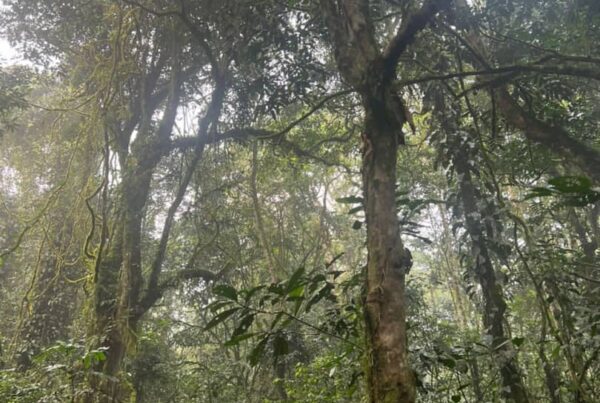
Never wander away from your assigned trekking group. The forest in Bwindi is dense, disorienting, and navigated safely only with an experienced guide. Your guide knows the terrain, understands gorilla behaviour, and is trained to handle emergencies. The maximum group size is eight visitors per gorilla family per day — this limit ensures minimal disturbance and maintains the intimate quality of the encounter. The gorilla families assigned to your sector each have experienced ranger guides who know those specific animals by individual name and history.
3. Keep Voices Low
Gorillas communicate through vocalisations and loud human voices disrupt their natural behaviour, cause stress, or trigger defensive responses. Speak in hushed tones throughout the trek. Your guide will use hand signals when you are near the gorillas. Silence is not required — quiet conversation is fine — but you will find yourself naturally quietening as you enter the encounter. The forest in Bwindi is remarkably quiet in the morning, and your own hearing sharpens when you stop generating noise.
4. No Flash Photography
Flash photography is strictly prohibited during gorilla encounters. The sudden burst of light startles gorillas, can trigger aggressive responses, and may cause temporary distress. Gorillas have sensitive eyes adapted to the dim forest understory. Disable your camera flash before the trek begins — do not wait until you reach the gorillas. If you are using a smartphone, turn off the flash in camera settings at the briefing. Natural light in the forest is often sufficient during morning treks, especially in open sections of canopy.
5. Do Not Eat or Drink Near the Gorillas
Consuming food or beverages in the presence of gorillas is forbidden. Food smells attract gorillas and increase the risk of unsafe close contact. Dropped food transmits diseases and can alter gorilla feeding behaviour over time. If you need water during the trek, ask your guide for an appropriate break away from the family’s location.
6. Do Not Mimic Gorilla Behaviour
Never mimic gorilla vocalisations, chest-beating, or other behaviours. Gorillas interpret mimicry as aggression or territorial challenge, potentially triggering defensive responses from the silverback. Your role in the encounter is that of a quiet observer — not a participant in gorilla social dynamics. This rule prevents the most common trigger of charged encounters that result in visitor injury.
7. Avoid Direct Eye Contact
In gorilla society, prolonged direct eye contact is a challenge or threat display. Staring directly into a gorilla’s eyes — particularly a silverback’s — communicates aggression. You can look at the gorillas freely, but avoid sustained staring. If a gorilla looks directly at you, briefly look away or down. This submissive gesture reassures the animal that you mean no harm and is one of the most important non-verbal protocols of the entire encounter.
8. Follow the One-Hour Rule
Visitors are allowed exactly one hour with the gorilla family from the moment of encounter. This time limit is strictly enforced and tracked by your guide. The rule minimises stress on the gorillas and ensures they can continue their natural daily activities — feeding, resting, social interaction — without extended human disruption. The hour feels brief in anticipation and concentrated in reality. Most trekkers find it more than sufficient. When your guide signals time is up, leave promptly and quietly.
9. Do Not Trek If You’re Ill
If you are experiencing cold or flu symptoms, fever, or any contagious illness, you must inform the authorities before the trek. You will not be permitted to participate. There are no refunds for illness-related cancellations — this policy has saved gorilla lives. Gorilla tourism generates critical conservation revenue, but the gorillas’ health takes absolute priority. If you feel unwell on trek day, report it immediately, even if it means losing your permit fee. The ranger staff at the briefing check visibly ill visitors and will turn them back.
10. No Littering in the Forest
Leave nothing behind in the forest — including organic waste like fruit peels. Litter harms wildlife, alters ecosystems, and degrades the trails for every visitor who follows. The forest is the gorillas’ home. Carry a small bag for your own rubbish and be prepared to pick up any you encounter on the trail.
What Happens If a Gorilla Charges?
Despite following all rules, gorilla charges can occur. A silverback may charge if he perceives a threat, particularly if someone breaks the distance rule or makes sudden movements. If charged:
- Do not run. Running triggers a pursuit response.
- Follow your guide’s instructions immediately. Crouch, look down, assume a submissive posture.
- Avoid eye contact. Look at the ground.
- Remain calm. The vast majority of charges are bluff displays designed to intimidate, not attack.
Guides are trained in gorilla behaviour and will use vocalisations and calm movements to manage the situation. Their authority in these moments is absolute — follow directions without hesitation or delay.
Frequently Asked Questions
The 15-year minimum age is set by Uganda Wildlife Authority and applies across all trekking sectors in Bwindi and Mgahinga. The rule exists because younger children are more likely to make sudden movements, vocalisations, or unpredictable behaviour that can stress or provoke gorilla families — particularly silverbacks protecting infants. The rule also protects children: a gorilla encounter requires the ability to understand and reliably follow instructions under the unusual conditions of a close wildlife encounter. There are no exceptions and no child-rate permits below the minimum age. What happens if you break the 7-metre rule? Your guide will immediately and firmly instruct you to move back. If the violation is serious or repeated, you can be removed from the encounter and, in extreme cases, from the forest entirely. Permit cancellation without refund is within UWA’s authority for serious rule violations. In practice, most distance breaches are accidental — gorillas approach humans, not the other way round, and guides manage the group’s response. The rule also matters beyond the encounter: if you are visibly ill, the 7-metre distance is insufficient to prevent disease transmission, which is why the no-trekking-while-ill rule takes precedence over everything else. Can I use a video camera or professional DSLR on a gorilla trek? Yes — video cameras, DSLRs, mirrorless cameras, and smartphones are all permitted. The only restriction is flash: no flash photography under any circumstances. Professional equipment with large lenses is allowed but should be carried in a way that doesn’t impede your movement on difficult terrain. Many photographers bring a monopod rather than a tripod, which is more practical in dense forest. The one-hour time limit applies regardless of what you are photographing. Are masks required during a gorilla trek? Mask requirements have varied over time and are set by Uganda Wildlife Authority based on current health guidance. During and after the COVID-19 period, masks were mandatory within 10 metres of gorilla families. Current requirements should be confirmed with your operator or UWA directly when booking, as these regulations are updated periodically. The underlying reason — protecting gorillas from human respiratory pathogens — remains permanent even when formal mask rules are relaxed. If you have any respiratory symptoms, do not trek regardless of mask rules. How are the gorilla trekking rules enforced in the forest? Each trekking group is accompanied by an experienced ranger guide and usually one or two additional armed rangers. The ranger guide manages the group’s movement, positioning relative to the gorilla family, and compliance with all rules in real time. Rangers have the authority to end an encounter immediately if rules are violated. The briefing at the ranger station (7 a.m., before all treks) is mandatory and covers every rule — signing the permit waiver confirms that you have understood them and accept the conditions of the trek. Prepare before you go Understanding these rules before you arrive makes the encounter more relaxed and more rewarding. Review them, then focus on the experience itself — the preparation is your responsibility, and the guides handle the rest. Uganda Gorilla Permit Guide — how to book, what the permit covers Uganda Gorilla Families — the families you may be assigned on trek day Bwindi Sector Comparison — difficulty levels across the four sectors Gorilla Safari Cost Guide — permits, porters, lodges, and total budget Safari Itineraries — full trip shapes built around the trekking day Further Reading Gorilla Trekking Etiquette: Rules Every Visitor Must Follow Drone photography rules and regulations in Uganda’s national parks 2025 Uganda Gorilla Trekking Permits – Cost, Booking, Rules & More Latest Health Rules at Entebbe International Airport 50 Wild Animals You Must See on an African Safari Gorilla Trekking Age Limit: Everything You Must Know Before Booking Your Safari 10 Things That Surprise First-Time Gorilla Trekkers in Uganda Can You Take Photos of Gorillas? Photography Rules in Uganda What Is the Gorilla Trekking Age Limit? Uganda Rules Explained Rabies Vaccination Uganda: Should Gorilla Trekkers Get It <
Your guide will immediately and firmly instruct you to move back. If the violation is serious or repeated, you can be removed from the encounter and, in extreme cases, from the forest entirely. Permit cancellation without refund is within UWA’s authority for serious rule violations. In practice, most distance breaches are accidental — gorillas approach humans, not the other way round, and guides manage the group’s response. The rule also matters beyond the encounter: if you are visibly ill, the 7-metre distance is insufficient to prevent disease transmission, which is why the no-trekking-while-ill rule takes precedence over everything else. Can I use a video camera or professional DSLR on a gorilla trek? Yes — video cameras, DSLRs, mirrorless cameras, and smartphones are all permitted. The only restriction is flash: no flash photography under any circumstances. Professional equipment with large lenses is allowed but should be carried in a way that doesn’t impede your movement on difficult terrain. Many photographers bring a monopod rather than a tripod, which is more practical in dense forest. The one-hour time limit applies regardless of what you are photographing. Are masks required during a gorilla trek? Mask requirements have varied over time and are set by Uganda Wildlife Authority based on current health guidance. During and after the COVID-19 period, masks were mandatory within 10 metres of gorilla families. Current requirements should be confirmed with your operator or UWA directly when booking, as these regulations are updated periodically. The underlying reason — protecting gorillas from human respiratory pathogens — remains permanent even when formal mask rules are relaxed. If you have any respiratory symptoms, do not trek regardless of mask rules. How are the gorilla trekking rules enforced in the forest? Each trekking group is accompanied by an experienced ranger guide and usually one or two additional armed rangers. The ranger guide manages the group’s movement, positioning relative to the gorilla family, and compliance with all rules in real time. Rangers have the authority to end an encounter immediately if rules are violated. The briefing at the ranger station (7 a.m., before all treks) is mandatory and covers every rule — signing the permit waiver confirms that you have understood them and accept the conditions of the trek. Prepare before you go Understanding these rules before you arrive makes the encounter more relaxed and more rewarding. Review them, then focus on the experience itself — the preparation is your responsibility, and the guides handle the rest. Uganda Gorilla Permit Guide — how to book, what the permit covers Uganda Gorilla Families — the families you may be assigned on trek day Bwindi Sector Comparison — difficulty levels across the four sectors Gorilla Safari Cost Guide — permits, porters, lodges, and total budget Safari Itineraries — full trip shapes built around the trekking day Further Reading Gorilla Trekking Etiquette: Rules Every Visitor Must Follow Drone photography rules and regulations in Uganda’s national parks 2025 Uganda Gorilla Trekking Permits – Cost, Booking, Rules & More Latest Health Rules at Entebbe International Airport 50 Wild Animals You Must See on an African Safari Gorilla Trekking Age Limit: Everything You Must Know Before Booking Your Safari 10 Things That Surprise First-Time Gorilla Trekkers in Uganda Can You Take Photos of Gorillas? Photography Rules in Uganda What Is the Gorilla Trekking Age Limit? Uganda Rules Explained Rabies Vaccination Uganda: Should Gorilla Trekkers Get It <
Yes — video cameras, DSLRs, mirrorless cameras, and smartphones are all permitted. The only restriction is flash: no flash photography under any circumstances. Professional equipment with large lenses is allowed but should be carried in a way that doesn’t impede your movement on difficult terrain. Many photographers bring a monopod rather than a tripod, which is more practical in dense forest. The one-hour time limit applies regardless of what you are photographing. Are masks required during a gorilla trek? Mask requirements have varied over time and are set by Uganda Wildlife Authority based on current health guidance. During and after the COVID-19 period, masks were mandatory within 10 metres of gorilla families. Current requirements should be confirmed with your operator or UWA directly when booking, as these regulations are updated periodically. The underlying reason — protecting gorillas from human respiratory pathogens — remains permanent even when formal mask rules are relaxed. If you have any respiratory symptoms, do not trek regardless of mask rules. How are the gorilla trekking rules enforced in the forest? Each trekking group is accompanied by an experienced ranger guide and usually one or two additional armed rangers. The ranger guide manages the group’s movement, positioning relative to the gorilla family, and compliance with all rules in real time. Rangers have the authority to end an encounter immediately if rules are violated. The briefing at the ranger station (7 a.m., before all treks) is mandatory and covers every rule — signing the permit waiver confirms that you have understood them and accept the conditions of the trek. Prepare before you go Understanding these rules before you arrive makes the encounter more relaxed and more rewarding. Review them, then focus on the experience itself — the preparation is your responsibility, and the guides handle the rest. Uganda Gorilla Permit Guide — how to book, what the permit covers Uganda Gorilla Families — the families you may be assigned on trek day Bwindi Sector Comparison — difficulty levels across the four sectors Gorilla Safari Cost Guide — permits, porters, lodges, and total budget Safari Itineraries — full trip shapes built around the trekking day Further Reading Gorilla Trekking Etiquette: Rules Every Visitor Must Follow Drone photography rules and regulations in Uganda’s national parks 2025 Uganda Gorilla Trekking Permits – Cost, Booking, Rules & More Latest Health Rules at Entebbe International Airport 50 Wild Animals You Must See on an African Safari Gorilla Trekking Age Limit: Everything You Must Know Before Booking Your Safari 10 Things That Surprise First-Time Gorilla Trekkers in Uganda Can You Take Photos of Gorillas? Photography Rules in Uganda What Is the Gorilla Trekking Age Limit? Uganda Rules Explained Rabies Vaccination Uganda: Should Gorilla Trekkers Get It <
Mask requirements have varied over time and are set by Uganda Wildlife Authority based on current health guidance. During and after the COVID-19 period, masks were mandatory within 10 metres of gorilla families. Current requirements should be confirmed with your operator or UWA directly when booking, as these regulations are updated periodically. The underlying reason — protecting gorillas from human respiratory pathogens — remains permanent even when formal mask rules are relaxed. If you have any respiratory symptoms, do not trek regardless of mask rules. How are the gorilla trekking rules enforced in the forest? Each trekking group is accompanied by an experienced ranger guide and usually one or two additional armed rangers. The ranger guide manages the group’s movement, positioning relative to the gorilla family, and compliance with all rules in real time. Rangers have the authority to end an encounter immediately if rules are violated. The briefing at the ranger station (7 a.m., before all treks) is mandatory and covers every rule — signing the permit waiver confirms that you have understood them and accept the conditions of the trek. Prepare before you go Understanding these rules before you arrive makes the encounter more relaxed and more rewarding. Review them, then focus on the experience itself — the preparation is your responsibility, and the guides handle the rest. Uganda Gorilla Permit Guide — how to book, what the permit covers Uganda Gorilla Families — the families you may be assigned on trek day Bwindi Sector Comparison — difficulty levels across the four sectors Gorilla Safari Cost Guide — permits, porters, lodges, and total budget Safari Itineraries — full trip shapes built around the trekking day Further Reading Gorilla Trekking Etiquette: Rules Every Visitor Must Follow Drone photography rules and regulations in Uganda’s national parks 2025 Uganda Gorilla Trekking Permits – Cost, Booking, Rules & More Latest Health Rules at Entebbe International Airport 50 Wild Animals You Must See on an African Safari Gorilla Trekking Age Limit: Everything You Must Know Before Booking Your Safari 10 Things That Surprise First-Time Gorilla Trekkers in Uganda Can You Take Photos of Gorillas? Photography Rules in Uganda What Is the Gorilla Trekking Age Limit? Uganda Rules Explained Rabies Vaccination Uganda: Should Gorilla Trekkers Get It <
Each trekking group is accompanied by an experienced ranger guide and usually one or two additional armed rangers. The ranger guide manages the group’s movement, positioning relative to the gorilla family, and compliance with all rules in real time. Rangers have the authority to end an encounter immediately if rules are violated. The briefing at the ranger station (7 a.m., before all treks) is mandatory and covers every rule — signing the permit waiver confirms that you have understood them and accept the conditions of the trek. Prepare before you go Understanding these rules before you arrive makes the encounter more relaxed and more rewarding. Review them, then focus on the experience itself — the preparation is your responsibility, and the guides handle the rest. Uganda Gorilla Permit Guide — how to book, what the permit covers Uganda Gorilla Families — the families you may be assigned on trek day Bwindi Sector Comparison — difficulty levels across the four sectors Gorilla Safari Cost Guide — permits, porters, lodges, and total budget Safari Itineraries — full trip shapes built around the trekking day Further Reading Gorilla Trekking Etiquette: Rules Every Visitor Must Follow Drone photography rules and regulations in Uganda’s national parks 2025 Uganda Gorilla Trekking Permits – Cost, Booking, Rules & More Latest Health Rules at Entebbe International Airport 50 Wild Animals You Must See on an African Safari Gorilla Trekking Age Limit: Everything You Must Know Before Booking Your Safari 10 Things That Surprise First-Time Gorilla Trekkers in Uganda Can You Take Photos of Gorillas? Photography Rules in Uganda What Is the Gorilla Trekking Age Limit? Uganda Rules Explained Rabies Vaccination Uganda: Should Gorilla Trekkers Get It <