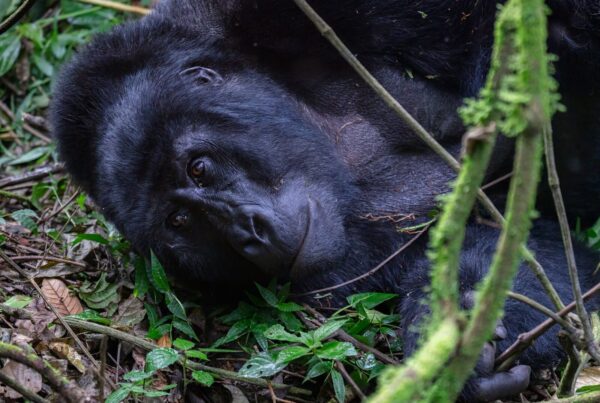
Safari is not for everyone. The long vehicle drives, the early morning starts, the wait-and-see nature of game spotting, the dust and heat of open savanna, the competitive atmosphere at popular waterholes where a dozen vehicles jostle for the best position — many otherwise adventurous travellers find that classical safari does not deliver the kind of experience they came for. They feel passive, processed, and oddly disconnected from the wildlife they have come so far to see. If this describes you, gorilla trekking in Uganda is worth reconsidering as a fundamentally different kind of wildlife experience — one that addresses almost every specific complaint about conventional safari.
The Problem With Conventional Safari for Some Travellers
Classical African safari — vehicle-based game drives in savanna reserves — is an extraordinary experience for the right traveller. But it is not universally loved, and the complaints that dissatisfied safari-goers make are consistently specific. The vehicle is a barrier between observer and animal. The experience is passive — you wait for animals to appear, then you look at them, then you move on. The best viewpoints are often crowded with other vehicles. The animals are aware of the vehicles but not specifically aware of you. The experience can feel, at its worst, like watching wildlife on a screen inside a vehicle — real but mediated.
For travellers who wanted to feel engaged, to feel present in the ecosystem rather than observing it from a managed distance, conventional safari can be disappointing. These are often the most active, most physically engaged travellers — people who would rather be walking than sitting, rather be in the environment than looking at it through glass.
How Gorilla Trekking Is Different
Gorilla trekking addresses every specific complaint about conventional safari. There is no vehicle: you walk to the gorillas through the forest under your own power. The experience is active rather than passive: you choose your pace, you navigate the terrain, you arrive at the encounter having worked for it. The encounter itself is at a human scale: you are on foot, the gorillas are on foot, and the seven-metre distance protocol makes you close enough to hear them breathe. There is no competition for viewpoints: a maximum of eight trekkers per gorilla family means the encounter is not shared with crowds. And the gorillas are specifically aware of you — they look at you, assess you, sometimes approach you. You are not watching wildlife from behind glass. You are in the presence of beings who know you are there.
The Physical Element: For the Traveller Who Wants to Move
For travellers who find vehicle-based safari too sedentary, gorilla trekking’s physical demands are a feature rather than a drawback. The trek — anywhere from 45 minutes to seven hours depending on family location — is genuinely demanding in a way that produces satisfaction. The terrain is steep, uneven, and beautiful. The forest you move through is one of the most biodiverse ecosystems in Africa: the birdsong, the primates in the canopy, the forest elephant trails, the streams — the trek itself is an experience, not just transport to the encounter. Travellers who love hiking, trekking, or any form of physical engagement in natural environments consistently rate gorilla trekking as more satisfying than any vehicle-based alternative.
What Gorilla Trekking Shares With Safari
Gorilla trekking is still fundamentally a wildlife encounter in a protected area, with professional guides and a conservation framework. If you have objections to all wildlife tourism on principle — to the commodification of animals, to the presence of tourists in wild spaces — gorilla trekking does not resolve those objections. But if your dissatisfaction with safari is specifically about the passive, mediated, vehicle-based nature of the experience, gorilla trekking is the best possible alternative.
In 2027, we have guided many trekkers who described themselves as “not safari people” before their Uganda visit. Most describe gorilla trekking as the wildlife experience that made them understand what they had been looking for. Contact us to plan an itinerary for the traveller who thought safari was not for them.