The Strongest Land Primate
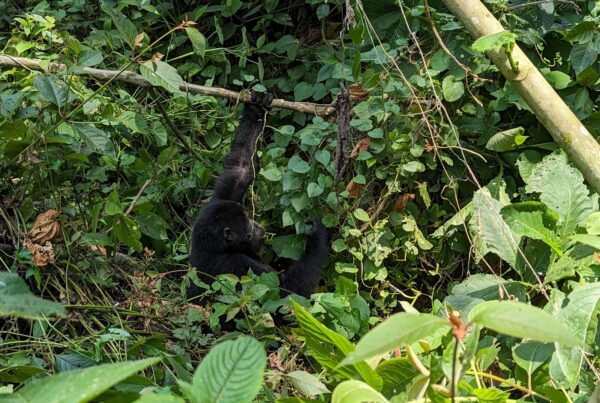
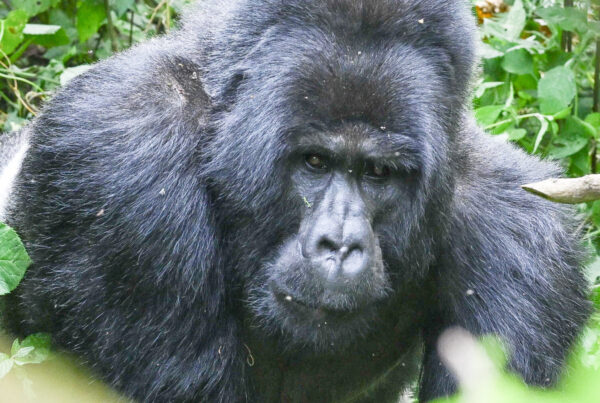
Mountain gorillas are widely cited as among the strongest land animals on Earth relative to body weight, and their physical power is one of the most striking aspects of the encounter in Bwindi. But quantifying gorilla strength is more complex than popular accounts suggest — direct measurement of wild gorilla strength is practically impossible, and most claims derive from extrapolation, captive studies, and indirect evidence. Understanding what is actually known about gorilla strength, and how it manifests in natural behaviour, gives a more accurate and more impressive picture than sensationalised estimates.
What Do We Actually Know About Gorilla Strength?
Direct scientific measurements of gorilla strength are limited primarily to captive studies, most conducted decades ago. The most frequently cited studies from the 1920s and 1930s measured grip strength and pulling force in captive gorillas using purpose-built dynamometers. These studies found that a captive gorilla could exert pulling forces of approximately 450 kilograms — roughly 4 to 6 times the force achievable by a trained human male.
More recent approaches to estimating gorilla strength rely on biomechanical analysis — measuring muscle cross-sectional area from carcasses, calculating force production capacity based on muscle fibre type and attachment geometry, and comparing these values to known human performance data. These analyses consistently indicate that mountain gorillas are approximately 4 to 8 times stronger than comparably-sized humans, with the wide range reflecting genuine uncertainty in extrapolation from limited data.
Why Exact Numbers Are Hard to Establish
Gorillas in the wild do not perform strength feats that lend themselves to measurement. In captive settings, it is difficult to motivate gorillas to perform maximum-effort tasks reliably enough to generate statistically sound measurements. The older dynamometer studies used only a small number of animals under conditions that may not have elicited true maximum effort. Modern researchers are generally cautious about repeating these numbers without appropriate qualification, though the order-of-magnitude difference between human and gorilla strength is well-supported.
Natural Evidence of Gorilla Strength
The most reliable evidence of gorilla strength comes from observing what they actually do in the wild. Silverbacks routinely break branches with diameters of 5 to 8 centimetres — branches that would require considerable effort for a strong adult human to fracture — when feeding or during displays. Vegetation that a gorilla rips apart in seconds during a display, throwing large sections of understorey plant material, is a genuine demonstration of mechanical force.
Inter-group encounters between silverbacks occasionally escalate to physical contact. These brief but intense fights involve biting, wrestling, and striking with the arms — and the wounds they produce (canine bites, torn skin, broken fingers) attest to the forces involved. Post-encounter injuries documented in long-term studies confirm that silverback physical confrontations involve genuinely high force, often causing significant injury even to the larger male.
Nest construction provides another demonstration of gorilla strength: the bending and breaking of vegetation stems that a gorilla processes during nest building — some stems with diameters of 3 to 4 centimetres — is accomplished with minimal apparent effort, revealing the casual application of force that would challenge a human significantly.
Muscle Composition and Anatomy
Gorilla strength derives from both the absolute mass of their musculature and the fibre-type composition of their muscles. Great apes, including gorillas, have a higher proportion of fast-twitch muscle fibres than humans — fibres that produce greater instantaneous force at the cost of less endurance. This fibre composition is adapted for the explosive movements of climbing, branch manipulation, and agonistic displays, rather than the endurance locomotion that characterises human movement patterns.
The gorilla’s skeletal anatomy also maximises strength expression. The attachment points of major muscle groups — particularly the pectorals, deltoids, biceps, and forearm muscles — provide mechanical advantages that differ from human anatomy in ways that amplify force output for specific movement types. The arm’s long lever arm relative to shoulder muscle attachment geometry means that the same muscle force translates into greater end-effector (hand) force than in comparable human anatomy.
Strength in the Context of Gorilla Behaviour
Gorilla strength is not primarily a weapon — it is an ecological tool. The physical power required to process tough vegetation, bend and break woody material for nests, and move through dense undergrowth is the primary context in which gorilla strength is deployed daily. The chest beat display — often perceived as aggressive — actually serves to communicate strength quality to rivals without physical contact: by demonstrating the power of the chest beat, a silverback may deter challenges that would require actually using that strength in combat.
Paradoxically, the animals with the most impressive strength are often the least likely to use it aggressively toward humans during trekking encounters. Fully habituated silverbacks that know the trekking protocol do not find a small group of stationary, compliant humans threatening. Their threat displays, when they occur, are directed at perceived social challenges, not at curious visitors who maintain distance and avoid direct eye contact.
Final Thoughts
Mountain gorilla strength is real, impressive, and somewhat beyond precise quantification. What we know with certainty is that it exceeds human strength by a substantial factor, that it is deployed primarily for ecological purposes rather than aggression, and that it is most visibly demonstrated in the casual ease with which gorillas manipulate their environment. Standing within seven metres of an animal that can do what a silverback can do, watching it feed contentedly and ignore you, is itself a form of communication about what truly commanding strength looks like.