Updated
Mountain Gorilla Lifespan: How Long Do Gorillas Live?
Gorilla Longevity in the Wild and in Captivity
Mountain Gorilla Lifespan: How Long Do Gorillas Live?. Mountain gorillas are long-lived primates whose lifespan in both wild and captive settings reflects the slow life history strategy typical of the great apes. Understanding gorilla lifespan — how long they live, what factors influence survival, and how age shapes behaviour and social role — provides essential context for appreciating the conservation mathematics that governs this endangered species.
Wild Lifespan
Mountain gorillas in the wild live approximately 35 to 40 years in most cases, with some individuals reaching the mid-40s under favourable conditions. This estimate comes from long-term monitoring of habituated populations in Bwindi and the Virungas, where known individuals have been tracked for decades. The Dian Fossey Gorilla Fund’s continuous monitoring programme, running since the 1960s in the Virungas, has produced some of the most reliable longevity data available for any wild great ape population.
Wild gorilla longevity is affected by multiple interacting factors. Disease — particularly respiratory illness and gastrointestinal parasitism — is the leading cause of mortality in most years. Injury from inter-group encounters (primarily affecting adult males), snare injuries, and the rare leopard predation event also reduce lifespan for some individuals. Females who survive the risks of early adulthood and establish themselves within stable family groups tend to have better survival prospects than males who must compete for dominance and reproductive access.
Oldest Known Wild Individuals
Among habituated populations, several individuals have been confirmed at 40 or more years. In Bwindi, long-monitored females from the original research groups established in the 1990s have reached their late 30s and early 40s in confirmed cases. The accuracy of these estimates depends on how well the individuals were known at the start of monitoring — individuals identified from birth have the most reliable age records, while animals already adult when first encountered have age estimates with wider uncertainty ranges.
Captive Lifespan
Captive gorillas typically live longer than their wild counterparts — a pattern common across many mammal species where veterinary care, consistent nutrition, and freedom from predation and pathogen pressure extend lifespan beyond wild averages. Captive gorillas have been documented reaching 50 to 55 years, with the oldest confirmed captive gorilla being a western lowland female named Fatou at Zoo Berlin, who reached 67 in 2024 — an extraordinary outlier that required consistent veterinary care and attentive management.
The comparison between wild and captive longevity is instructive for conservation. Wild gorillas face hazards that captive individuals do not: disease transmission from humans, snare injuries, inter-group fighting, and the energy demands of finding food across large areas. The longevity gap between wild and captive gorillas represents the mortality load imposed by natural and anthropogenic threats in the wild environment.
Life Stages: From Infant to Elder
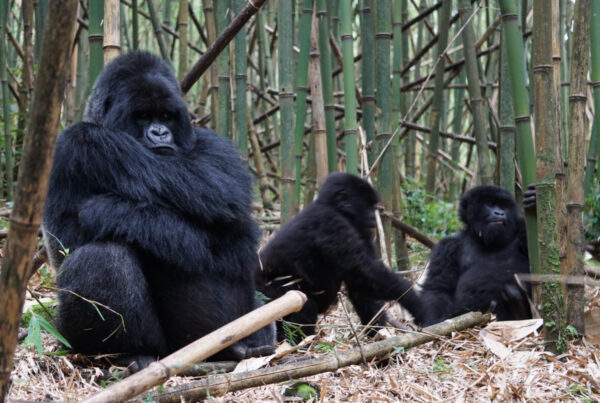
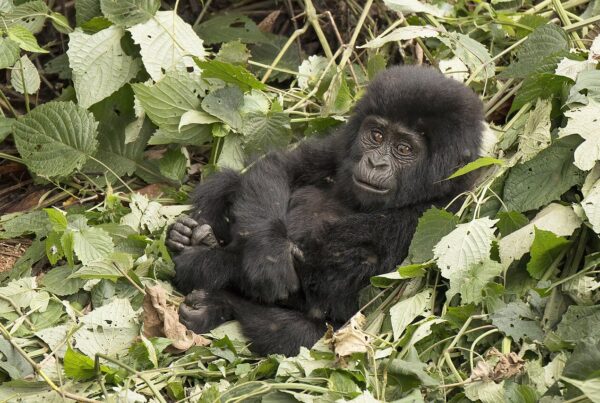
Gorilla life history progresses through distinct stages that researchers recognise as having different behavioural, social, and developmental characteristics. The infant stage runs from birth to approximately three years, characterised by complete dependence on the mother and intensive social learning through observation and play. Juveniles (3 to 6 years) are increasingly independent but still closely associated with the mother. Subadults (6 to 12 years) range more widely, engage in more active social play, and begin the process of social positioning that will determine their adult status.
Males enter the blackback stage at around 8 to 12 years and the silverback stage from approximately 12 to 15 years, with full physical and social maturity not complete until their late teens. Females reach reproductive maturity at 8 to 10 years and may have their first infant at 10 to 12 years. In both sexes, early adulthood is the period of highest reproductive investment, with energy allocated heavily to reproduction and social competition.
In late adulthood — from their late 20s onward — gorillas begin to show age-related physical changes. Older silverbacks may show greying beyond the typical silver saddle, reduced musculature, and declining teeth from decades of processing tough vegetation. In the social sphere, older silverbacks with established reputations are not necessarily weaker than younger competitors — experience and social networks built over decades can compensate for declining physical peak. Some of the most reproductively successful silverbacks documented in long-term studies have been older males with large, established groups.
Infant Mortality and Its Conservation Significance
While adult gorillas can live into their 40s, infant survival to adulthood is not guaranteed. Infant mortality in mountain gorillas, though lower than in many wild mammals, removes individuals before they can contribute to the breeding population. Infanticide — the killing of infants by incoming silverbacks who take over a group — is documented in mountain gorilla populations and represents both a biological event within normal gorilla social dynamics and a conservation concern in a species with a tiny total population.
Veterinary intervention by Gorilla Doctors has extended the lives of individual gorillas who might otherwise have died from treatable conditions — snare injuries, respiratory illness, and other ailments that medical treatment can address. Each life extended by veterinary care contributes to a population that grows only as fast as the difference between births and deaths. In a species where a single individual represents approximately 0.1% of the total population, keeping each gorilla alive longer is meaningful conservation action.
How Age Shapes Social Life
Age in gorilla groups is not merely a biological fact but a social reality. Older individuals — particularly matriarchal females who have been group members for decades — carry environmental knowledge that younger animals lack. Their experience of drought years, inter-group conflicts, and the locations of rarely-used food patches represents information that the group benefits from even as its possessor ages. The death of a long-term group member is not just an individual loss but a potential loss of encoded environmental and social knowledge.
Final Thoughts
A mountain gorilla that lives to 40 in the wild has spent decades navigating disease, inter-group competition, climate variability, and the increasing pressure of human land use at its habitat margins. That longevity represents biological robustness, social skill, and a great deal of accumulated fortune. Conservation efforts that reduce the mortality risks at each life stage — infant, juvenile, adult — compound over decades to produce the slow, hard-won population growth that has brought mountain gorilla numbers above 1,000 for the first time in recorded history.