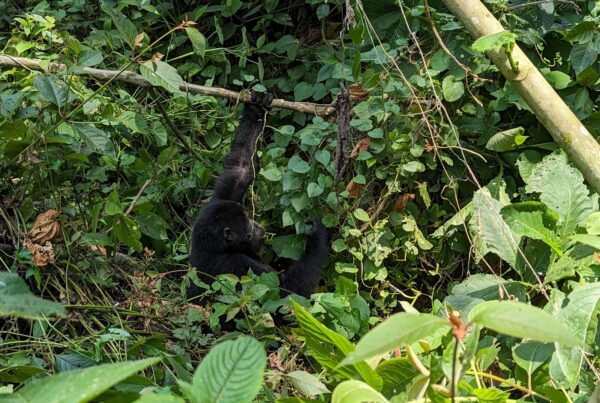
Health at the Interface: Gorillas and Human Disease
Mountain gorilla health management is one of the most intensive and medically sophisticated wildlife conservation programmes in the world. The proximity of gorillas to large and growing human populations, combined with the extraordinary genetic similarity between humans and gorillas (approximately 98% shared DNA), creates a disease transmission pathway that makes gorilla health inseparable from human health in the gorilla range countries. Understanding the health challenges facing mountain gorillas — and the conservation medicine system that addresses them — illuminates why gorilla trekking protocols are designed as they are.
Respiratory Disease: The Biggest Killer
Respiratory disease is the leading cause of death in mountain gorilla populations. The cold, damp conditions of highland forest create an environment where respiratory pathogens thrive, and gorillas appear particularly susceptible to a range of upper and lower respiratory infections. Outbreaks of respiratory illness in habituated gorilla families can affect multiple individuals simultaneously, particularly in the cold months when animals are already under thermoregulatory stress.
The origins of respiratory disease outbreaks in habituated gorillas are a matter of ongoing research and concern. Evidence from pathogen identification in sick gorillas and analysis of their contacts with humans (rangers, researchers, tourists) supports the hypothesis that human-to-gorilla transmission of respiratory viruses is a significant contributor to gorilla respiratory illness. Common human respiratory viruses — rhinovirus, respiratory syncytial virus (RSV), metapneumovirus — have been identified in sick gorillas, often matching pathogen strains circulating in nearby human communities.
Gorilla Doctors, the international veterinary organisation that provides health monitoring and treatment for all habituated mountain gorilla populations, has responded to respiratory disease outbreaks by administering antibiotics for secondary bacterial infections, supportive care fluids where safe, and careful monitoring of affected individuals. Veterinary interventions in respiratory cases have demonstrably reduced mortality in outbreak events, though the interventions themselves carry stress and disease-transmission risks that must be weighed carefully.
Gastrointestinal Disease
Gastrointestinal parasitism and infection is the second major health challenge in mountain gorilla populations. Intestinal parasites — nematodes, protozoa, and other organisms — are present at background levels in healthy gorilla populations and do not typically cause significant disease in immunocompetent animals. However, high parasite loads, novel parasite introductions, or concurrent immune challenge from other conditions can precipitate clinical gastrointestinal disease with diarrhoea, weight loss, and in severe cases, life-threatening dehydration.
The gorilla’s foraging behaviour — processing enormous volumes of soil-associated vegetation daily — provides multiple routes of parasite ingestion. The distribution of parasite loads within gorilla groups is not uniform: young animals and those with compromised immunity from concurrent disease tend toward higher parasite burdens. Faecal monitoring programmes collect samples from habituated gorillas monthly to track parasite prevalence and identify individuals with concerning parasite profiles that may require veterinary attention.
Snare Injuries
Although not a disease, snare injuries represent one of the most frequent reasons for veterinary intervention in mountain gorilla management. Wire and rope snares set by poachers for other animals — forest hogs, antelopes, duikers — catch gorillas incidentally, typically around the hand or foot. Snare-entangled gorillas face escalating tissue damage as the snare tightens with movement, eventually causing ischaemia, necrosis, and potential loss of the affected limb if the snare is not removed.
Anti-snare patrol teams operating in Bwindi and other gorilla parks remove thousands of snares annually and are the primary prevention mechanism. Gorilla Doctors provide veterinary intervention when snared individuals are identified — immobilising the affected gorilla to remove the snare and treat the wound, a complex procedure requiring careful anaesthesia management in a wild great ape. Outcomes depend heavily on how quickly the snare is identified and removed: early intervention often results in full recovery, while delayed treatment may result in permanent disability or loss of the affected extremity.
Skin Conditions
Several skin conditions have been documented in mountain gorilla populations. Mange — caused by Sarcoptes mites — has occurred in gorilla groups, causing significant fur loss, skin thickening, and intense itching. Mange is potentially serious in a species that depends heavily on its long fur for thermoregulation, and outbreaks require veterinary intervention to prevent spread through the group and reduce individual suffering.
Bacterial skin infections, fungal conditions, and the occasional wound infection from bites or scratches also occur. These are managed both through natural gorilla immune responses and, where conditions become clinically concerning, through veterinary assessment and treatment.
The Veterinary System
Gorilla Doctors operates continuously in both Uganda and Rwanda, maintaining permanent veterinary staff based near gorilla habitat. The programme’s intervention criteria balance the benefit of treatment against the risks of immobilisation (stress, anaesthesia complications) and increased human contact (disease transmission). Not every ill gorilla is treated: the threshold for active intervention is calibrated to cases where treatment benefit clearly outweighs the risks of the intervention itself.
The Bwindi Impenetrable Forest Conservation Trust (BINPACT) and Uganda Wildlife Authority work alongside Gorilla Doctors in coordinating health monitoring, ranger training, and the tourist protocol management that reduces disease transmission from visitors. The seven-metre trekking distance, health screening before visits, and masking requirements in some sectors are all direct products of the disease transmission understanding developed through decades of veterinary monitoring.
Final Thoughts
Mountain gorilla health sits at the intersection of wildlife medicine, conservation biology, human epidemiology, and ecological management. The sophisticated system of health monitoring, veterinary intervention, and prevention protocols that protects habituated gorilla populations from disease is one of the least visible but most consequential components of the gorilla conservation enterprise. Every gorilla permit fee purchased funds, in part, the veterinary capability that responds when a respiratory illness sweeps through a family group or a silverback is found with a snare around its wrist.
Frequently Asked Questions
Yes. The gorilla trekking zones — Bwindi and Mgahinga in southwestern Uganda — have no security concerns. Standard travel precautions apply for Kampala. Uganda Wildlife Authority rangers accompany all trekking groups. Check your government’s current travel advisory before departure and ensure you have comprehensive travel insurance.
Required: Yellow fever vaccination (mandatory for entry — carry the certificate). Recommended: Typhoid, Hepatitis A, Hepatitis B, Rabies (pre-exposure if handling wildlife), Meningococcal. Consult a travel health clinic 6–8 weeks before departure. Malaria prophylaxis is strongly recommended for all Uganda travel.
Yes, though reduced. Bwindi sits at 1,600–2,600m altitude — higher elevations reduce (but do not eliminate) malaria transmission. Malaria prophylaxis is recommended. Common options include atovaquone-proguanil (Malarone), doxycycline, or mefloquine. Consult your doctor for the most appropriate option based on your health history.
Uganda Wildlife Authority requires all gorilla trekkers to be 15 years or older. No exceptions are made regardless of operator, permit type, or family circumstances. Children under 15 cannot participate in gorilla trekking or the Gorilla Habituation Experience.
Yes — comprehensive travel insurance is essential. Look for policies that cover: medical evacuation (critical given Bwindi’s remote location), trip cancellation, and ideally Cancel for Any Reason cover. Ensure your policy explicitly covers high-altitude trekking and wildlife activities. Providers including Battleface, World Nomads, and Campbell Irvine offer policies suitable for Uganda.