Updated
East Africa wildlife secrets beyond Serengeti is a subject we explore in depth in this guide, drawing on direct experience and expertise from Uganda’s wildlife and safari industry. The Serengeti is one of the world’s most famous wildlife destinations for good reason. The wildebeest migration is genuinely spectacular, the big cat density in some areas is extraordinary, and the open savannah landscape is what most people picture when they think of African wildlife. But the Serengeti’s fame has a cost: in peak season, the park supports tens of thousands of visitors whose vehicles compete for the same sightings, whose lodges cluster around the same river crossings, and whose experience of African wildlife is fundamentally shaped by the presence of other tourists. East Africa offers experiences that are equally — and in some cases more — remarkable, and far less visited. This is a guide to seven of them.
East Africa’s Greatest Wildlife Secrets That Are Not the Serengeti
Bwindi Impenetrable Forest, Uganda
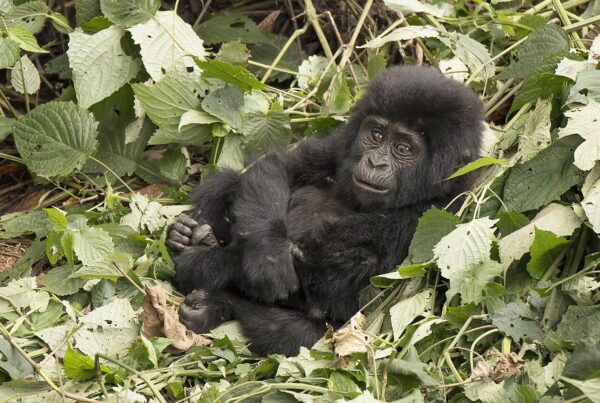
Bwindi Impenetrable National Park in south-western Uganda holds approximately half of the world’s remaining mountain gorillas — around 500 individuals from the total global population of roughly 1,100. Trekking to visit a habituated gorilla family is a regulated, intimate experience: maximum eight visitors per family per day, one hour with the gorillas, a guide-to-visitor ratio that makes the encounter personal rather than institutional. The $800 USD permit price ensures that total daily visitor numbers across the entire park remain very low. This is not the Serengeti’s volume experience. It is something closer to its opposite.
Kibale National Park, Uganda
Kibale National Park holds the highest density of primates anywhere on earth. Thirteen species of primate inhabit a relatively small area of forest in western Uganda, including the largest habituated chimpanzee community in Africa. Chimpanzee tracking here is the best available anywhere — more reliable, more intimate, and in more genuinely wild conditions than the more-commercialised chimp experiences in Tanzania. Kibale is also home to the red colobus monkey, the L’Hoest’s monkey, and the striking mangabey, all visible on forest walks guided by naturalists who know individual animals by name.
Mabamba Swamp, Uganda
The shoebill stork is among the most sought-after birds in Africa — a bizarre, prehistoric-looking wetland giant whose global population of 5,000-8,000 makes it rarer than many iconic mammals. Mabamba Swamp on the northern shore of Lake Victoria is the most reliable shoebill site in the world. Local community guides pole visitors through papyrus channels in dugout canoes for encounters with birds that stand motionless in the reeds at close range. This is not a hide-and-telephoto experience. It is a two-metre encounter with a bird that looks like it walked out of the Cretaceous period.
Murchison Falls, Uganda
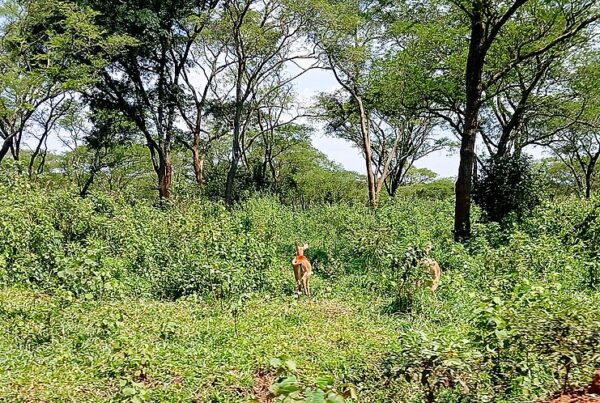
Murchison Falls National Park is Uganda’s largest protected area and one of the most underrated wildlife destinations in East Africa. The Nile forces itself through a seven-metre gap in the rock at Murchison Falls with a power that is genuinely extraordinary — one of the most dramatic geographical features anywhere on the continent. The boat trip to the base of the falls passes hippo schools numbering in the hundreds, Nile crocodiles on every sandbank, and elephants drinking at the river’s edge. The northern game drive areas hold healthy populations of Rothschild’s giraffe (one of the world’s most endangered giraffe subspecies), lion, and buffalo.
Amboseli National Park, Kenya
Amboseli is sometimes dismissed as too crowded, but the scale of its elephant herds — some of the largest and most studied in Africa — combined with the backdrop of Mount Kilimanjaro on clear days creates wildlife images that are impossible to replicate elsewhere. The elephant families here have been individually studied for decades, and knowledgeable guides can name individuals and describe their histories in ways that add a dimension to the encounter that pure game-counting cannot match.
Mahale Mountains, Tanzania
Mahale Mountains National Park on the shores of Lake Tanganyika is accessible only by boat or light aircraft and sees fewer than 1,000 visitors per year. It holds one of the largest studied chimpanzee communities in Africa — the M group, which has been observed since the 1960s by researchers from Kyoto University. Trekking to find the chimpanzees through mountain forest on the lake’s edge, then swimming in the world’s second-deepest lake in the afternoon, is an East African experience of a quality and rarity that is entirely off most itineraries.
Nyungwe Forest, Rwanda
Nyungwe National Park in southern Rwanda is one of the oldest and most biodiverse rainforests in Africa, with thirteen primate species including one of the largest troops of colobus monkeys on the continent. The canopy walkway — a suspension bridge through the forest canopy at height — offers perspective on the forest that is available at very few other East African sites. Combined with Rwanda’s gorilla trekking in Volcanoes National Park, Nyungwe forms part of one of Africa’s most compelling all-forest itineraries.
Why These Destinations Matter
The Serengeti is not replaceable, and neither is any of the above. Each of these destinations offers something specific, irreplaceable, and threatened. The mountain gorillas of Bwindi, the chimpanzees of Kibale and Mahale, the shoebills of Mabamba, the elephants of Amboseli — all of them exist within protected areas whose survival depends on the economic case that wildlife tourism provides. The visitors who choose these less-famous destinations over the Serengeti circuit are not making a sacrifice. They are often having a richer, more intimate, and more memorable experience — and supporting conservation outcomes that depend on their presence.
Frequently Asked Questions
Kibale Forest National Park, near Fort Portal, has the highest density of chimpanzees in Africa and is Uganda’s premier chimpanzee destination. The standard chimp trekking permit costs $300 FNR. The Chimpanzee Habituation Experience at Kibale ($400 FNR) gives 4 hours with a habituated community — Uganda’s only chimp habituation programme.
Yes — the gorilla + chimp combination is Uganda’s most popular primate itinerary. A typical 8-day route: Entebbe → Kibale Forest (2 nights, chimp trekking) → Queen Elizabeth National Park (2 nights, game drives) → Bwindi (2 nights, gorilla trekking) → Entebbe. Charter flights on any leg reduce travel time significantly.
Uganda has 13 primate species. Commonly seen: olive baboon, vervet monkey, red-tailed monkey, black-and-white colobus, L’Hoest’s monkey, grey-cheeked mangabey. Golden monkeys are found at Mgahinga. Kibale Forest has the highest primate diversity of any East African forest. A dedicated primate safari can tick 7–8 species in a single itinerary.
Uganda has over 1,060 recorded bird species — one of the highest counts of any country in Africa. Bwindi alone has 350+ species including 23 Albertine Rift endemics. Murchison Falls, Queen Elizabeth, and the wetlands around Entebbe round out a world-class birding circuit. The African green broadbill and Shelley’s crimsonwing are Bwindi specialities.
Uganda is home to the mountain gorilla (Gorilla beringei beringei), one of two subspecies of eastern gorilla. They live exclusively in the Virunga volcanic highlands (Uganda/Rwanda/DRC) and Bwindi Impenetrable Forest (Uganda only). Mountain gorillas are the only gorilla subspecies that cannot survive in captivity — every individual you can trek is a wild animal.