Updated
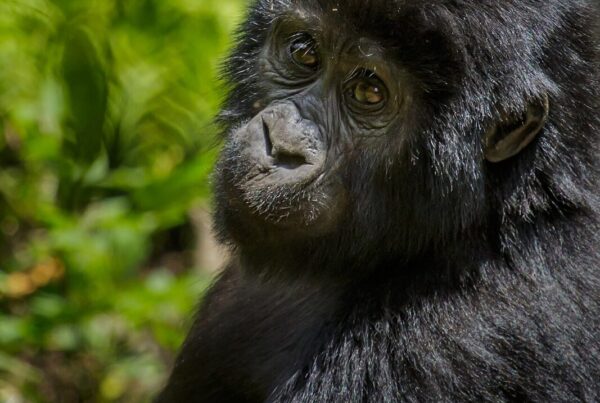
The gorilla social hierarchy who eats first family structure is one of the habituated mountain gorilla groups that trekkers can visit in Uganda or Rwanda, offering an intimate encounter with these remarkable primates. A gorilla group has a strict social hierarchy, and who eats first — who accesses the best food, the best resting spots, the first choice of grooming partners — is determined by this hierarchy in ways that are both consistent and observable during an hour with a gorilla family in Bwindi. Understanding the social structure of a mountain gorilla family group transforms what might look like a casual gathering of large primates into a legible social system with rules, relationships, and a logic that becomes clearer the longer you watch.
A Gorilla Group Has a Strict Social Hierarchy: Who Eats First Explained
The Basic Structure
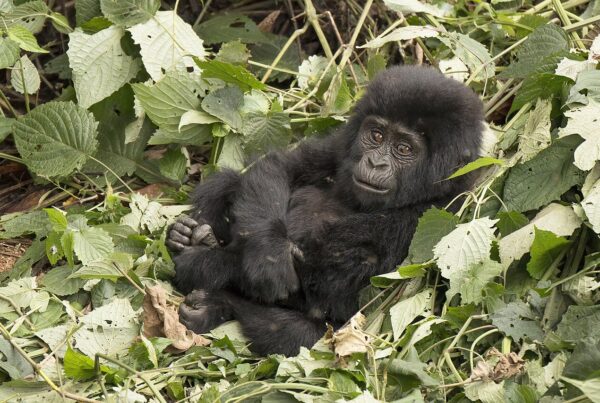
Mountain gorilla family groups are organized around a single dominant silverback, who is the clear apex of the social hierarchy. In larger groups, there may be one or more subordinate adult males (blackbacks, or younger silverbacks) who occupy a middle tier of the hierarchy. Adult females form the next tier, with their own internal ranking based on age and tenure in the group. Sub-adults and juveniles have lower status, and infants — while objects of intense protective attention from all group members — have no formal social rank of their own.
The Silverback’s Position
The dominant silverback’s position is not simply about food priority — it is about being the centre of the group’s social organisation in all respects. He leads movement decisions, mediates conflicts between females, defends the group against outside threats, and is the primary social reference point for every other member. His calm or agitation sets the emotional tone of the entire group. When the silverback is settled and feeding, the family is settled. When he is alert and displaying, the family follows his attention.
The silverback’s food priority is real but not typically expressed through active aggression. He does not, in ordinary circumstances, chase other group members away from food. His priority is expressed through approach: when he moves toward a food source, other group members give way. The hierarchy is maintained by communication — social signals that convey “I am moving to this space” and responses that convey “acknowledged, I will move” — rather than by constant enforcement through force.
Female Hierarchy
Within the adult female tier, a hierarchy exists that is based primarily on tenure: the female who has been in the group longest typically has the highest rank among females. This hierarchy determines priority at food sources when they are limited, access to the best grooming partners, and the degree of social attention the silverback pays to individual females.
How Female Rank Is Expressed
Female rank is expressed subtly — through which female approaches a food source first, through grooming preferences, through who initiates and who receives contact. Unlike male displays, female rank interactions are rarely dramatic. A lower-ranking female yields to a higher-ranking one by moving away; a higher-ranking female asserts priority by approaching without yielding to others.
Female rank is not entirely fixed. A female who transfers into a new group (female transfer between groups is common in mountain gorillas) typically enters at low rank and may move up over time as she establishes her tenure. A female with a young infant receives elevated social attention from the silverback and from other group members, which can translate into practical resources.
The Juvenile and Sub-Adult Tier
Juveniles and sub-adults occupy the lowest ranks in the group but are treated differently depending on their age, sex, and the specific relationships they have established. Young males approaching sub-adulthood may begin testing social limits — approaching food sources before their rank technically permits, challenging older animals in play — and the silverback’s management of these transgressions is part of what socialises young males into the group’s hierarchy.
Young females are typically less assertive in testing hierarchy than young males, consistent with the life history pattern in which females will eventually transfer to a new group as adults, making the long-term social investment in asserting rank in the natal group less valuable.
Grooming as Social Currency
Grooming in mountain gorillas is not only hygienic — it is a social tool. Who grooms whom, how frequently, and the duration of grooming sessions reflect and reinforce the social hierarchy. Higher-ranking animals receive more grooming than they give, which makes grooming a form of upward investment: lower-ranking animals groom higher-ranking ones as a social relationship maintenance strategy.
The silverback is typically the least-grooming and most-groomed individual in the group. Adult females groom each other and groom the silverback more than they are groomed in return. Grooming between females reflects the alliance structures within the female tier — animals that groom each other frequently tend to support each other in social conflicts and to prefer proximity to each other in the group’s spatial arrangement.
Watching the Hierarchy on a Trek
The hierarchy is visible during a gorilla trek if you know what to watch for. When two animals approach the same food source simultaneously, watch which one yields. When the silverback rises and moves, watch the group reorganise around his new position. When grooming occurs, note the direction: who initiates, who is the recipient, and for how long.
Your guide can interpret what you are seeing in real time. Guides who have been with a specific family for years know the individual animals and can explain the specific social dynamics on any given morning — which female is currently highest in the hierarchy, which juvenile is pushing limits, whether the silverback is more or less tolerant today than usual.
The hierarchy is not rigid theatre. It is a living social system, responding to daily events, seasonal changes, and the long history of relationships between specific individuals. The hour you spend with the family is one hour of that ongoing system, seen from outside.
Why the Hierarchy Matters for Conservation
Understanding gorilla social structure matters for conservation management. The death or removal of a dominant silverback has predictable destabilising effects on the social hierarchy — the group may split, existing hierarchies may be disrupted, and the period of social reorganisation that follows a leadership change involves elevated stress and potentially elevated mortality, particularly for infants. Conservation teams that know a group’s social structure can anticipate and manage these transitions more effectively than teams working with less social information.
Long-term monitoring of individual identities and social relationships — possible only in habituated groups that have been studied consistently — produces the social maps that make this management possible.
Planning Your Visit
Uganda gorilla trekking permits are $800 per person. Contact Uganda Gorilla Trekking to book your permit. The hierarchy is visible for those who watch carefully. Your guide will help you read what you are seeing.