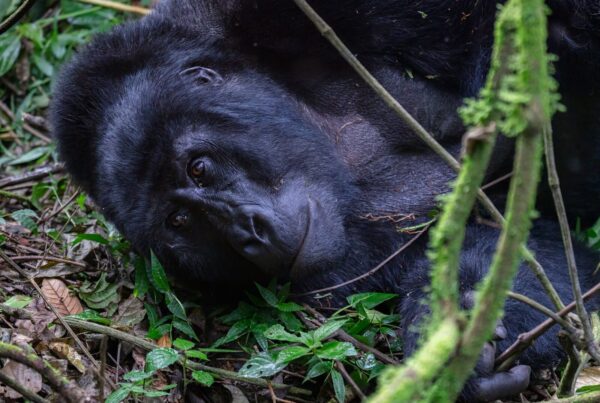
A gorilla group can have two silverbacks at once, and the dynamics of how power is shared — or negotiated, or divided, or accumulated — between two adult males in the same family group is one of the more fascinating aspects of mountain gorilla social organisation. The simplified picture of gorilla social life as “one silverback, one group” is accurate for many groups but not all, and the exceptions reveal important truths about gorilla social flexibility and about the relationship between physical dominance and social function that has direct implications for what you see during a gorilla trek.
When Two Silverbacks Coexist
Multi-male gorilla groups — those with more than one adult male — arise through two main pathways. The first is the maturation of a son within the natal group: when the silverback’s son reaches adulthood and begins to silver, the question of whether he will remain in the group or leave to form his own depends on a complex of factors including group size, the quality of the available food resources in the home range, and the specific relationship between father and son.
In some cases, particularly in large, well-resourced groups, the younger silverback remains as a subordinate member. The dominant silverback tolerates his son’s presence partly because the son provides real benefits — additional vigilance, additional physical capability in the event of inter-group conflict, potential succession that maintains group stability after the dominant’s eventual decline — and partly because the relationship between them is one of the most emotionally intense in gorilla social life: long-term, familiarity-based, and not easily dissolved by the competitive pressures that would exist between unrelated males.
The Second Pathway: External Recruitment
Less commonly, a solitary silverback — a male who has left his natal group but has not yet established a new family — may join an existing group, typically by being tolerated by the dominant male in the context of mutual benefit. This is more common in groups where the dominant male is aging and may benefit from additional support, or in situations where inter-group competition is intense enough that having a second adult male provides meaningful protection.
How Power Is Divided
The division of power between two silverbacks is not a formal negotiation — it is an ongoing social reality expressed through daily interactions, spatial positioning, priority of access to resources, and the deference shown by one male to the other in situations where the hierarchy must be made visible.
The Clear Hierarchy
Even in multi-male groups, there is always a dominant male — the individual who has unambiguous priority in access to females, food, and the best resting positions. The subordinate silverback defers to the dominant in these contexts. The deference is expressed through posture, spatial positioning, and the avoidance of direct competition for resources the dominant is using or approaching.
Division of Labour
The subordinate silverback’s contributions are real and observed. In groups with two silverbacks, studies have found that the subordinate often takes a more active role in perimeter monitoring and response to threats, leaving the dominant free to focus on the family group. In inter-group encounters — where two family groups interact and the risk of injury to adult males is highest — having a second silverback provides additional display capability and, in cases where contact occurs, additional fighting support.
Reproductive Access
Reproductive access for subordinate males in multi-male groups is limited but not zero. Dominant males father the majority of offspring in multi-male groups (DNA paternity studies confirm this consistently), but subordinate males have been documented siring some offspring — particularly in cases where the dominant is old or infirm and less able to monitor all mating opportunities.
The Long-Term Dynamics
Multi-male groups are inherently less stable than single-male groups over the long term. The subordinate male’s tolerance of subordinate status is conditional on the balance of costs and benefits remaining in his favour. As the dominant ages and his physical capability declines, this balance shifts: the subordinate may challenge for dominance, or may leave to form his own group if the conditions are right.
The most stable multi-male groups are those where the relationship between the two silverbacks is long-term and kinship-based — father and son, or brothers — because the evolutionary logic of tolerating a rival is stronger when that rival shares your genes. The least stable are those formed by unrelated adults, where the competitive logic is less diluted by kinship.
What You Might See on a Trek
If you are trekking with a gorilla family that has two silverbacks, you may observe the subtle dynamics of multi-male coexistence: the slight spatial separation between the two males, the deference signals of the subordinate, and the specific quality of the relationship between them — which is neither the antagonism of strangers nor the equality of partners, but something in between that is specific to its long history and its specific individuals.
Your guide will know whether the family has two silverbacks and can explain the relationship between them. The knowledge adds a dimension to observation that the “one silverback rules everything” model does not accommodate.
Uganda gorilla trekking permits are $800 per person. Contact Uganda Gorilla Trekking to book your permit. The gorillas’ power structures are more nuanced than the simplified story. The real story is better.
Frequently Asked Questions
A silverback is a mature male mountain gorilla (12+ years old) whose saddle-area back hair has turned silver-grey — a visible sign of adulthood. The silverback leads and protects his family group, decides when and where the group moves, and mediates conflicts. Each habituated gorilla family in Uganda has at least one silverback.
Adult male mountain gorillas weigh 140–200kg and stand 1.5–1.8m tall. Their arm span can reach 2.3 metres. Females are significantly smaller at 70–113kg. Mountain gorillas are the largest living primates. Despite their size, mountain gorillas are generally peaceful and only become aggressive if threatened.
Habituated silverbacks are accustomed to small groups of human visitors and generally ignore the trekking group. You may see the silverback feeding, resting, grooming family members, or moving the group through the forest. Direct eye contact should be avoided. If a silverback charges or bluff-charges, rangers instruct visitors to crouch down, avoid eye contact, and stay still.
A blackback is a sub-adult male gorilla (8–12 years old) whose hair has not yet turned silver. Blackbacks have not reached full maturity and typically live in the family group until they leave to establish their own. A silverback is a fully mature male, larger, dominant, and recognisable by the silver saddle. Both may be present in a single habituated family.
Uganda is home to the mountain gorilla (Gorilla beringei beringei), one of two subspecies of eastern gorilla. They live exclusively in the Virunga volcanic highlands (Uganda/Rwanda/DRC) and Bwindi Impenetrable Forest (Uganda only). Mountain gorillas are the only gorilla subspecies that cannot survive in captivity — every individual you can trek is a wild animal.