Updated
A Famous Photographer Just Released 100 Gorilla Portraits: We Reviewed Them
Gorilla portrait photography collection 2026 — a review of the most important primate photography of the year
A Famous Photographer Just Released 100 Gorilla Portraits: We Reviewed Them Gorilla portrait photography collection 2026 — a review of the most important primate photography of the year A collection of 100 mountain gorilla portraits released by a prominent wildlife photographer in 2026 has been described by photography editors, conservation organisations, and wildlife photography communities as the most significant body of gorilla photography produced since the early work of the researchers who first documented mountain gorilla behaviour in the 1960s and 1970s. A collection of 100 mountain gorilla portraits released by a prominent wildlife photographer in 2026 has been described by photography editors, conservation organisations, and wildlife photography communities as the most significant body of gorilla photography produced since the early work of the researchers who first documented mountain gorilla behaviour in the 1960s and 1970s. The collection, the result of multiple extended visits to Bwindi Impenetrable Forest over three years with special research access permits from Uganda Wildlife Authority, represents a sustained artistic and documentary project that goes beyond the individual encounter photographs that constitute most gorilla trekking photography and attempts to create a comprehensive visual portrait of mountain gorilla society and individual character. Here is our review.
The portraits of individual gorillas
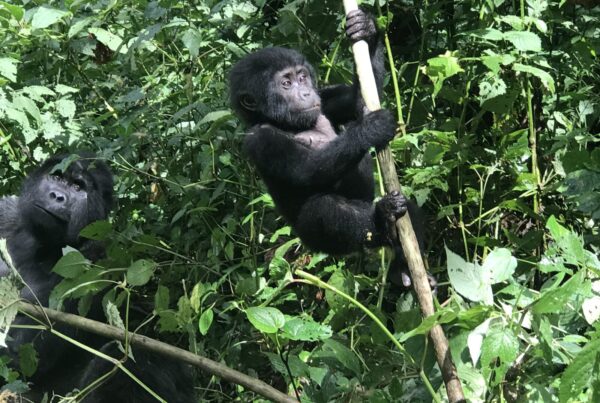
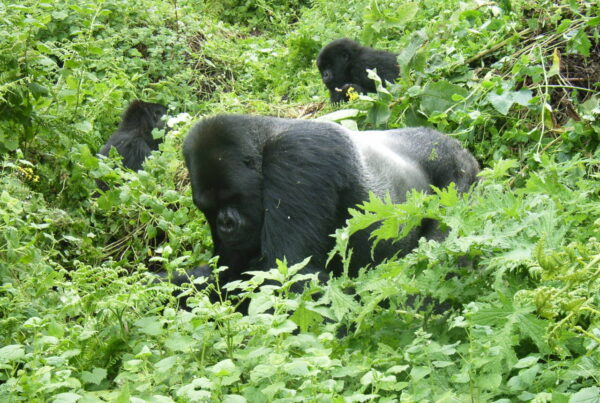
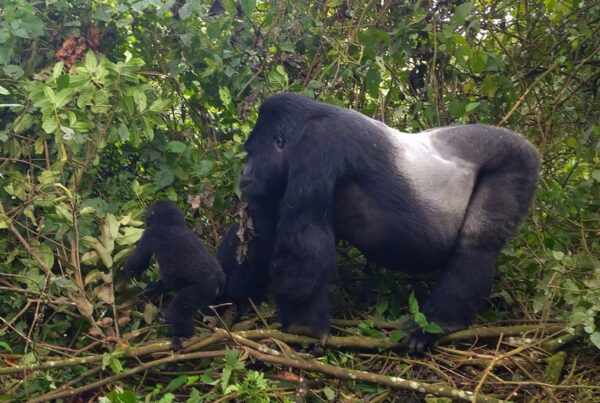
The strongest element of the collection is the series of individual gorilla portraits — close-up facial photographs of specific, named individuals from Bwindi’s habituated families that document the range of gorilla facial character with a directness and intimacy that is genuinely unprecedented in published gorilla photography. The photographer had access to the same individuals over multiple visits, and the familiarity that developed over time is visible in the photographs: the subjects are relaxed in ways that single-visit trekking photography rarely captures, and the extended access allowed the photographer to wait for the specific quality of light and expression that produces a portrait rather than a record photograph. The images of the Ruhija sector families in particular — the Bitukura silverback, the Oruzogo females, the juveniles at play — have been universally praised as among the finest wildlife portraits produced in any format in any year.
The family dynamics series
A second strand of the collection focuses on family relationships — the gorilla mother with her infant, the silverback with his juveniles, the social grooming interactions between adult females — and achieves the same quality of intimacy in a more complex compositional challenge. Photographing the relationship between two individuals, rather than the face of one, requires the photographer to be in the right position at the right moment for an interaction that cannot be predicted. The best images in this series — a mother meeting her infant’s gaze in a shaft of forest light, the silverback’s enormous hand resting gently on a sleeping juvenile’s back — are photographs of such compositional and emotional completeness that they would be remarkable in any context, animal or human.
The conservation message
The collection is not neutral about its conservation intent. The final section of the 100 images makes an explicit argument about the importance of mountain gorilla conservation and the fragility of the recovery that has produced the animals the earlier portraits document. Photographs of the forest boundary — where agriculture presses directly against the park edge — and of the rangers whose daily work maintains the system of protection are positioned alongside the portraits in a way that makes the connection between the beauty of the gorillas and the human effort required to keep them alive undeniable. The photographer’s artist statement, accompanying the collection, describes the three years in Bwindi as the most important work of their professional life. The images make that claim credible.
Where to see the collection
The full collection of 100 portraits is available as a large-format photographic book and as a touring exhibition that will visit galleries in London, New York, Paris, and Tokyo in 2026 and 2027. The book — available through wildlife and conservation photography publishers — is accompanied by essays from primatologists and conservation managers who provide the scientific and conservation context for the images. Both formats are recommended for anyone preparing for a gorilla trekking visit to Uganda — the collection provides a depth of preparation for the encounter that conventional travel material cannot match, and the visual standard it sets creates an aspiration for trekking visitors’ own photography that is achievable with any capable camera in the right conditions.
Frequently Asked Questions
A versatile zoom lens in the 24–200mm range (or equivalent on crop sensor) works for most forest conditions. A fast lens (f/2.8) handles the low light under the forest canopy. Mirrorless cameras with fast autofocus track gorilla movement well. Flash is strictly prohibited. Bring a rain cover — the forest is damp year-round.
Set: Shutter priority at minimum 1/250s (to freeze movement), Auto ISO with a ceiling of 6400, continuous autofocus, burst mode. Shoot in RAW for post-processing flexibility. In the dense understorey, light is limited — prioritise shutter speed over aperture. Wide-angle shots require patience as gorillas occasionally approach very close.
UWA guidelines require a minimum 7-metre distance from gorillas at all times. In practice, gorillas regularly approach the human group on their own — rangers manage this by repositioning the group when needed. Most trekkers end up photographing gorillas at 3–10 metres. Infant gorillas sometimes approach even closer, which rangers discourage gently.
Yes — video cameras and smartphone video are permitted. Flash is the only restriction. A monopod is useful for steadier video in low light. If you plan serious video work (wildlife documentary standard), consider the Gorilla Habituation Experience ($1,800) which gives 4 hours to film natural behaviour in a smaller group of just 4 visitors.
Uganda is home to the mountain gorilla (Gorilla beringei beringei), one of two subspecies of eastern gorilla. They live exclusively in the Virunga volcanic highlands (Uganda/Rwanda/DRC) and Bwindi Impenetrable Forest (Uganda only). Mountain gorillas are the only gorilla subspecies that cannot survive in captivity — every individual you can trek is a wild animal.