Updated
gorilla trekking Uganda deaf travellers is one of Africa’s most extraordinary wildlife experiences, connecting travellers with mountain gorillas in their natural forest habitat. Gorilla trekking is fundamentally a visual and physical experience. You walk. You watch. You witness. The sounds of the forest — and there are many extraordinary ones — are a bonus layer rather than the foundation of the experience. For deaf travellers, this means that gorilla trekking in Uganda is among the more fully accessible wildlife experiences available anywhere in the world, and in some respects it is an experience that deaf visitors may perceive more richly than hearing ones.
Gorilla Trekking Uganda for Deaf Travellers
What You Do Not Miss
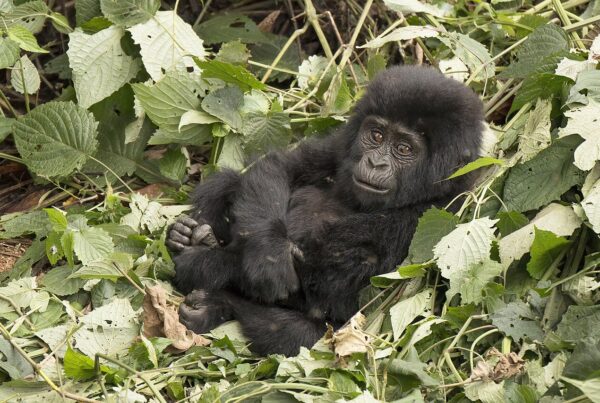
The gorilla encounter is primarily visual and immediate. The gorillas’ communication — posture, facial expression, movement, proximity, eye contact — is entirely visible. The silverback’s authority is communicated through how he holds his body, how other family members orient toward him, and how slowly and deliberately he moves. A mother’s relationship with her infant is expressed in touch, position, and attention. None of this requires hearing to interpret.
The pre-trek briefing at the park gate is spoken, but the content is straightforward and can be provided in written form. Ranger guides are experienced with communicating in the forest through gesture, hand signal, and visual cue. The requirement to keep quiet during the gorilla encounter is the same for all visitors, which means that deaf travellers are already operating in the mode the forest requires — attentive, low-impact, communication-through-gesture.
Communication with Your Guide
Ranger guides in Bwindi use a combination of spoken instruction and physical gesture to lead the group. For deaf visitors, the guide communicates through eye contact, pointing, hand signals for stop, slow down, and crouch. This is standard practice in the forest regardless of hearing status — the need for quiet means that verbal communication is minimal for everyone.
When booking, inform your tour operator of your communication needs in advance. A good operator will brief the ranger guide team before the trek so that the lead guide is prepared to adapt communication style from the start. In some cases, it is possible to arrange a written information card summarising the key safety and etiquette rules in advance, which can be reviewed the evening before the trek.
The Permit and Booking
Gorilla permits cost $800 USD per person for international visitors in 2027, issued by the Uganda Wildlife Authority. There is no variation in permit cost based on disability status. The booking process is the same for all visitors and is handled by your tour operator. Informing the operator of your hearing status at the time of booking allows them to make appropriate arrangements with the park.
Permits sell out months in advance for popular dates. Book as early as possible — three to four months ahead is the standard recommendation, and earlier is better for July, August, and December treks when demand peaks.
What the Forest Offers Deaf Visitors
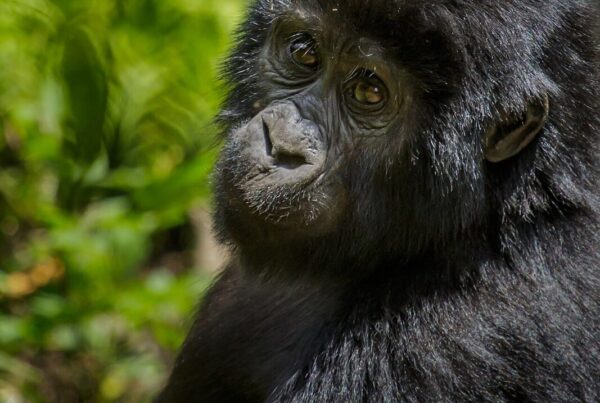
Bwindi Impenetrable National Park is a profoundly sensory environment. The visual density alone — the layers of vegetation, the shifting light through the canopy, the sudden movement of a bird, the texture of bark on ancient trees — rewards sustained attention. Many hearing visitors report that after the trek, what they remember most vividly is not the sounds but the images: the gorilla’s hand, the infant’s face, the silverback’s stillness.
For deaf visitors who have spent a lifetime developing heightened visual attention and spatial awareness, the forest may offer a richer perceptual experience than it does for people who divide their attention between sound and sight. The vibration of a large animal moving nearby, the visible disturbance of vegetation before the gorillas come into view, the changes in light and shadow that signal proximity — these are observable cues that hearing visitors often miss because they are waiting to hear something.
Photography and Documentation
Photography is permitted during the gorilla encounter (no flash). Many deaf travellers find that the camera becomes a particularly valuable tool during the trek — not just for capturing the gorillas, but for communicating with the guide and other group members about what is being seen. Pointing to the viewfinder, sharing an image, or showing a frame to the guide creates a shared visual reference that works across language and hearing differences.
Video is also permitted and can capture context that still photography misses — the gorilla’s movement, the group’s response to the silverback, the atmosphere of the forest floor. For deaf visitors who communicate in sign language, video also allows you to document your own narration in sign alongside the footage, which is something hearing travellers cannot do in the same way.
Practical Preparation
Prepare a simple information card in English stating that you are deaf and your preferred communication methods. Give copies to your driver, your lodge’s reception team, and your guide on trek day. Most Ugandan tourism professionals are attentive and flexible — they encounter visitors from many different backgrounds and adapt readily when they understand the need.
The lodges near Bwindi are generally small and personal in character, which makes communication with staff more direct and easier to manage than a large hotel. Staff who know you by name will naturally develop a communication routine over two or three nights that reduces friction considerably.
Gorilla trekking in Uganda is for everyone who can make the journey. The forest does not discriminate. The gorillas certainly do not. And in a world of wildlife experiences that increasingly depend on narration, explanation, and audio commentary, gorilla trekking stands apart as something that speaks entirely through presence. You are there, they are there, and everything meaningful happens in the space between.
Frequently Asked Questions
Uganda is home to the mountain gorilla (Gorilla beringei beringei), one of two subspecies of eastern gorilla. They live exclusively in the Virunga volcanic highlands (Uganda/Rwanda/DRC) and Bwindi Impenetrable Forest (Uganda only). Mountain gorillas are the only gorilla subspecies that cannot survive in captivity — every individual you can trek is a wild animal.
The standard gorilla trekking permit gives you exactly 1 hour with the gorilla family. This time begins when you make first contact with the family — the ranger signals the start. The Gorilla Habituation Experience gives 4 hours with a semi-wild family. The walk to find the gorillas can take 30 minutes to 5 hours depending on where the family has moved.
Stay calm, crouch down slowly, avoid direct eye contact, and remain quiet. Do not run — running triggers a chase response. Rangers accompanying your group manage close approaches. Habituated gorillas are accustomed to humans and almost never make contact, but a charging silverback is managed by staying still and following ranger instructions immediately.
A maximum of 8 visitors per habituated gorilla family per day for standard trekking. The Gorilla Habituation Experience has a maximum of 4 visitors per family per day. These limits are set by UWA to minimise stress on the gorilla families and maintain the quality of the experience.
Uganda is home to the mountain gorilla (Gorilla beringei beringei), one of two subspecies of eastern gorilla. They live exclusively in the Virunga volcanic highlands (Uganda/Rwanda/DRC) and Bwindi Impenetrable Forest (Uganda only). Mountain gorillas are the only gorilla subspecies that cannot survive in captivity — every individual you can trek is a wild animal.