Updated
gorilla trekking Uganda expats East Africa is one of Africa’s most extraordinary wildlife experiences, connecting travellers with mountain gorillas in their natural forest habitat. Living in East Africa puts you in the geographic neighbourhood of one of the world’s most extraordinary wildlife experiences. Whether you are based in Nairobi, Dar es Salaam, Kigali, Addis Ababa, or any other East African city, gorilla trekking in Uganda is closer and more achievable than it is for almost anyone else on earth. This guide is for expats who know they should go and have not yet made it happen.
Gorilla Trekking Uganda for Expats Based in East Africa
From Nairobi
The Nairobi-to-Uganda route is the most common for expat gorilla trekkers. Kenya Airways, Uganda Airlines, and RwandAir operate daily flights between Jomo Kenyatta International Airport and Entebbe International Airport. Flight time is approximately one hour. From Entebbe, you transfer to Bwindi by road (eight to nine hours) or charter flight (45 minutes).
A long weekend from Nairobi — flying out Thursday evening, trekking Saturday, flying back Sunday evening — is a realistic plan. Add a Friday-as-annual-leave and you have a four-day trip with no Monday urgency. Nairobi-based expats do this regularly and regard it as one of the standard East Africa experiences worth having before a posting ends.
From Kigali
Rwanda offers its own gorilla trekking in Volcanoes National Park, and many Kigali-based expats have already trekked in Rwanda. The Uganda experience is meaningfully different — larger forest, different families, different landscape character, and the permit price in Uganda ($800 USD for international visitors in 2027) is lower than the equivalent in Rwanda ($1,500 USD).
From Kigali, the overland route to Bwindi through Cyanika or Katuna border crossings takes approximately four to five hours, making it one of the most accessible driving routes to Bwindi from any East African city. Kigali-based expats who have not yet trekked in Uganda often cite the Rwanda option as a reason — but both are worth doing, and Uganda offers distinct advantages in price and forest experience.
From Dar es Salaam and Zanzibar
Tanzania-based expats can reach Entebbe via Nairobi or Kilimanjaro. The connection adds time compared to the Nairobi or Kigali routes, but it remains achievable on a long weekend with a Thursday evening departure. Flights from Zanzibar connect through Dar es Salaam to Nairobi and on to Entebbe, typically with a same-day or overnight connection.
Tanzania has extraordinary wildlife of its own, and many Tanzania-based expats have already done multiple Serengeti and Selous trips. Gorilla trekking provides an experience that is categorically different from savannah game drives and is genuinely difficult to match anywhere on the continent.
The EAC Rate and Eligibility
East African Community nationals pay 300,000 UGX for a gorilla permit, compared to the $800 international rate. EAC member states currently include Uganda, Kenya, Tanzania, Rwanda, Burundi, South Sudan, DRC, and Somalia. If your passport is from one of these countries, you are eligible for the EAC rate regardless of where you currently live. Confirm eligibility with the Uganda Wildlife Authority or your tour operator at the time of booking.
Expatriates with foreign passports living in EAC countries are not eligible for the EAC rate and pay the Foreign Non-Resident rate of $800. This is the standard international price and applies to most expats from Europe, North America, and Asia living in East Africa.
Doing It Before Your Posting Ends
This is the most important practical point in this guide. Expat postings are finite. The number of Kampala, Nairobi, and Kigali residents who leave East Africa without having trekked the gorillas — always intending to, always finding a reason to delay — is remarkably high. Permit availability, busy seasons at work, family visits, other travel priorities: there is always a reason to postpone.
The practical solution is to book the permit before you book the accommodation, and to book both before you find a reason not to. Permits for popular months sell out three to four months in advance. If your posting has a known end date, work backwards from it and identify the window when you will go.
What You Get That Tourists Do Not
Expats based in the region bring a different quality of attention to gorilla trekking than fly-in tourists on a first Africa trip. You have context for Uganda, for East Africa, for the conservation politics of the region. You may have met rangers or scientists working with the gorilla families. You understand the stakes around land use and forest protection in a way that someone who has just arrived from London or New York does not.
That context makes the hour with the gorillas richer. You are not processing novelty. You are having a genuine encounter with a species whose survival you already understand to be contested and hard-won. The silverback does not know this, but it matters to the quality of what you take away.
East Africa is a privilege to live in. The gorillas are the most compelling proof of that. Go before your posting ends.
Frequently Asked Questions
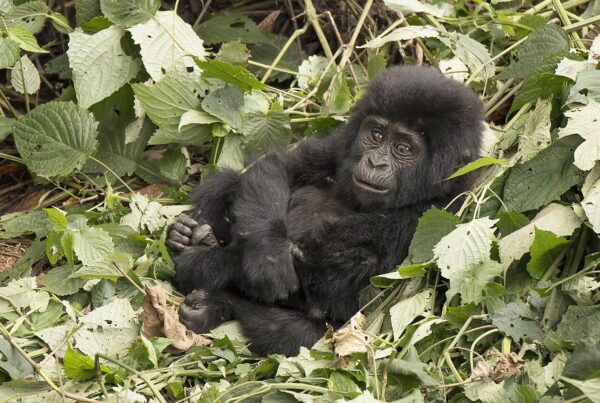
Uganda is home to the mountain gorilla (Gorilla beringei beringei), one of two subspecies of eastern gorilla. They live exclusively in the Virunga volcanic highlands (Uganda/Rwanda/DRC) and Bwindi Impenetrable Forest (Uganda only). Mountain gorillas are the only gorilla subspecies that cannot survive in captivity — every individual you can trek is a wild animal.
The standard gorilla trekking permit gives you exactly 1 hour with the gorilla family. This time begins when you make first contact with the family — the ranger signals the start. The Gorilla Habituation Experience gives 4 hours with a semi-wild family. The walk to find the gorillas can take 30 minutes to 5 hours depending on where the family has moved.
Stay calm, crouch down slowly, avoid direct eye contact, and remain quiet. Do not run — running triggers a chase response. Rangers accompanying your group manage close approaches. Habituated gorillas are accustomed to humans and almost never make contact, but a charging silverback is managed by staying still and following ranger instructions immediately.
A maximum of 8 visitors per habituated gorilla family per day for standard trekking. The Gorilla Habituation Experience has a maximum of 4 visitors per family per day. These limits are set by UWA to minimise stress on the gorilla families and maintain the quality of the experience.
Uganda is home to the mountain gorilla (Gorilla beringei beringei), one of two subspecies of eastern gorilla. They live exclusively in the Virunga volcanic highlands (Uganda/Rwanda/DRC) and Bwindi Impenetrable Forest (Uganda only). Mountain gorillas are the only gorilla subspecies that cannot survive in captivity — every individual you can trek is a wild animal.