Updated
Karamoja—the vast, semi-arid plateau in Uganda’s north-eastern corner—is as different from Bwindi as it is possible to be while remaining within the same national borders. While gorilla trekkers focus on the rain-drenched forests of the south-west, Karamoja receives less than 700mm of rain annually, supports a sparse but extraordinary savannah wildlife community, and is home to the Karamojong: one of East Africa’s last traditionally pastoralist peoples, agro-pastoralists whose cattle herds, warrior traditions, and elaborate material culture have fascinated ethnographers since the early twentieth century. Understanding this region offers context for the remarkable diversity that Uganda contains within its colonial-era boundaries.
Who the Karamojong are
The Karamojong are Nilotic pastoralists related to the Turkana of Kenya and the Toposa of South Sudan. Their traditional economy centres on cattle herding across semi-arid range, with cattle serving not merely as food animals but as the primary medium of wealth, social status, bride price, and spiritual significance. A Karamojong elder’s social standing is measured in cattle; disputes between families and clans are often conducted as cattle raids; and the cycle of raiding, counter-raiding, and diplomatic resolution through cattle exchange has structured Karamojong social life for centuries.
The Karamojong have a distinctive visual culture: men traditionally wear minimal clothing and carry spears, while women wear elaborate beaded neckwear and leather skirts. The beadwork is gender-specific in its patterns and colours, communicating marital status, clan affiliation, and achieved life stages through designs that require deep familiarity with the code to read. Contemporary Karamojong life is increasingly hybrid—younger generations wear urban clothing, own mobile phones, and engage with the national economy through trade—but traditional practices remain visible and are not performed for tourists. They are simply lived.
Karamoja’s wildlife and conservation
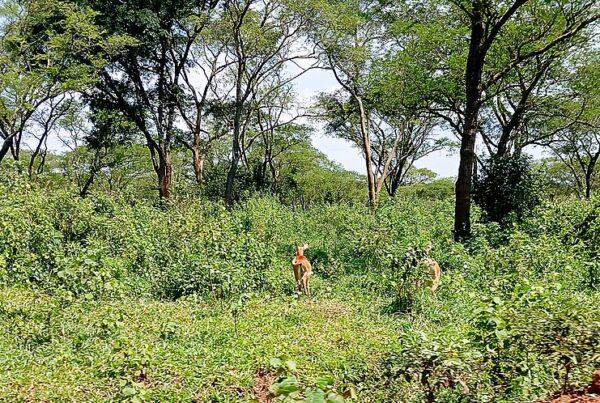
Kidepo Valley National Park in northern Karamoja is consistently rated among Africa’s finest wildlife destinations by those who make the effort to reach it. The park supports lion, leopard, elephant, buffalo, and a suite of species found nowhere else in Uganda: cheetah, caracal, bat-eared fox, aardwolf, Besia oryx, and Rothschild’s giraffe. The Narus Valley within the park concentrates game during the dry season in a landscape of acacia savannah and rocky escarpments that has a visual grandeur quite unlike Uganda’s forested south.
Access to Kidepo has improved significantly since the early 2000s, when security concerns made the region largely inaccessible to tourists. Charter flights from Entebbe take approximately two hours, eliminating the previously necessary 12-hour overland journey. Visitor numbers remain low by East African standards—which means that a Kidepo safari offers an exclusivity and wildlife encounter quality that the more heavily visited Kenyan and Tanzanian parks struggle to provide.
Why Karamoja matters to understanding Uganda
Uganda’s colonial and post-colonial history created deep inequalities between regions. The south-west, with its fertile soils and proximity to Lake Victoria, developed agriculture, cash crops, and infrastructure that attracted investment and generated a professional middle class. Karamoja, marginal in rainfall and remote from administrative centres, was perceived as a problem to be managed rather than a region to be developed: colonial administrators attempted to disarm the Karamojong repeatedly and unsuccessfully, and post-independence governments had similarly strained relationships with a region that resisted state penetration on its own terms.
The result is a region that remains culturally distinct and, in some respects, economically marginalised—but also one that has preserved social structures and ecological landscapes that more intensively developed parts of Uganda have lost. For visitors who travel only the gorilla trekking circuit of Kampala-Queen Elizabeth-Bwindi, Uganda presents as a lush, green, densely farmed country with friendly communities and spectacular forests. Karamoja’s existence—visible from satellite images as a notably drier rectangle in Uganda’s north-east—is a reminder that the country contains multiplicities that no single itinerary can capture.
- Karamojong culture: the pastoralists of Uganda’s northeast
- The World’s Most Famous Gorilla Tracking Experience: Why the USA Chooses Uganda
- Forgotten Hoofbeats: The Steinbuck and Bongo of Karamoja
- Happy World Gorilla Day: Efforts Being Made To Save The Species
- The World Mourns the Death of Chimpanzee Expert Jane Goodall
- The 10 Longest Rivers in the World
- The 10 Hottest Countries in the World (2026)
- The 10 Coldest Countries in the World (2026)
- The 10 Cleanest Countries in the World
- The Biggest Animals in the World (Land & Ocean)
The Karamoja region’s improvement in security since the government disarmament programme of the 2010s has opened one of Uganda’s most culturally distinct landscapes to visitors who previously had no safe access — the Moroto and Kotido districts that were effectively off-limits for a decade are now reachable on standard vehicle-accessible roads.