Updated
mindful gorilla trekking is one of Africa’s most extraordinary wildlife experiences, connecting travellers with mountain gorillas in their natural forest habitat. A mindful gorilla trek has nothing to do with meditation retreats. It means being properly present for the hours you spend in Bwindi: noticing the forest on the walk in, watching the gorillas with your own eyes for part of your hour rather than only through a screen, and giving yourself time afterwards to let the experience settle.
A permit costs US$800, or US$600 in April, May and November, and buys exactly 60 minutes with a gorilla family. Many visitors spend most of that hour adjusting camera settings and later feel they barely saw the animals. This guide sets out a practical, unmystical approach to slowing down, from the evening before the trek to the days after it.
Mindfulness and presence in the forest: the art of the slow gorilla trek
Why presence matters on a gorilla trek
Most travellers arrive in Bwindi in task mode. The trip has taken months of planning, an expensive permit and a long drive, and the trek itself feels like a goal to complete: find the gorillas, photograph them, finish the hour. That mindset is understandable, but it narrows attention to the viewfinder and the clock. People who describe their encounter as the highlight of their lives usually describe small, specific things instead. They remember a silverback’s slow breathing as he dozed, an infant tumbling off a vine and climbing straight back up, or the moment a female looked directly at them.
Those details are easy to miss when you are busy. The hour passes quickly, the rules keep you at least 7 m from the gorillas, and the vegetation often hides half the family. What you take home depends heavily on where your attention goes. Being mindful here simply means choosing deliberately where it goes, rather than letting habit decide.
The evening before and the morning briefing
Presence starts with logistics, oddly enough. If you pack your daypack, charge batteries, set out boots, gaiters and rain jacket and check your permit and passport the night before, you will not spend the morning worrying about them. Eat a proper dinner, drink water and get to bed early. Treks start with a briefing at the sector headquarters at around 07:30–08:00, and an anxious, under-slept mind is rarely a present one. Our hour-by-hour guide to trek day explains what happens when, which also removes a lot of uncertainty.
At the briefing, use the waiting time well. Groups of up to eight visitors are assigned to gorilla families while trackers who left at dawn radio in the families’ positions. Instead of scrolling your phone, notice where you are. Listen to the morning birdsong, the cool damp air and the mist sitting in the valleys below the forest edge. A few slow breaths and a deliberate look around are enough to shift from travel mode into the place itself.
Listen carefully to the ranger’s talk, too. The rules on distance, voices and what to do if a gorilla approaches are easier to follow calmly if you have actually taken them in.
Walking in: attention on the forest trail
The walk to the gorillas can take from 30 minutes to five hours or more, on steep, muddy and often trail-less slopes. For much of it, your attention belongs on your feet: where to place the next step, which root is slippery, when to lean on your walking stick or your porter’s hand. That is mindfulness too. Full attention on footing is safer and less tiring than walking while your mind is elsewhere, and treks are far more enjoyable if you have done some fitness preparation beforehand.
On flatter sections and during the frequent pauses while trackers update the guide by radio, let your attention widen. Bwindi has more than 350 bird species, and on a still morning you may hear turacos, greenbuls and the hornbill’s heavy wingbeats, with the chatter of L’Hoest’s monkeys or black-and-white colobus in the canopy. Soften your gaze rather than scanning hard. Peripheral vision picks up movement better than focused vision, so you are more likely to spot a duiker, a sunbird or a chameleon.
Notice smells as well, from wet earth and crushed leaves to wild ginger and, as you get close, the strong musky scent of the gorillas themselves. Our sensory guide to the sounds of Bwindi will help you put names to what you hear.
Talk less than you normally would. A quiet group hears more, sees more and arrives in a calmer state, which the gorillas notice. Many guides stop briefly when the trackers are close to let everyone drink, drop bags and walking sticks and settle down. Use that moment to slow your breathing before the final approach.
The hour with the gorillas
A simple plan helps more than any technique. Split the hour into three parts. For the first five to ten minutes, keep the camera down and just look. Work out where each family member is, which is the silverback, where the infants are and what the group is doing: feeding, resting, grooming or moving. Your eyes also adjust to the dim green light. Photographers often find that this pause improves their pictures, because they know what is happening before they start shooting.
Then take your photographs with full attention, rather than half-watching and half-shooting. Turn off the flash, which is forbidden, set the camera up before the encounter, and accept that you will not get every shot. Our photography guide covers lenses and settings.
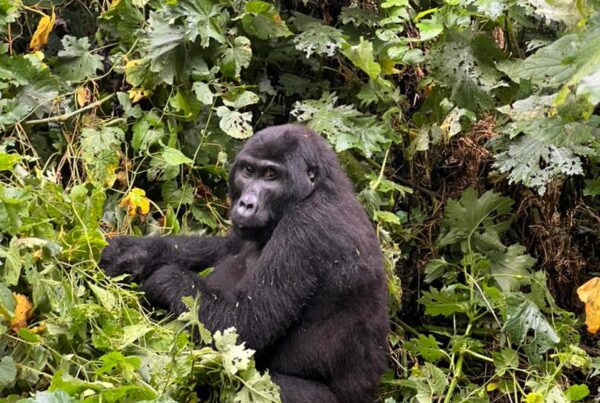
In the last ten minutes or so, put the camera away again. Watch one gorilla for a long stretch, ideally a face. After a minute of uninterrupted looking, an animal you were seeing as “a gorilla” becomes an individual with its own expressions, habits and moods. That shift is what most people mean when they say the encounter changed something for them.
Pay attention to your own reactions as well. A fast heartbeat when the silverback stands up, an urge to giggle when a juvenile beats its chest, or a sudden lump in the throat are all part of the experience, and noticing them helps you stay steady rather than reacting. If a gorilla moves towards you, do what the ranger says, which usually means staying still or stepping back slowly with your eyes lowered. Keep your voice low throughout. The gorillas are habituated to quiet human groups, and a calm group usually gets a more relaxed family and a better hour.
Watching the guide and trackers is also worthwhile. They read the family constantly: the silverback’s mood, a female’s warning grunt, when to move the group a few metres or when to fall back. Rangers also make soft belching sounds, a deep throaty “mm-hmm” that gorillas use to signal contentment. Noticing these small exchanges shows you how much patient work underlies the encounter. Our guide to how rangers find gorillas every morning explains that work in detail.
After the encounter
The walk out is a natural cooling-down period. The excitement fades, the legs feel heavy, and the group often goes quiet on its own. Resist the urge to review photos on the trail. Instead, let the encounter replay in your head while you walk.
Back at the lodge, before you open the camera or phone, spend ten minutes writing or sketching what you remember: the first sight of the family, the sounds, an individual gorilla’s face, how you felt. Many photographers find that editing images straight away reshapes their memory of the event around the best shots, so it is worth capturing the raw impression first.
If your itinerary allows, keep the following day slow rather than rushing off on a long drive. In Buhoma, the Munyaga River waterfall walk and community walks are gentle ways to stay in the forest’s rhythm. Some travellers book a second permit with a different family, or the four-hour Gorilla Habituation Experience (US$1,500, rising to US$1,800 in 2027), precisely because one hour felt too short to take everything in. For tips on settling back into daily life afterwards, read our guide to the journey home after a gorilla trip.
Presence, respect and conservation
Slowing down is not only good for you. A quiet, attentive group follows the rules more closely: it keeps its distance, does not crowd for a photo and does not stress the gorillas. That matters, because mountain gorillas are vulnerable to human disease and disturbance. A visit that the gorillas barely notice is the visit conservationists want, and it is the kind that keeps tourism sustainable.
Visitors who leave with a real connection to the animals often go on to support conservation, and permit revenue already pays for the rangers and community projects that protect the parks. Read more about how tourism saved mountain gorillas.
Frequently asked questions
Spend the first five to ten minutes watching without a camera, then photograph with full attention, and finish the hour camera-free, watching one gorilla closely. Keep quiet and follow the ranger’s lead.
You do not have to choose. Splitting the hour into watching and shooting phases gives better photos and better memories than shooting nonstop.
No. It only means paying attention on purpose: to your footing, the forest’s sounds and smells, and the gorillas themselves, with less talking and less screen time.
Walk out quietly, write down your impressions before reviewing photos, and keep the next day slow if you can, with a gentle forest or community walk.