Updated
gorilla tourism conservation Uganda is a subject central to Uganda’s wildlife tourism, where mountain gorilla conservation and responsible visitor experiences go hand in hand. The USD $800 gorilla permit is the highest per-visitor entry fee for a single wildlife encounter anywhere in Africa, and it is also among the most economically justified: the mountain gorilla population grew from 620 individuals in 1989 to over 1,063 by 2018 — the only great ape population that is increasing rather than declining — and the primary mechanism behind that recovery is the financial system that the permit funds, which pays ranger salaries and anti-poaching patrols, distributes a 20% community revenue levy to the households adjacent to the forest who would otherwise have stronger economic incentives to encroach on gorilla habitat than to protect it, and funds the veterinary monitoring programme that has saved individual gorillas from snares, respiratory illness, and inter-group conflict injuries. This guide maps the full economic chain from your permit payment through to conservation outcomes: where the money goes, how the community levy works, what the ranger funding buys, and why the financial argument for gorilla conservation is one of the most studied and replicated wildlife economics models in the world. The permit guide covers booking mechanics; this guide covers what your booking pays for.
Where the USD $800 Permit Goes
- Uganda Wildlife Authority (majority): ranger salaries, patrol vehicles, trail maintenance, visitor infrastructure
- Community Revenue Sharing (20%): ~USD $160 per permit to Local Councils adjacent to Bwindi and Mgahinga
- Community projects: schools, health clinics, water systems — administered through BICT and local councils
- Vet programme (donor-funded supplement): Mountain Gorilla Veterinary Project for snare removal, treatment
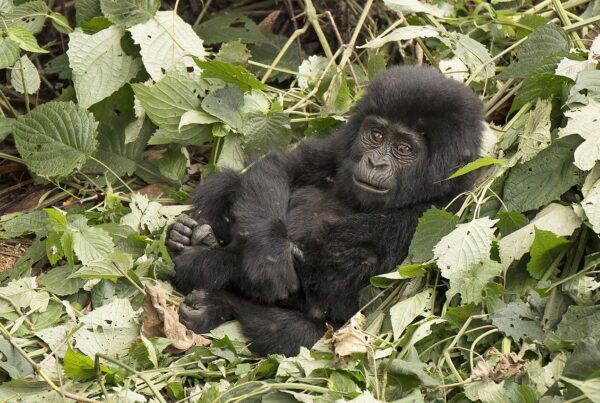
- Conservation outcome: gorilla population 620 (1989) → 1,063 (2018) — only increasing great ape population
- See gorilla families guide for the habituated groups the permit system supports
When visitors pay to watch mountain gorillas move through the mist-shrouded forests of Bwindi Impenetrable National Park, they are participating in one of the most effective wildlife financing mechanisms ever devised. The economic chain that begins with a gorilla permit fee and ends with rangers patrolling forest boundaries, local children attending school, and veterinary teams treating injured animals is both complex and remarkable. Understanding this chain helps every trekker appreciate the deeper purpose behind their visit and the tangible difference their dollars make in securing the future of a species that came within decades of disappearing forever.
How gorilla tourism funds conservation in Uganda: the economics of saving a species
The permit fee: where conservation begins
Uganda’s gorilla permit currently costs USD 800 per person for a single one-hour visit. This figure is not arbitrary. It reflects decades of negotiation among conservation bodies, government agencies, tourism operators, and community groups, all seeking a price point that generates sufficient revenue while remaining accessible to enough visitors to sustain the tourism economy. Rwanda charges USD 1,500, positioning itself as a premium destination. Uganda deliberately sits lower to attract a broader range of travelers, particularly those combining gorilla trekking with budget-conscious East African itineraries.
Of the USD 800 fee, Uganda Wildlife Authority retains the majority. UWA is a semi-autonomous government body responsible for managing Uganda’s national parks and wildlife reserves. Its mandate covers everything from ranger salaries and patrol equipment to road maintenance, visitor infrastructure, and wildlife monitoring. The permit revenue forms the backbone of UWA’s operational budget, supplemented by entry fees, concession agreements with lodge operators, and international donor grants.
Revenue sharing: communities as conservation partners
A defining feature of Uganda’s gorilla tourism model is its community revenue sharing programme. Under current policy, twenty percent of all gorilla permit revenue is channelled directly into communities surrounding Bwindi Impenetrable National Park and Mgahinga Gorilla National Park. These communities are the Bakiga, Bafumbira, Batwa, and other groups who have lived alongside the forest for generations and who bear the most immediate costs of conservation: crop raiding by wildlife, restrictions on forest access, and the ever-present risk of human-wildlife conflict.
The community revenue fund is administered through a consultative process involving local councils, parish representatives, and UWA community wardens. Decisions about how to spend the funds are made at community level, which means different villages prioritise different investments. Common projects include classroom construction and renovation, clean water supply systems, community health centres, road improvement, and support for locally managed ecotourism enterprises such as cultural centres and craft cooperatives.
The logic is straightforward but powerful. Communities that derive tangible economic benefit from gorilla tourism have a direct financial interest in the gorillas’ survival. A farmer who sees his village school built with permit money thinks differently about poaching or habitat encroachment than one who sees the national park purely as an obstacle to land use. Revenue sharing transforms potential adversaries into genuine stakeholders, and this transformation has proven more durable than enforcement-only approaches tried in earlier decades.
Lodge employment and the local economy
Beyond the formal revenue sharing mechanism, gorilla tourism generates an informal economic ecosystem of enormous significance. The lodges, camps, and guesthouses operating around Bwindi collectively employ hundreds of people from surrounding communities. Positions range from trackers, guides, and porters directly involved in the trekking experience to kitchen staff, maintenance workers, laundry teams, and security guards who keep lodges functioning.
Many gorilla lodges have adopted explicit local hiring policies, sourcing the majority of their workforce from parishes within a defined radius of the park. Some operators go further, establishing training programmes that develop hospitality skills, English language ability, and nature interpretation knowledge among community members who might otherwise have no access to formal skills development. Graduates of these programmes often move into senior guide or management roles over time, building careers entirely funded by gorilla tourism.
The multiplier effect of lodge payroll is significant. Salaries earned by local employees circulate through village economies: spent on food at local markets, school fees at local institutions, materials from local builders, and healthcare at local clinics. A single well-run lodge can anchor an economic ecosystem that supports dozens of households indirectly for every employee on its direct payroll.
Porter hiring: the most direct economic transfer
Hiring a porter on a gorilla trek is among the most direct economic transfers available to a visitor. Porters are typically recruited from the poorest households in communities immediately adjacent to the park. They earn a fixed daily rate, often supplemented by tips from trekkers they assist, and the income can represent a transformative contribution to household finances in areas where cash income is scarce and irregular.
Beyond the financial dimension, porter programmes provide employment to people who might otherwise have no connection to the gorilla tourism economy. Men and women who carry bags up steep muddy slopes for six to eight hours are not peripheral to conservation — they are ambassadors between the forest economy and the village economy, and their continued participation in the tourism sector maintains the social acceptance that conservation depends on.
Most responsible tour operators and lodges strongly encourage their clients to hire porters, not as a charity gesture but as an integral part of the trek experience. Many visitors find that porters, who often have detailed knowledge of the local landscape and community life, enrich the experience considerably beyond the physical assistance they provide.
Veterinary intervention and gorilla health programmes
A portion of gorilla tourism revenue funds specialised veterinary capacity that has saved numerous individual gorillas and entire family groups. The Mountain Gorilla Veterinary Project, now operating under Gorilla Doctors, maintains a permanent presence in the Virunga massif and Bwindi ecosystem. Veterinary teams respond to emergencies including snare injuries, respiratory illnesses, and human disease transmission events that periodically threaten habituated groups.
The cost of maintaining a permanent veterinary team with field equipment, medications, and communication infrastructure is substantial. Without tourism revenue to fund it, this capacity would not exist, and gorillas that survive snare injuries or disease outbreaks with veterinary intervention would instead face death or permanent debilitation. Every gorilla that veterinarians save represents both an intrinsic conservation win and an economic asset: gorillas generate tourism revenue, and tourism revenue funds gorillas.
Ranger salaries and anti-poaching capacity
The rangers who protect Bwindi and Mgahinga are paid from tourism revenue channelled through UWA. This is not a trivial consideration. Ranger salaries, equipment, training, and support represent one of the largest recurring costs in national park management. In the absence of tourism revenue, maintaining a professional ranger force would require either full government subsidy — an unstable arrangement in any developing country budget — or dependence on donor funding that can dry up with changing international priorities.
Tourism revenue provides a self-sustaining funding mechanism for protection. As gorilla tourism grows, so does the revenue available for ranger capacity. This creates a virtuous cycle: more rangers mean better protection, better protection means gorilla populations remain stable or grow, stable gorilla populations sustain visitor interest, visitor interest sustains permit revenue, and permit revenue pays for more rangers.
The ranger force at Bwindi is responsible not only for anti-poaching patrols but also for gorilla monitoring, snare removal, boundary enforcement, and the daily tracking work that makes tourist visits possible. Without this human infrastructure, the gorilla groups that draw visitors from around the world could not be reliably located, habituated, or protected.
International NGO investment and the grant economy
Gorilla tourism revenue is supplemented by substantial international conservation grants from organisations including the World Wildlife Fund, the Wildlife Conservation Society, the International Gorilla Conservation Programme, and numerous bilateral and multilateral donors. These grants fund research, habitat restoration, community conservation programmes, and capacity building that government revenue alone cannot cover.
Critically, international donors often require evidence that local conservation programmes are generating sustainable revenue before committing long-term grant funding. Gorilla tourism revenue serves as proof of concept: it demonstrates that conservation can be economically viable, that communities support protected area management, and that the investment case for gorilla protection is sound. Tourism revenue and grant funding are thus complementary, each reinforcing the credibility and sustainability of the other.
What sustainable tourism looks like in practice
The economic model surrounding gorilla tourism in Uganda is not perfect. Revenue sharing distributions sometimes reach communities unevenly. Lodge hiring policies vary in their commitment to local sourcing. Permit revenue fluctuates with tourism volumes, making park management budgets vulnerable to global events such as the COVID-19 pandemic, which devastated gorilla tourism income for nearly two years and forced emergency conservation funding from international donors to fill the gap.
Nevertheless, the fundamental architecture works. Uganda’s mountain gorilla population has grown from approximately 620 individuals in 2010 to over 1,000 today, a trajectory directly linked to sustained conservation investment funded in large part by tourism revenue. Communities surrounding the parks have seen measurable improvements in school infrastructure, water access, and household income compared to communities in similar areas without proximity to a major tourism attraction.
For trekkers, this context transforms the experience. The USD 800 permit fee is not simply the price of an hour with gorillas — it is an investment in a functioning conservation economy that supports rangers, veterinarians, community projects, and the continued existence of one of the most charismatic and threatened animals on earth. Understanding where the money goes makes the choice to trek not just a travel decision but a conservation act.
Frequently asked questions about gorilla tourism economics
What percentage of the gorilla permit fee goes to communities?
20% of all gorilla permit revenue collected by Uganda Wildlife Authority is redistributed to communities adjacent to Bwindi Impenetrable National Park and Mgahinga Gorilla National Park. At the current USD $800 permit price, this is USD $160 per permit sold. The fund is distributed to Local Council (LC3) sub-counties bordering the parks, proportional to their boundary length with the park. Local Council committees determine how the funds are spent — typically on community infrastructure like school construction, health clinic equipment, and water system maintenance. This community revenue sharing mechanism is the economic incentive that aligns community interests with park conservation — a community receiving school buildings and clinic equipment funded by gorilla permit income has a concrete financial reason to protect the gorilla forest from agricultural encroachment.
Has gorilla tourism actually helped increase the mountain gorilla population?
Yes — the mountain gorilla population has grown from an estimated 620 individuals in 1989 to 1,063 in the 2018 census, and is the only great ape species showing population growth rather than decline. This recovery is the product of multiple interacting factors, all of which are funded partly by permit revenue: ranger anti-poaching patrols (which dramatically reduced snaring and hunting compared to pre-tourism levels), veterinary intervention by the Mountain Gorilla Veterinary Project (which has treated dozens of gorillas for snare wounds and respiratory illness that would otherwise have been fatal), the community revenue sharing that reduced agricultural encroachment incentives, and the habituation programme that provides scientific monitoring data to guide conservation management. The gorilla population recovery is one of the most cited examples in conservation biology of tourism-funded conservation working at population scale.
How does Uganda’s gorilla permit fee compare to Rwanda’s?
Rwanda charges USD $1,500 per gorilla permit — nearly double Uganda’s USD $800. Rwanda’s higher price is a deliberate premium positioning strategy: by limiting permits to smaller total volumes at higher individual prices, Rwanda targets a luxury tourism segment and generates equivalent or greater total revenue with fewer visitors, which reduces wildlife disturbance and supports the high-end lodge infrastructure that surrounds Volcanoes National Park. Uganda’s lower price point brings a broader visitor demographic, generates higher total permit volumes (more habituated families, more daily permits available), and is accessible to visitors who could not justify the Rwanda price point. The conservation argument for Uganda’s price is that higher visitor volume — more people directly exposed to the gorilla conservation story and community economic system — produces a wider political and financial support base for gorilla protection.
What is the Mountain Gorilla Veterinary Project?
The Mountain Gorilla Veterinary Project (MGVP), now operating as Gorilla Doctors, is a veterinary programme providing medical intervention for habituated mountain gorillas across Uganda, Rwanda, and the Democratic Republic of Congo. Teams of veterinarians monitor the health of habituated gorilla groups, treat animals injured by snares or in inter-group conflicts, manage disease outbreaks, and conduct annual health surveillance to track population health trends. The programme operates on the principle that habituated gorillas — which have reduced flight responses to humans — carry a higher disease transmission risk from visitor contact than unhabituated animals, and therefore require a dedicated veterinary monitoring system as a condition of responsible tourism management. MGVP/Gorilla Doctors has conducted hundreds of clinical interventions on individual mountain gorillas since its founding in 1986, with a documented contribution to survival outcomes that would otherwise have been fatal.
Does choosing a more expensive lodge help gorilla conservation more?
Not necessarily — the conservation contribution of your trip is most directly determined by the permit fee (which is fixed regardless of which lodge you stay in) and by specific community-directed spending like hiring a community porter, doing the community walk, and purchasing crafts from community sellers. A more expensive lodge does not automatically deliver more conservation benefit unless that lodge has a specific, transparent community employment and benefit programme. The questions to ask any lodge: what percentage of staff are from communities adjacent to the park? Does the lodge contribute directly to community development funds beyond employment? Does the lodge have a formal conservation partnership with UWA or BICT? A lodge that employs exclusively local staff, purchases food locally, and contributes to the community trust delivers more community benefit than one that imports staff and supplies regardless of its room rate.
Understand the conservation economics
- Uganda Gorilla Families — the 24+ habituated groups the permit system funds and protects
- Gorilla Permit Guide — the permit booking process and what the fee covers
- Bwindi Sector Guide — community lodge options that maximise local economic benefit
- Full Safari Cost Guide — full trip cost including community porter and cultural walk
- Safari Itineraries — community-integrated itinerary designs
- Gorilla Conservation Success Story: How Tourism Saved the Species
- The economics of eco-lodges: how sustainable accommodation funds conservation
- Gorilla Conservation Success Story: How Tourism Saved Mountain Gorillas
- How Gorilla Tourism Helps Conservation in Uganda
- How Gorilla Tourism Funds Malaria Treatment for 15,000 People Per Year
- The Conservation Lover’s Gorilla Trekking Uganda Guide: Impact Tourism
- Olympians, explorers, and conservationists: the famous names behind Uganda tourism
- Carbon credits and gorilla conservation: the economics of forest carbon in Bwindi
- Amy Vedder and Bill Weber: the conservationists who invented gorilla tourism
- Carbon tourism and gorilla conservation: can your trek offset its own footprint?